


Search News
Global Industrial Intelligence Hub (GIIH)Industry Portal
Global Industrial Intelligence Hub (GIIH)Status
Standard Access
Upgrade to PremiumNewsHow to assess eco building suppliers in Germany clearly
Time
Click Count
Choosing an Eco-friendly building materials supplier in Germany is not only a sustainability question. For quality control and safety managers, it is mainly a risk-control task.
A supplier may present green claims and attractive product ranges, yet still fail on documentation, consistency, legal compliance, or delivery reliability. In Germany, where standards, certification culture, and regulatory enforcement are relatively strict, a clear assessment process can help buyers avoid costly mistakes.
This guide explains how to assess suppliers in a practical way. It focuses on the criteria that matter most to quality and safety teams: verified certifications, traceable materials, compliance with German and EU rules, operational stability, environmental credibility, and product performance under real project conditions.
Start with the real question: is the supplier safe, compliant, and reliable enough to approve?
When people search for an eco building supplier in Germany, they usually do not want theory. They want a dependable method to compare suppliers and decide whether a vendor should enter the approved supplier list.
For quality control personnel, the core concern is product conformity over time. A sample may pass once, but repeatability across batches, sites, and delivery cycles is what protects project quality.
For safety managers, the concern is broader. Materials must meet fire, emissions, chemical, handling, and installation requirements, while supplier documentation must support audits, inspections, and internal compliance reviews.
That means your assessment should not begin with marketing brochures. It should begin with evidence, risk categories, and a structured qualification workflow that tests both the product and the supplier behind it.
Check whether the supplier’s sustainability claims are verifiable, not just attractive
Many suppliers use terms such as green, low-carbon, natural, recyclable, or climate-friendly. These labels may be useful starting points, but they are not enough for supplier approval.
You need to ask what exactly is being claimed and which documents support it. A credible supplier should be able to connect each claim to a recognized standard, certification, declaration, or test result.
In Germany, buyers often look for Environmental Product Declarations, third-party test reports, and product-specific certifications that align with intended building applications. A reliable supplier should provide these quickly and clearly.
If claims are vague, inconsistent across documents, or unsupported by independent verification, treat that as a warning sign. Strong environmental messaging without technical transparency often signals a higher procurement risk.
Focus first on regulatory and standards compliance in Germany and the EU
For an eco-friendly building materials supplier in Germany, compliance is the first hard filter. Sustainability value means little if the product fails legal, construction, or occupational safety requirements.
Start by checking whether the product falls under the Construction Products Regulation and whether CE marking is required for its intended use. Then verify the supporting Declaration of Performance and relevant harmonized standards.
Beyond CE requirements, many materials must also satisfy German market expectations around fire safety, indoor air quality, hazardous substance limits, and application-specific technical rules. This is especially important for interior products and insulation materials.
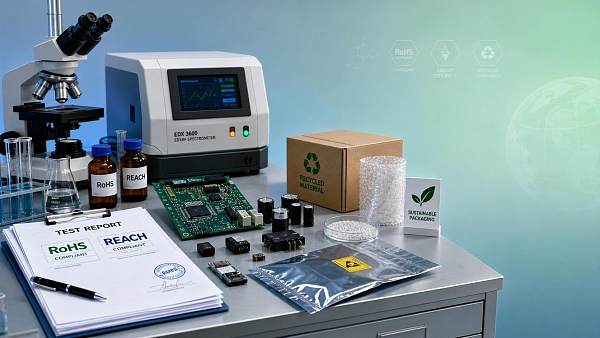
Quality and safety teams should request a compliance package that includes technical data sheets, safety data sheets where applicable, performance declarations, test certificates, and installation guidance in a usable form.
If the supplier cannot explain how its products meet both EU-wide obligations and Germany-specific expectations, the assessment should pause until those gaps are closed.
Evaluate product certifications that matter for building quality and safety
Not every certificate carries the same decision value. Some are highly relevant to building safety and environmental screening, while others are mainly promotional and should not drive qualification decisions alone.
Useful examples may include Environmental Product Declarations, FSC or PEFC for certified wood sourcing, Blue Angel in relevant categories, natureplus, DGNB-related documentation support, and verified VOC emissions testing.
However, the key is not simply collecting logos. You need to check certificate scope, issuing body, validity period, product model coverage, and whether the certified product is exactly the one being quoted.
A common mistake is approving a supplier based on a certificate that applies only to one product line, one facility, or one outdated formulation. Always match the certificate to the actual item, site, and current version.
For quality teams, certification review should be built into the incoming supplier qualification checklist, not left as a late-stage sustainability review after price negotiations are already advanced.
Material traceability is what turns sustainability into something auditable
Traceability is one of the clearest ways to assess supplier maturity. If a supplier cannot show where key raw materials come from, how they are processed, and how batches are controlled, sustainability claims remain weak.
Ask whether the supplier can identify upstream sources for critical inputs such as timber, recycled polymers, binders, coatings, mineral content, or additives. Also ask how changes in raw material sources are managed.
From a quality control perspective, batch traceability matters because environmental or safety performance can shift when upstream components change. That includes emissions behavior, durability, structural consistency, and chemical content.
Strong suppliers usually maintain lot-level records, change-control procedures, supplier approval systems for their own vendors, and documented responses for non-conforming materials. These are signs of operational discipline, not just administrative neatness.
If your organization faces audits, green building documentation requests, or incident investigations, traceability can dramatically reduce response time and legal exposure.
Assess whether the product performs well in real use, not only in lab conditions
Eco-friendly materials still need to function reliably in the project environment. A product that is low-emission or recyclable but unstable in service can create both safety and commercial problems.
Review the application context carefully. Consider moisture resistance, dimensional stability, thermal behavior, fire class, load performance, abrasion resistance, weathering, and compatibility with adjacent materials or systems.
Ask the supplier for test data that reflects realistic installation and operating conditions. If possible, request case studies from German or comparable European projects rather than only generic laboratory summaries.
Quality managers should also check tolerance control, packaging protection, shelf life, storage conditions, and complaint rates. These factors often affect field performance more than headline sustainability features.
Where the material is critical, pilot trials or sample validation under site-relevant conditions are worth the effort. Early testing can prevent expensive rework and disputes later.
Do not overlook indoor air quality and chemical safety risks
For safety managers, indoor environmental quality is often a major selection factor, especially for paints, adhesives, sealants, insulation, flooring, panels, and composite materials used in enclosed spaces.
Check VOC emissions data, formaldehyde limits where relevant, and whether the product contains substances of very high concern or other restricted chemicals under REACH-related expectations.
Also verify whether safety data sheets are complete and current, whether handling instructions are practical, and whether workers need special controls during storage, cutting, installation, or disposal.
In many projects, a supplier’s ability to provide clear chemical and emissions information is just as important as the product’s technical performance. Ambiguity in this area can delay approvals and create downstream compliance issues.
If the supplier is transparent about composition boundaries, test methods, and risk controls, that is usually a good indicator of broader governance quality.
Review manufacturing quality systems and consistency controls
A supplier may offer excellent sustainability credentials, yet still create repeated quality problems if process control is weak. That is why factory-level discipline should be part of any serious evaluation.
Ask whether the supplier operates under ISO 9001 or comparable quality systems, and how process deviations, customer complaints, and corrective actions are managed. Environmental management systems such as ISO 14001 can also add confidence.
But certifications alone are not enough. You need to understand how quality is maintained at the production line: incoming inspection, in-process testing, final release, calibration, retention samples, and change management.
For critical materials, it is reasonable to request audit access, remote quality reviews, or detailed manufacturing questionnaires. Consistency matters more than a polished presentation.
If a supplier cannot explain how it controls variation between batches, facilities, or subcontracted production, the long-term quality risk may be too high.
Supply stability and logistics reliability matter as much as product credentials
Many procurement failures happen after technical approval, when suppliers cannot maintain lead times, stock levels, or delivery quality. A strong environmental profile does not compensate for repeated supply disruption.
Assess where the product is manufactured, how inventory is managed, whether there are backup production arrangements, and how transport conditions affect material quality. Germany’s market often values predictability as much as technical merit.
Also ask about minimum order quantities, delivery flexibility, packaging robustness, damage rates, and return handling. These details matter for site execution and warehouse efficiency.
From a risk perspective, suppliers that rely on fragile imported inputs, single-source formulations, or unstable logistics routes deserve closer scrutiny, even if their sustainability story is compelling.
The most dependable suppliers are those that can combine technical transparency with realistic service commitments and measurable delivery performance.
Use a supplier scorecard instead of informal impressions
One of the clearest ways to assess suppliers fairly is to create a weighted scorecard. This helps quality, safety, procurement, and sustainability teams make decisions using the same structure.
Your scorecard may include categories such as regulatory compliance, certification quality, traceability, product performance, chemical safety, manufacturing controls, supply stability, responsiveness, and total cost of risk.
Not all criteria should carry equal weight. For example, a safety-critical interior material may require stronger weighting on fire performance, VOC emissions, and installation risk than on price or aesthetic range.
Using a scorecard also makes requalification easier. If a supplier changes formulation, factory, or sourcing, you can reassess the same risk areas without restarting from zero.
This approach is especially valuable for organizations building an approved vendor list for repeated use across projects, regions, or business units.
Questions quality and safety managers should ask before approval
Can the supplier provide current technical and compliance documents for the exact product being offered? Are all environmental claims supported by third-party evidence or recognized declarations?
Can they trace major raw materials and explain change-control procedures? Do they have clear batch identification, complaint handling, and corrective action systems?
What emissions, fire, and chemical safety data exist for the intended application? Are installation, storage, and disposal instructions complete and practical for field teams?
How stable is production capacity, and what is the supplier’s on-time delivery record? Are there previous German or EU project references that confirm consistent product performance?
If the answers are delayed, incomplete, or evasive, that is often more informative than the answers themselves. Supplier behavior during qualification is an early indicator of future cooperation quality.
Common red flags when assessing eco building suppliers in Germany
Be cautious when suppliers rely heavily on sustainability language but provide limited technical evidence. Another warning sign is when certificates are expired, generic, or unrelated to the quoted product.
Watch for inconsistent figures across brochures, data sheets, and declarations. Also pay attention if the supplier avoids discussing upstream sourcing, emissions testing, or non-conformance history.
Operational red flags include unstable lead times, unclear manufacturing locations, weak document control, and slow responses to technical questions. These often indicate deeper process issues.
Finally, be careful with suppliers who promise universal compliance across all use cases. In building materials, performance and regulatory suitability are often application-specific, and credible suppliers usually acknowledge those limits clearly.
Conclusion: clear assessment means reducing risk before purchase, not after failure
To assess an Eco-friendly building materials supplier in Germany clearly, quality and safety managers should move beyond surface-level green claims and evaluate evidence in a disciplined way.
The strongest suppliers are not simply those with sustainable branding. They are the ones that combine verified compliance, dependable product performance, traceable sourcing, controlled manufacturing, and stable delivery capability.
If you build your review process around certifications, traceability, German and EU compliance, chemical and safety data, and operational consistency, supplier selection becomes much more defensible.
In practice, the best decision is usually the supplier that reduces total risk across the full lifecycle: qualification, installation, audit readiness, building performance, and long-term sustainability credibility.
That is the clearest standard to use when comparing vendors, approving materials, and supporting safer, more reliable sustainable construction decisions.
Recommended News
 Jul 15, 2026Eco Technology Compliance: Key Standards, Test Documents, and Approval RisksEco technology compliance explained: key standards, required test documents, and hidden approval risks that can delay launches, disrupt shipments, and weaken market access.
 Jul 13, 2026Green Energy Solutions in Europe: Which Options Fit Industrial Sites Best?Green energy solutions Europe industrial teams can actually use: compare solar, storage, heat recovery, wind, and PPAs to find the best-fit path for lower costs, resilience, and decarbonization.
 Jul 06, 2026What an Environmental Innovation Platform Can Do for Corporate Sustainability ProjectsEnvironmental innovation platform insights for corporate sustainability projects: learn how to connect ESG goals, supply chain realities, and smarter investment decisions.
 Jul 01, 2026CO2 Reduction Systems Explained: Capture Methods, Limits, and Use CasesCO2 reduction systems explained: compare capture methods, costs, limits, and real use cases to find where carbon reduction delivers practical value.
 May 23, 2026How to assess eco building suppliers in Germany clearlyEco-friendly building materials supplier in Germany: learn how to verify compliance, certifications, traceability, and delivery reliability to choose safer, more dependable partners.
 May 22, 2026Are lightweight eco panels worth using in new builds?Eco-friendly building materials lightweight panels: discover whether they truly reduce costs, speed up new builds, and improve sustainability—plus what project managers must check before specifying them.
 May 21, 2026Which eco building materials cut long term costsEco-friendly building materials for sustainable construction can cut lifetime costs through energy savings, durability, and compliance value. Discover the best options for smarter ROI.
 May 20, 2026Do residential solar panels still cut power bills in 2026?Photovoltaic solar panels for residential use still cut power bills in 2026—but savings depend on tariffs, sizing, roof fit, and storage. See what drives real returns.
![]() May 19, 2026Can Agri-PV systems raise greenhouse farm efficiency?Agri-PV systems for greenhouse farming can boost efficiency, cut energy costs, and support decarbonization. Discover key design, crop-light, and ROI factors before you invest.
May 19, 2026Can Agri-PV systems raise greenhouse farm efficiency?Agri-PV systems for greenhouse farming can boost efficiency, cut energy costs, and support decarbonization. Discover key design, crop-light, and ROI factors before you invest. Apr 30, 2026Can sustainable waste disposal support carbon reduction goals?Sustainable waste disposal supports carbon reduction through smarter recycling solutions, environmental innovation, and eco-friendly solutions. Discover practical strategies that boost efficiency, cut costs, and strengthen greener supply chains.
 Apr 16, 2026CO2 reduction projects often miss hidden energy tradeoffsCO2 reduction insights: uncover hidden energy tradeoffs in climate technology, sustainable solutions, biotech solutions, healthcare resources, IoT home security, and water purifier planning.
 Apr 16, 2026CO2 reduction numbers can improve while emissions stay highExplore why CO2 reduction numbers can improve while emissions stay high. Learn how emissions control, climate technology, sustainable solutions, clean water, water filter and waste reduction drive real results.
 Apr 16, 2026Why CO2 reduction targets slip after the pilot phaseExplore why CO2 reduction and emissions control targets slip after pilots, and how sustainable solutions, climate technology, clean water, water filter systems, and eco-friendly waste handling can scale successfully.
 Apr 16, 2026When emissions control upgrades cut output instead of costEmissions control upgrades can hurt output when climate technology, CO2 reduction, water filter, clean water, and eco-friendly waste handling are poorly integrated—discover sustainable solutions that restore efficiency.