


Search News
Global Industrial Intelligence Hub (GIIH)Industry Portal
Global Industrial Intelligence Hub (GIIH)Status
Standard Access
Upgrade to PremiumNewsJFE Steel and Partners Launch Mizushima Carbon Recycling Supply Chain Demonstration
Time
Click Count
The exact project start date is not specified in the supplied information. The summary dates the announcement to October 22, 2026, stating that JFE Steel, Mitsubishi Gas Chemical and Mitsubishi Chemical launched a carbon recycling supply chain demonstration at Japan’s Mizushima complex. The project connects steelmaking by-product gas with methanol and propylene production. For steelmakers, chemical producers and downstream buyers, the analytical significance lies in how such a supply chain might support future purchasing, traceability and environmental claims. The supplied information identifies no new regulation, certification requirement or trade rule.
Three Companies Connect Steelmaking Gas to Chemical Production
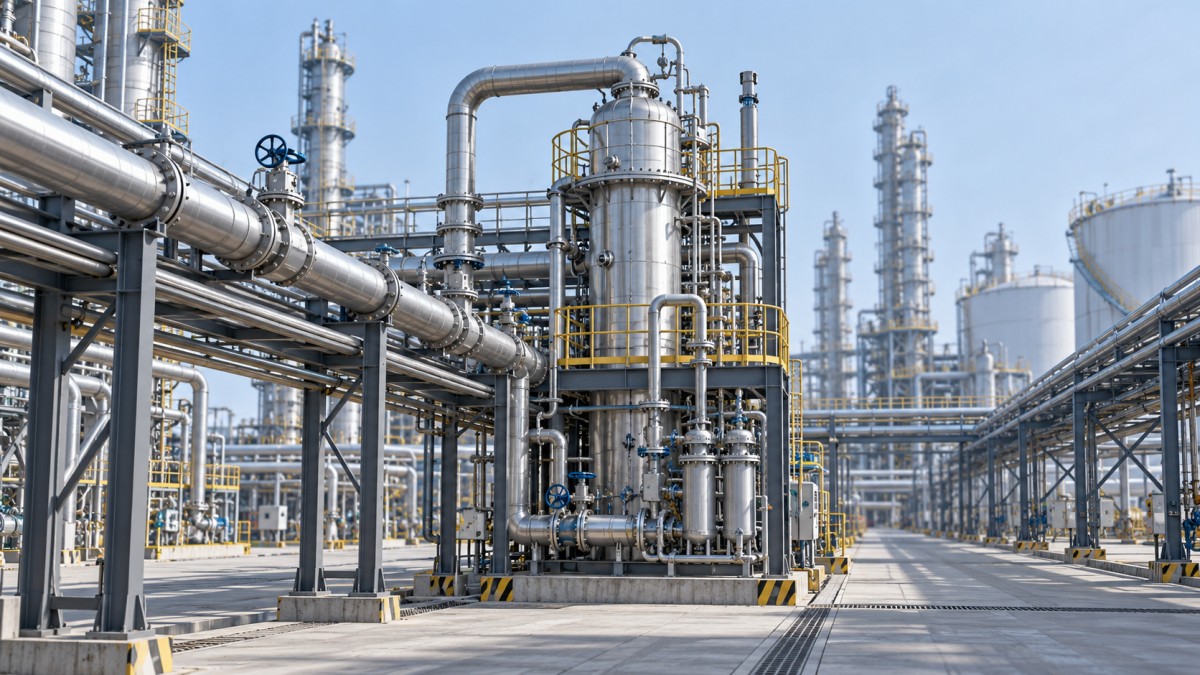
Under the arrangement described in the supplied summary, JFE Steel supplies steelmaking by-product gas, which Mitsubishi Gas Chemical converts into methanol. Mitsubishi Chemical then uses that methanol to produce propylene.
The demonstration aims to verify the feasibility of a complete supply chain extending from industrial waste-gas recovery to the production of higher-value chemicals. The supplied information describes the project’s purpose and participating companies; it does not report demonstration results.

Potential Procurement Implications Across the Production Chain
Gas supply could require closer specification alignment
From an industry perspective, connecting steelmaking operations with chemical production could make gas specifications and supply arrangements important points of coordination. Feedstock suppliers and processors may need to assess how gas characteristics, availability and acceptance procedures fit the conversion process. These are potential commercial and technical considerations, rather than requirements confirmed by the announcement.
Methanol transfers could bring documentation into focus
Analysis suggests that the transfer of methanol between production stages could become a key point for documenting material origin and linking deliveries to subsequent propylene output. Producers and purchasing teams considering a similar arrangement could examine product specifications, delivery records and traceability procedures. The input does not establish a mandatory documentation format or an applicable certification scheme.
Downstream buyers would need evidence for product claims
For potential buyers of the resulting propylene, the practical question would be whether supplier evidence supports the purchasing specifications and environmental claims attached to the product. Analysis suggests that production from recovered industrial gas alone would not establish the basis for a particular certification or quantified emissions claim. Neither certification status nor verified emissions performance is provided in the supplied information.
What Companies Could Prepare Before Changing Purchasing Terms
Check the basis of carbon recycling claims
As a preparatory step, prospective purchasers could ask what records would support a claim that a delivery is linked to the demonstrated supply chain. Any assessment could examine how the gas-to-methanol and methanol-to-propylene stages are documented. This is a suggested due-diligence approach, not an announced compliance obligation.
Separate product acceptance from environmental assessment
Analysis suggests that buyers could assess product suitability and environmental evidence as distinct purchasing questions. Technical acceptance would concern whether the supplied material meets the buyer’s specifications; environmental assessment would concern the evidence supporting any associated claim. The announcement does not confirm either outcome for a particular customer or application.
Verify availability before revising delivery plans
Companies considering procurement changes could seek confirmation of supply availability, qualification arrangements and delivery commitments before adjusting purchasing schedules. The supplied summary gives no commercial volumes, customer commitments or delivery timetable. A demonstration announcement therefore provides insufficient evidence to assume routine commercial availability.
Look for an explicit connection to applicable rules
Compliance and procurement teams could monitor whether later disclosures identify a relevant standard, certification framework or regulatory treatment. Until such information is available, this announcement alone provides no basis for treating recycled-carbon content as a new mandatory purchasing condition or for changing trade documentation.
A Demonstration Signal Rather Than Evidence of a Rule Change
At this stage, it is more appropriate to understand the project as a supply chain demonstration with potential relevance to future compliance and procurement practices. The supplied information does not identify a policy amendment, a new certification pathway, a trade preference or a binding industry requirement.
As an editorial assessment, the development deserves attention because it links material recovery with successive production stages involving three companies. If subsequent disclosures address traceability, product qualification and the treatment of environmental claims, they could help businesses evaluate how comparable arrangements might fit their purchasing requirements. That possibility remains an analytical observation, not a confirmed change in market practice.
Feasibility Evidence Will Determine Its Practical Reach
The project’s stated objective is to test an integrated route from industrial waste gas to higher-value chemicals. From an industry perspective, its practical relevance will depend on evidence that the linked stages can support dependable production, acceptable product quality and substantiated claims.
The proportionate response is to monitor the demonstration and prepare targeted supplier questions. The supplied information supports interest in a developing production arrangement, while leaving its commercial performance and any connection to formal rules unresolved.
Basis of This Article and Points for Further Verification
This article is based solely on the user-provided news title, event-time field and event summary. The event-time field states that the timing was not explicitly specified, while the summary gives October 22, 2026 as the announcement date. The exact project start date remains unspecified.
No specific official source link was provided in the input, and the announcement and subsequent developments require continued verification. Relevant materials for follow-up could include participating companies’ official announcements, published demonstration findings and any applicable standards or certification documents subsequently identified. Further observation should focus on project execution, product qualification, traceability evidence, certification interpretations, procurement terms and industry feedback. No such subsequent development is confirmed here.
Recommended News
 Oct 23, 2026JFE Steel and Partners Launch Mizushima Carbon Recycling Supply Chain DemonstrationExplore JFE Steel’s Mizushima carbon recycling demonstration, linking steelmaking gas to methanol and propylene, and discover what it could mean for procurement and traceability.
 Oct 21, 2026Global CCS Capacity Set to Top 100 Mtpa as Europe Leads Cross-Border Hub ShiftGlobal CCS capacity is set to exceed 100 Mtpa as Europe shifts to cross-border hubs. Explore key implications for procurement, compliance and project delivery.
 Jul 15, 2026Eco Technology Compliance: Key Standards, Test Documents, and Approval RisksEco technology compliance explained: key standards, required test documents, and hidden approval risks that can delay launches, disrupt shipments, and weaken market access.
 Jul 13, 2026Green Energy Solutions in Europe: Which Options Fit Industrial Sites Best?Green energy solutions Europe industrial teams can actually use: compare solar, storage, heat recovery, wind, and PPAs to find the best-fit path for lower costs, resilience, and decarbonization.
 Jul 06, 2026What an Environmental Innovation Platform Can Do for Corporate Sustainability ProjectsEnvironmental innovation platform insights for corporate sustainability projects: learn how to connect ESG goals, supply chain realities, and smarter investment decisions.
 Jul 01, 2026CO2 Reduction Systems Explained: Capture Methods, Limits, and Use CasesCO2 reduction systems explained: compare capture methods, costs, limits, and real use cases to find where carbon reduction delivers practical value.
 May 23, 2026How to assess eco building suppliers in Germany clearlyEco-friendly building materials supplier in Germany: learn how to verify compliance, certifications, traceability, and delivery reliability to choose safer, more dependable partners.
 May 22, 2026Are lightweight eco panels worth using in new builds?Eco-friendly building materials lightweight panels: discover whether they truly reduce costs, speed up new builds, and improve sustainability—plus what project managers must check before specifying them.
 May 21, 2026Which eco building materials cut long term costsEco-friendly building materials for sustainable construction can cut lifetime costs through energy savings, durability, and compliance value. Discover the best options for smarter ROI.
 May 20, 2026Do residential solar panels still cut power bills in 2026?Photovoltaic solar panels for residential use still cut power bills in 2026—but savings depend on tariffs, sizing, roof fit, and storage. See what drives real returns.
![]() May 19, 2026Can Agri-PV systems raise greenhouse farm efficiency?Agri-PV systems for greenhouse farming can boost efficiency, cut energy costs, and support decarbonization. Discover key design, crop-light, and ROI factors before you invest.
 Apr 30, 2026Can sustainable waste disposal support carbon reduction goals?Sustainable waste disposal supports carbon reduction through smarter recycling solutions, environmental innovation, and eco-friendly solutions. Discover practical strategies that boost efficiency, cut costs, and strengthen greener supply chains.
 Apr 16, 2026CO2 reduction projects often miss hidden energy tradeoffsCO2 reduction insights: uncover hidden energy tradeoffs in climate technology, sustainable solutions, biotech solutions, healthcare resources, IoT home security, and water purifier planning.
 Apr 16, 2026CO2 reduction numbers can improve while emissions stay highExplore why CO2 reduction numbers can improve while emissions stay high. Learn how emissions control, climate technology, sustainable solutions, clean water, water filter and waste reduction drive real results.
 Apr 16, 2026Why CO2 reduction targets slip after the pilot phaseExplore why CO2 reduction and emissions control targets slip after pilots, and how sustainable solutions, climate technology, clean water, water filter systems, and eco-friendly waste handling can scale successfully.
 Apr 16, 2026When emissions control upgrades cut output instead of costEmissions control upgrades can hurt output when climate technology, CO2 reduction, water filter, clean water, and eco-friendly waste handling are poorly integrated—discover sustainable solutions that restore efficiency.
{item.publish_time}{item.title}{item.description}