


Search News
Global Industrial Intelligence Hub (GIIH)Industry Portal
Global Industrial Intelligence Hub (GIIH)Status
Standard Access
Upgrade to PremiumNewsWhich eco building materials cut long term costs
Time
Click Count
For business decision-makers, the question is no longer whether sustainability matters, but which Eco-friendly building materials for sustainable construction can truly lower lifetime costs. From energy savings and reduced maintenance to compliance value and stronger asset resilience, the right material choices can improve both financial performance and environmental outcomes. This article explores which options deliver the best long-term return in today’s evolving construction landscape.
Why long-term cost matters more than upfront price
Many procurement teams still compare materials mainly by purchase price. That approach often misses the larger cost structure of a building, including energy use, repair cycles, replacement intervals, waste handling, insurance exposure, and future compliance upgrades.
For enterprise decision-makers, Eco-friendly building materials for sustainable construction should be evaluated as operational assets, not as decorative upgrades. The real question is how each material performs across a 20- to 40-year ownership horizon.
This is especially important in a cross-industry environment where offices, warehouses, mixed-use sites, medical facilities, logistics hubs, and smart living projects face different combinations of climate stress, regulatory pressure, and occupancy intensity.
- Upfront cost is visible immediately, but maintenance and utility costs accumulate quietly over years.
- Shorter replacement cycles create disruption, labor expense, and downtime risk for revenue-generating facilities.
- Materials with better environmental profiles can support green building targets, investor expectations, and tenant retention.
- Compliance-ready specifications reduce the likelihood of costly retrofits when local codes or buyer requirements tighten.
What “cost reduction” should include
A useful cost model combines capital expenditure with operating expenditure and risk. In practice, that means tracking energy demand, service life, cleaning and repair frequency, moisture resistance, fire performance, embodied carbon reporting needs, and supply chain reliability.
Which Eco-friendly building materials for sustainable construction usually cut costs best?
Not every green material saves money in the same way. Some reduce heating and cooling bills. Others lower maintenance, extend lifespan, or improve water performance. The table below compares common Eco-friendly building materials for sustainable construction through a business decision lens.
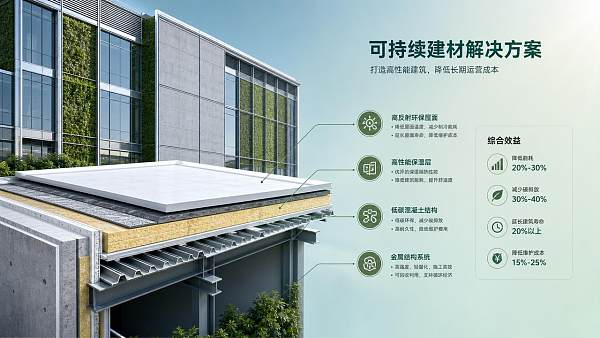
The strongest cost reducers are usually the materials that affect building systems every day, especially insulation, roofing, structural durability, and envelope performance. Decorative eco materials may support brand goals, but they rarely move lifetime cost as much as thermal or structural choices.
The highest-impact categories for most portfolios
- Envelope materials that reduce energy loss in heating- or cooling-dominant climates.
- Roofing systems that resist UV degradation, ponding, and thermal shock.
- Structural materials with lower maintenance and better corrosion or moisture performance.
- Interior finishes with low emissions and high durability for heavily occupied environments.
How to compare cost, performance, and risk before procurement
A decision matrix helps teams avoid greenwashing and avoid overpaying for features that do not match the asset profile. The next table can be used during supplier review, design value engineering, or cross-border sourcing discussions.
For enterprise portfolios, the best Eco-friendly building materials for sustainable construction are not always the most advanced on paper. They are the ones that fit the local code, climate, operational duty cycle, installation workforce, and procurement timeline without creating hidden risk.
A practical procurement sequence
- Define the asset goal: energy savings, durability, carbon reduction, or certification support.
- Identify the biggest cost driver in that building type, such as HVAC load, roof failure, moisture damage, or structural maintenance.
- Compare at least three material options using life-cycle cost rather than invoice price alone.
- Verify test reports, environmental documentation, and logistics feasibility before final approval.
- Align installation quality control with the expected performance outcome.
Which materials make sense in different building scenarios?
Material economics change by use case. A hospital, a smart residential complex, and a distribution center do not fail in the same way, and they do not recover savings on the same timeline. Decision-makers should match Eco-friendly building materials for sustainable construction to operating reality.
Commercial offices and mixed-use buildings
In these projects, high-performance glazing systems, effective insulation, durable interior finishes, and low-emission materials can improve energy efficiency and occupant comfort. The cost benefit often appears through lower utility use, stronger leasing appeal, and fewer finish replacements.
Warehouses and logistics facilities
Here, roof reflectivity, thermal envelope quality, durable slab design, and corrosion-resistant metal systems usually matter more than premium interior materials. In large-footprint assets, small percentage gains in cooling load or roof lifespan can translate into significant operating savings.
Healthcare and specialized technical buildings
Medical and laboratory environments need materials that balance sustainability with hygiene, indoor air quality, cleanability, and fire safety. Low-VOC finishes, moisture-resistant assemblies, and durable surfaces often deliver better long-term value than materials chosen only for embodied carbon benefits.
Smart living and residential developments
Residential projects typically gain from insulation, window upgrades, low-maintenance cladding, and water-efficient products. These materials support lower utility bills, reduced resident complaints, and stronger resilience against heat waves and moisture-related repairs.
What standards, documentation, and compliance signals should buyers check?
Business buyers increasingly need materials that support internal reporting, lender expectations, and regional approvals. While exact requirements vary, the most useful suppliers can provide clear technical and environmental documentation without delay.
- Environmental Product Declarations can help compare embodied impacts across similar materials.
- VOC and indoor air quality documentation is important for occupied spaces, especially healthcare, education, and residential assets.
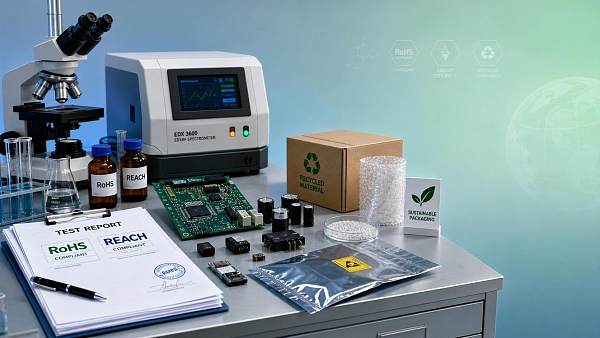
- Fire, moisture, thermal, acoustic, and structural test records should match the intended application rather than generic marketing claims.
- Chain-of-custody or responsible sourcing documentation may matter for timber and selected natural materials.
- Regional code compatibility must be checked early to avoid redesign and import delays.
GIIH’s value in this process lies in connecting fragmented technical data, market intelligence, and cross-border supply chain signals. For decision-makers facing volatile lead times or changing sustainability mandates, that integrated view supports faster and safer material selection.
Common mistakes that erase the savings
Even strong materials can fail financially if they are selected or implemented poorly. Many long-term cost disappointments come from process errors rather than from the material category itself.
Frequent decision errors
- Choosing based on recycled content alone while ignoring durability, detailing, or climate suitability.
- Assuming premium eco materials always deliver faster payback, even in low-usage or short-hold assets.
- Underestimating installation quality. Poor sealing, moisture management, or substrate preparation can erase expected savings.
- Ignoring regional sourcing risk, which can create substitution issues, schedule penalties, and cost escalation.
- Treating sustainability and operations as separate workstreams instead of one investment decision.
A disciplined material strategy should link design intent, procurement controls, supplier documentation, and maintenance planning from the start. That is where lifetime savings become real rather than theoretical.
FAQ: what enterprise buyers usually ask first
How do we know whether a green material will actually save money?
Use a life-cycle cost model. Include procurement price, installation, expected service life, annual maintenance, energy effect, replacement timing, and disruption cost. For many buildings, the largest savings come from thermal performance and durability, not from visible finish upgrades.
Which Eco-friendly building materials for sustainable construction usually have the fastest payback?
In many commercial and industrial projects, insulation upgrades, efficient roofing systems, airtight envelope improvements, and durable low-maintenance exterior materials often show the fastest and most measurable returns. Actual payback depends on climate, energy prices, and operating hours.
Are eco materials always more expensive to buy?
No. Some sustainable options carry a premium, but others are cost-competitive or reduce total installed cost through lighter weight, easier assembly, or lower transport demand. A higher purchase price can still be financially favorable if service life and energy savings are strong.
What should global buyers ask suppliers before approval?
Ask for technical data sheets, application limitations, environmental documentation, fire and thermal test records, maintenance guidance, production lead time, origin details, and substitution options. For cross-border projects, shipping reliability and code alignment are just as important as product claims.
Why informed material intelligence creates better decisions
Sustainable construction is no longer a narrow design preference. It is a capital allocation issue that affects energy exposure, asset resilience, investor perception, and regulatory readiness. The best-performing Eco-friendly building materials for sustainable construction are those selected through evidence, scenario fit, and supply chain clarity.
For decision-makers operating across sectors, GIIH brings value by translating fragmented industrial data into usable material intelligence. Our cross-industry perspective helps teams compare technical options, understand market shifts, assess sourcing risk, and connect sustainability choices with commercial outcomes.
Why choose us for material strategy and sourcing insight
GIIH supports enterprise buyers that need more than a product list. We help interpret which Eco-friendly building materials for sustainable construction fit your asset type, investment horizon, operating environment, and regional supply conditions.
- Parameter confirmation for thermal, durability, maintenance, and compliance priorities.
- Material selection support based on scenario, budget, and expected lifecycle performance.
- Delivery cycle review for regional sourcing, cross-border logistics, and substitution planning.
- Documentation guidance for environmental reporting, technical validation, and certification alignment.
- Quotation and solution discussions for phased upgrades, new builds, or portfolio-wide sustainability programs.
If your team is comparing long-term building costs, planning a retrofit, or evaluating regional suppliers, contact GIIH to discuss performance parameters, material options, lead times, compliance questions, and decision-ready intelligence tailored to your project pipeline.
Recommended News
 Jul 15, 2026Eco Technology Compliance: Key Standards, Test Documents, and Approval RisksEco technology compliance explained: key standards, required test documents, and hidden approval risks that can delay launches, disrupt shipments, and weaken market access.
 Jul 13, 2026Green Energy Solutions in Europe: Which Options Fit Industrial Sites Best?Green energy solutions Europe industrial teams can actually use: compare solar, storage, heat recovery, wind, and PPAs to find the best-fit path for lower costs, resilience, and decarbonization.
 Jul 06, 2026What an Environmental Innovation Platform Can Do for Corporate Sustainability ProjectsEnvironmental innovation platform insights for corporate sustainability projects: learn how to connect ESG goals, supply chain realities, and smarter investment decisions.
 Jul 01, 2026CO2 Reduction Systems Explained: Capture Methods, Limits, and Use CasesCO2 reduction systems explained: compare capture methods, costs, limits, and real use cases to find where carbon reduction delivers practical value.
 May 23, 2026How to assess eco building suppliers in Germany clearlyEco-friendly building materials supplier in Germany: learn how to verify compliance, certifications, traceability, and delivery reliability to choose safer, more dependable partners.
 May 22, 2026Are lightweight eco panels worth using in new builds?Eco-friendly building materials lightweight panels: discover whether they truly reduce costs, speed up new builds, and improve sustainability—plus what project managers must check before specifying them.
 May 21, 2026Which eco building materials cut long term costsEco-friendly building materials for sustainable construction can cut lifetime costs through energy savings, durability, and compliance value. Discover the best options for smarter ROI.
 May 20, 2026Do residential solar panels still cut power bills in 2026?Photovoltaic solar panels for residential use still cut power bills in 2026—but savings depend on tariffs, sizing, roof fit, and storage. See what drives real returns.
![]() May 19, 2026Can Agri-PV systems raise greenhouse farm efficiency?Agri-PV systems for greenhouse farming can boost efficiency, cut energy costs, and support decarbonization. Discover key design, crop-light, and ROI factors before you invest.
May 19, 2026Can Agri-PV systems raise greenhouse farm efficiency?Agri-PV systems for greenhouse farming can boost efficiency, cut energy costs, and support decarbonization. Discover key design, crop-light, and ROI factors before you invest. Apr 30, 2026Can sustainable waste disposal support carbon reduction goals?Sustainable waste disposal supports carbon reduction through smarter recycling solutions, environmental innovation, and eco-friendly solutions. Discover practical strategies that boost efficiency, cut costs, and strengthen greener supply chains.
 Apr 16, 2026CO2 reduction projects often miss hidden energy tradeoffsCO2 reduction insights: uncover hidden energy tradeoffs in climate technology, sustainable solutions, biotech solutions, healthcare resources, IoT home security, and water purifier planning.
 Apr 16, 2026CO2 reduction numbers can improve while emissions stay highExplore why CO2 reduction numbers can improve while emissions stay high. Learn how emissions control, climate technology, sustainable solutions, clean water, water filter and waste reduction drive real results.
 Apr 16, 2026Why CO2 reduction targets slip after the pilot phaseExplore why CO2 reduction and emissions control targets slip after pilots, and how sustainable solutions, climate technology, clean water, water filter systems, and eco-friendly waste handling can scale successfully.
 Apr 16, 2026When emissions control upgrades cut output instead of costEmissions control upgrades can hurt output when climate technology, CO2 reduction, water filter, clean water, and eco-friendly waste handling are poorly integrated—discover sustainable solutions that restore efficiency.