


Search News
Global Industrial Intelligence Hub (GIIH)Industry Portal
Global Industrial Intelligence Hub (GIIH)Status
Standard Access
Upgrade to PremiumNewsCan recycled materials meet strict quality standards?
Time
Click Count
As sustainability targets reshape procurement and production, quality control and safety teams face a critical question: can recycled materials truly meet strict quality standards?
The answer depends on traceability, material characterization, process control, and compliance verification across every stage of the value chain.
From plastics and metals to packaging and industrial components, recycled materials can deliver reliable performance when supported by disciplined testing and risk-based governance.
Foundational Understanding of Recycled Materials
Recycled materials are recovered resources processed for reuse in manufacturing, packaging, infrastructure, consumer goods, or industrial systems.
They may come from post-industrial scrap, post-consumer waste, demolition streams, closed-loop production returns, or certified recovery programs.
Quality depends less on the word “recycled” and more on input control, separation accuracy, contamination management, and repeatable processing.
In many sectors, recycled materials are no longer considered secondary choices. They are engineered inputs with defined specifications.
However, performance confidence requires evidence. This evidence may include certificates, laboratory results, process records, and compliance documentation.
Core Quality Factors
- Known origin and documented chain of custody.
- Consistent physical, chemical, and mechanical properties.
- Low contamination from restricted or incompatible substances.
- Stable processing behavior in production environments.
- Verification against relevant product and regulatory standards.
These factors determine whether recycled materials can be qualified for sensitive, regulated, or high-performance applications.
Current Industry Signals and Quality Pressures
Global industries are increasing recycled content because of carbon goals, resource security, customer expectations, and extended producer responsibility rules.
At the same time, product liability, safety expectations, and cross-border compliance requirements are becoming more demanding.
This creates a practical challenge: recycled materials must satisfy sustainability expectations without weakening technical reliability.
These pressures explain why recycled materials must be evaluated through technical, regulatory, and commercial lenses together.
Standards That Shape Qualification Decisions
Strict quality standards vary by material type, end use, geography, and risk level.
For metals, standards often focus on alloy chemistry, tensile strength, fatigue behavior, surface quality, and impurity limits.
For plastics, qualification may examine melt flow, tensile properties, impact strength, odor, color stability, and additive compatibility.
For paper, fiber strength, moisture, brightness, printability, and food-contact suitability may become decisive.
For glass, ceramics, rubber, textiles, and composites, recycled materials require application-specific benchmarks.
Common Verification References
- ISO-based quality management and environmental management systems.
- ASTM, EN, DIN, GB, or sector-specific testing methods.
- RoHS, REACH, food-contact, or packaging compliance requirements.
- Chain-of-custody and recycled content certification schemes.
- Customer technical specifications and internal acceptance criteria.
No single certificate guarantees performance. Reliable approval combines standards, data, audits, and production validation.
Business Value of Qualified Recycled Materials
When properly qualified, recycled materials can support cost control, supply resilience, and measurable sustainability performance.
They can reduce exposure to virgin resource volatility, especially in metals, polymers, packaging fibers, and construction inputs.
They also help document progress toward carbon reduction, circular economy programs, and responsible sourcing commitments.
The strongest value appears when quality systems treat recycled materials as engineered resources, not unpredictable waste streams.
These benefits depend on evidence-based management. Unsupported claims create risk instead of value.
Typical Applications and Risk Profiles
Not every application carries the same risk. Recycled materials should be matched to performance requirements and exposure conditions.
Low-risk uses may tolerate wider variation, while safety-critical systems require tighter control and stronger validation evidence.
This classification helps define testing depth, supplier controls, approval timelines, and monitoring frequency.
Testing Methods That Build Confidence
Testing should start before commercial adoption and continue after approval through incoming inspection and periodic reassessment.
A strong test plan compares recycled materials against virgin baselines, customer specifications, and actual production conditions.
Material Characterization
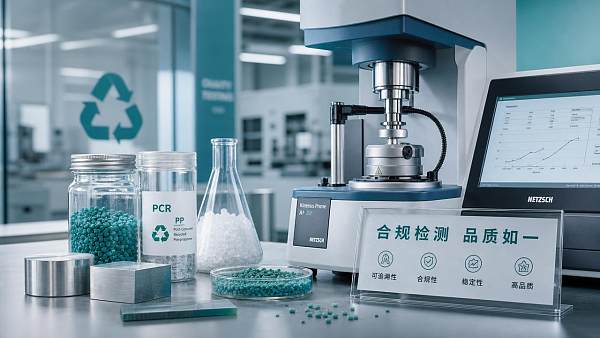
Material characterization identifies composition, impurities, morphology, moisture, thermal properties, and processing behavior.
For polymers, tools may include FTIR, DSC, TGA, melt flow testing, and mechanical property analysis.
For metals, spectroscopy, hardness testing, microstructure evaluation, and tensile testing are commonly used.
Contamination and Safety Screening
Contamination screening is essential because recycled materials may contain unknown residues or legacy substances.
Testing may cover heavy metals, volatile organic compounds, halogens, plasticizers, residual solvents, or restricted additives.
Production Trial Validation
Laboratory results are necessary but insufficient. Production trials confirm whether recycled materials behave reliably at operational scale.
Trial data should examine yield, defect rates, machine settings, energy use, cycle time, and finished product performance.
Supplier Control and Traceability Requirements
Quality begins upstream. Recycled materials are only as reliable as the recovery, sorting, and reprocessing systems behind them.
Supplier audits should verify source control, segregation, cleaning, processing parameters, laboratory capability, and change notification practices.
Traceability records should link batches to origin categories, processing lots, test results, shipment documents, and corrective actions.
Recommended Supplier Evidence
- Certificate of analysis for each batch or defined lot.
- Recycled content declaration with recognized verification support.
- Restricted substance compliance statement.
- Process flow description and critical control points.
- Change management rules for feedstock, additives, or processing.
Without these controls, recycled materials may pass initial testing but fail consistency expectations later.
Practical Framework for Quality Approval
A structured approval framework reduces uncertainty and prevents sustainability goals from bypassing quality discipline.
- Define the application, performance requirements, and regulatory obligations.
- Identify material risks related to contamination, variability, and durability.
- Set acceptance criteria for composition, properties, and documentation.
- Conduct laboratory testing and compare results with approved baselines.
- Run production trials under realistic operating conditions.
- Approve suppliers through audits, contracts, and quality agreements.
- Monitor incoming batches and review trends over time.
This approach allows recycled materials to enter controlled use without sacrificing safety, reliability, or compliance confidence.
Common Pitfalls and Control Measures
Several recurring mistakes undermine qualification programs. Most involve weak assumptions, incomplete data, or poor communication.
Effective control measures turn recycled materials from uncertain inputs into manageable industrial resources.
Strategic Outlook for Industrial Decision-Making
The future of recycled materials will be shaped by better sorting technologies, digital traceability, advanced analytics, and stricter environmental disclosure.
Artificial intelligence, spectroscopy, blockchain records, and automated quality inspection are improving confidence across recovery and manufacturing networks.
At the same time, market access will increasingly depend on verified recycled content, transparent claims, and defensible life cycle data.
Organizations that combine sustainability ambition with technical rigor will use recycled materials more safely and competitively.
Actionable Next Steps for Quality Confidence
Recycled materials can meet strict quality standards when qualification is systematic, documented, and aligned with real application risks.
The next step is to build a material approval map covering specifications, test plans, supplier evidence, and monitoring frequency.
Start with high-volume or lower-risk applications, then expand into demanding uses as data confidence improves.
Use independent testing, periodic audits, and transparent reporting to protect product quality and sustainability credibility.
For deeper industrial intelligence, GIIH tracks global standards, supply chain signals, and sustainability technologies shaping the future of recycled materials.
Visioning the Industry Trends, Linking the Global Future.
Recommended News
 Sep 08, 2026When do recycling solutions reduce waste disposal costs for businesses?Recycling solutions can lower business waste costs when diversion, efficient collections, and compliance savings exceed implementation expenses. Discover how to build a stronger ROI case.
 Jul 13, 2026How to Compare a Recycling Solutions Manufacturer for Waste Stream Fit and Operating CostRecycling solutions manufacturer comparison starts with waste stream fit and operating cost. Learn how to evaluate energy, maintenance, uptime, and service for smarter recycling investments.
 Jul 12, 2026What Are Garbagesortingplants Used for in Modern Waste Management Systems?garbagesortingplants help recover valuable materials, cut landfill use, and improve recycling efficiency. Discover how they support smarter, cleaner modern waste management.
 Jul 05, 2026How AI Waste Recycling Systems Work in MRFs: Sorting Accuracy, Sensors, and ROIAI waste recycling systems in MRFs use sensors, machine vision, and automation to boost sorting accuracy, cut contamination, and improve ROI. See how they work.
 Jul 03, 2026Waste Management Systems in Southeast Asia: Key Market Drivers and Buyer PrioritiesWaste management systems Southeast Asia are being reshaped by regulation, ESG pressure, and resource recovery demand. Explore key market drivers and buyer priorities to identify smarter, scalable opportunities.
 Jul 01, 2026How to Evaluate Waste Recycling Systems in North America for Multi-Site OperationsWaste recycling systems North America for multi-site operations: learn how to compare vendors, control lifecycle costs, strengthen compliance, and scale smarter recycling decisions.
 Jun 28, 2026Outdoor Garden Supplies for Commercial Landscaping: What to Buy for Durability and Low UpkeepOutdoor garden supplies for commercial landscaping: discover what to buy for durability, low upkeep, smarter sourcing, and long-term value across demanding commercial sites.
 Jun 27, 2026What Does a Waste Treatment Plant Do? Key Processes, Equipment, and Output StandardsWaste treatment plant guide: learn key processes, core equipment, output standards, and how modern facilities recover value, reduce risk, and meet strict compliance requirements.
 Jun 24, 2026Biomass Energy Project Evaluation: Feedstock Costs, ROI, and Operational Risks ExplainedBiomass energy project evaluation starts with feedstock costs, ROI sensitivity, and operational risk. Learn how to spot weak assumptions, compare options, and make smarter investment decisions.
 Jun 20, 2026Eco-Friendly Innovations in Manufacturing: Which Solutions Are Practical to Adopt First?Eco-friendly innovations in manufacturing: discover the most practical solutions to cut waste, lower energy costs, strengthen compliance, and improve resilience without disrupting production.
 Jun 17, 2026Waste Management Compliance: Key Standards, Tracking Methods, and Audit RisksWaste management compliance explained: learn key standards, tracking methods, and top audit risks to strengthen control, avoid costly gaps, and improve operational resilience.
 Jun 12, 2026Eco Tech in Waste Management: Which Solutions Improve Sorting and Energy Efficiency?Eco Tech in waste management: discover which solutions improve sorting accuracy and energy efficiency across mixed, organic, and industrial waste streams for smarter, higher-value recovery.
 Jun 07, 2026Sustainable Waste Disposal Methods: How to Choose the Right Option for Business OperationsSustainable waste disposal starts with the right fit. Learn how businesses can compare methods, cut risk, stay compliant, and choose cost-effective options that support ESG goals.
 May 31, 2026Is Sustainable Board ready for high-volume packaging?Sustainable Board can scale high-volume packaging when performance, compliance, supply, and recovery are validated by real scenarios. Learn how to reduce risk and improve ROI.
 May 30, 2026Can recycled materials meet strict quality standards?Recycled materials can meet strict quality standards with traceability, testing, and supplier control. Learn how to reduce risk, prove compliance, and build sustainable value.
![]() May 23, 2026How to choose garden supplies for commercial landscapingOutdoor garden supplies for commercial landscaping: learn how to compare durability, supplier reliability, lifecycle cost, and compliance to make smarter, lower-risk purchasing decisions.
May 23, 2026How to choose garden supplies for commercial landscapingOutdoor garden supplies for commercial landscaping: learn how to compare durability, supplier reliability, lifecycle cost, and compliance to make smarter, lower-risk purchasing decisions. Apr 30, 2026Recycling solutions that struggle with inconsistent waste streamsDiscover recycling solutions for inconsistent waste streams with sustainable waste disposal, environmental innovation, Eco Tech, and green energy strategies that improve recovery and ROI.
 Apr 29, 2026Eco Tech monitoring tools that catch waste leaks earlierEco Tech monitoring tools detect waste leaks earlier, improving sustainable waste disposal, recycling solutions, and environmental innovation with eco-friendly solutions that cut risk and cost.
 Apr 25, 2026Eco Tech tools helping waste audits become more accurateEco Tech improves sustainable waste disposal and recycling solutions with environmental innovation and sustainable technology, helping businesses cut costs, boost compliance, and scale eco-friendly solutions.
 Apr 22, 2026Recycling solutions facing stricter material traceability rulesRecycling solutions for stricter traceability: discover sustainable waste disposal, Eco Tech, and sustainable technology that reduce compliance risk and unlock greener growth.
 Apr 22, 2026Are closed-loop recycling solutions worth the extra setup?Sustainable waste disposal and recycling solutions: find out when closed-loop systems pay off through environmental innovation, eco-friendly solutions, and stronger supply value.
 Apr 22, 2026What makes recycling solutions scalable across multiple sitesDiscover how recycling solutions scale across multiple sites through sustainable waste disposal, environmental innovation, Eco Tech data visibility, and eco-friendly solutions that also support replacement parts and vehicle upgrades.
 Apr 22, 2026Recycling solutions for materials that are hard to sortExplore recycling solutions for hard-to-sort materials, from sustainable waste disposal and environmental innovation to eco-friendly solutions, green energy, and sustainable technology trends.
 Apr 22, 2026How to compare recycling solutions beyond recovery ratesCompare recycling solutions beyond recovery rates with a practical guide to sustainable waste disposal, environmental innovation, eco-friendly solutions, and sustainable technology for smarter, lower-risk decisions.