


Search News
Global Industrial Intelligence Hub (GIIH)Industry Portal
Global Industrial Intelligence Hub (GIIH)Status
Standard Access
Upgrade to PremiumNewsEco Tech tools helping waste audits become more accurate
Time
Click Count
As Eco Tech reshapes waste auditing, businesses are gaining sharper visibility into sustainable waste disposal, recycling solutions, and broader environmental innovation. For procurement teams, researchers, and commercial evaluators, these eco-friendly solutions and sustainable technology tools turn raw waste data into actionable insight—supporting compliance, cost control, and smarter green energy planning across evolving industrial and distribution networks.
In industrial and commercial environments, waste audits are no longer simple bin checks or end-of-month disposal summaries. They have become data-intensive exercises tied to regulatory reporting, supplier qualification, ESG planning, and operational efficiency. As distribution networks expand across regions and product categories diversify, the margin for error in material classification, contamination tracking, and recovery-rate estimation becomes smaller.
For B2B decision-makers, the value of more accurate waste audits extends beyond environmental compliance. Better data can reduce hauling frequency by 10%–25%, identify recoverable materials earlier, support vendor negotiations, and improve forecasting for recycling and reverse logistics. This matters to procurement professionals comparing service providers, researchers mapping industrial waste streams, and distributors evaluating where sustainable technology creates measurable business advantage.
Why waste audit accuracy now matters more in industrial decision-making
Waste audits have traditionally relied on manual sampling, spreadsheet logging, and visual estimation. While these methods still have a role, they often produce error ranges of 8%–20% when waste streams are mixed, seasonal, or handled across multiple facilities. In sectors with packaging waste, damaged inventory, organics, plastics, and e-commerce returns moving together, even small classification errors can distort disposal budgets and sustainability reporting.
For procurement and commercial evaluation teams, inaccurate audits create three direct risks. First, disposal contracts may be priced against the wrong material profile. Second, recycling potential may be underestimated, leading to unnecessary landfill spending. Third, site-level data may fail to align with corporate ESG targets or local reporting requirements. In cross-border or multi-site operations, these problems multiply quickly over 4 quarters of reporting.
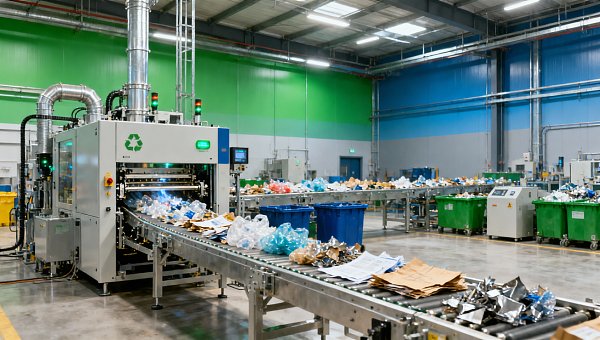
Eco Tech tools improve this picture by adding sensor data, digital imaging, AI-assisted sorting analysis, route tracking, and cloud-based dashboards. Instead of relying on a single inspection day, businesses can assess waste generation over 7-day, 30-day, or 90-day periods. That shift turns waste auditing into a continuous intelligence process rather than a one-time compliance task.
This is especially relevant to the industrial intelligence approach promoted by GIIH, where fragmented operational signals are converted into strategic insight. Waste audit accuracy becomes a useful lens for supply chain resilience, environmental technology adoption, and regional market readiness. Accurate waste data can reveal packaging redesign opportunities, vendor performance issues, and hidden cost centers in warehousing, manufacturing, and distribution.
The table below outlines how more precise waste auditing changes business outcomes across common evaluation dimensions.
The key takeaway is that accurate waste auditing is no longer an isolated sustainability task. It influences supplier management, logistics planning, asset utilization, and site-level performance benchmarks. For organizations comparing technology investments, audit precision should be treated as an operational metric, not just a reporting metric.
Where inaccurate audits usually originate
Most audit errors stem from four recurring issues: mixed waste streams, inconsistent staff training, limited sample windows, and weak data integration. A single 1-day sort exercise rarely captures fluctuations caused by promotions, production shifts, or return peaks. That is why many industrial buyers now prefer tools that can track activity over at least 2 to 12 weeks.
Which Eco Tech tools are improving waste audit performance
The most effective Eco Tech stack combines hardware, software, and workflow control. No single tool solves every audit problem. Instead, high-performing systems usually blend smart weighing, optical recognition, IoT-connected bins, route and pickup telemetry, and analytics platforms that standardize waste categories across facilities. This layered approach is particularly useful for companies operating warehouses, retail distribution channels, light manufacturing plants, or mixed-use industrial parks.
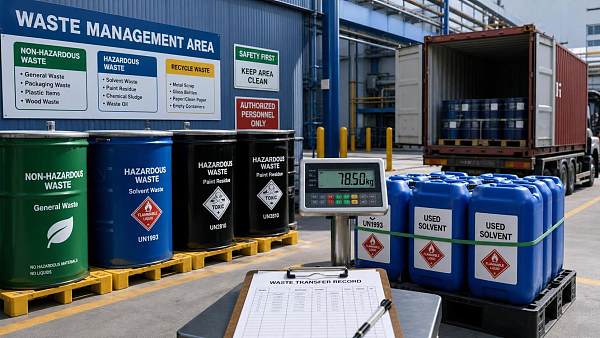
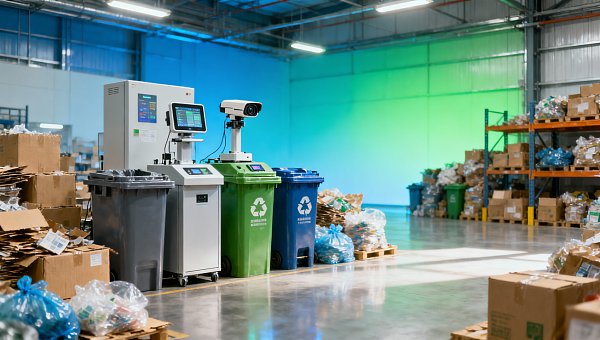
Smart scales and load sensors are often the entry point. They provide repeatable weight measurements and reduce dependence on visual estimates. In practical terms, a site handling 2–5 tons of recyclable packaging per week gains clearer data on cardboard, film, pallets, and contaminated fractions. When paired with timestamped records, these systems improve weekly comparison and contractor verification.
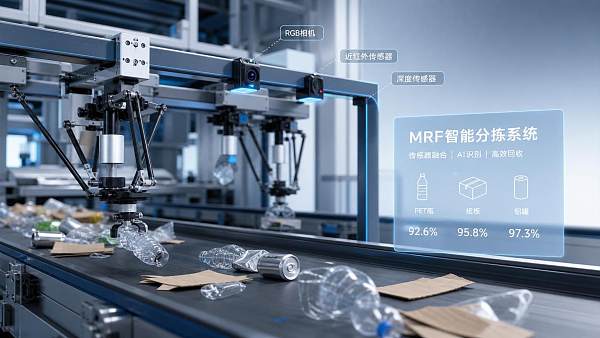
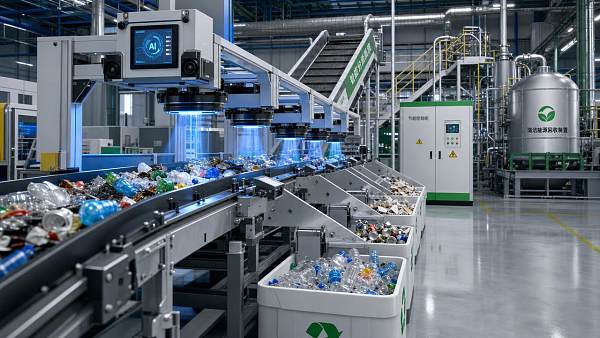
Computer vision is another major upgrade. Cameras positioned at sorting lines, dockside waste stations, or compactor inlets can identify material types and contamination trends. While accuracy varies by deployment and lighting conditions, image-assisted classification typically helps teams distinguish recurring waste categories faster than manual spot checks alone. This is valuable for facilities where the difference between recyclable and non-recyclable material can affect disposal cost by a noticeable margin.
IoT bin monitoring adds another layer. Fill-level sensors, temperature alerts, motion data, and collection frequency records reveal whether waste generation is stable, rising, or linked to a specific workflow. For organics or chemical-adjacent waste, condition monitoring can also support safer handling. Many industrial users review this data in intervals such as every 15 minutes, hourly, or daily, depending on the waste type.
Cloud dashboards are what make these tools commercially useful. They allow procurement and operations teams to compare sites using common metrics, such as diversion rate, contamination rate, collection cost per ton, or audit completion cycle time. For companies with 3, 10, or 50 locations, standardized reporting is often the difference between isolated green initiatives and scalable waste intelligence.
Core tool categories and their best-fit use cases
The table below compares common waste audit technologies through a B2B selection lens.
A balanced selection rarely starts with the most advanced option. In many cases, the better choice is the system that can deliver stable data over 6–12 months, integrate with existing reporting routines, and support repeatable audit methodology across more than one site.
Practical features buyers should verify
- Measurement consistency under real operating conditions, including dust, moisture, forklift movement, and variable lighting.
- Data retention periods of at least 12 months if quarterly comparison and annual compliance reviews are required.
- User access structure for 3 common roles: site operator, procurement reviewer, and executive stakeholder.
- Export compatibility with CSV, ERP connectors, or sustainability reporting platforms to avoid manual re-entry.
How procurement teams should evaluate waste audit technology vendors
Procurement decisions around Eco Tech tools should not focus only on hardware price. Total value depends on data quality, maintenance demands, deployment complexity, and service responsiveness. A lower-cost device that requires frequent recalibration or manual data cleaning may cost more over 12–24 months than a higher-priced but more stable system. This is especially true in industrial settings where interrupted measurement can undermine audit continuity.
A useful vendor review framework usually includes five areas: measurement reliability, integration capability, implementation support, reporting flexibility, and total cost of ownership. Buyers should ask how often sensors need recalibration, how exceptions are flagged, and how the system handles mixed-material loads. For multi-site deployments, they should also confirm whether taxonomy standards remain consistent across regions and service partners.
Commercial evaluators should pay attention to the deployment path. Some systems can be piloted in 2–4 weeks at a single site, while broader rollouts may require 8–16 weeks when involving routing changes, staff onboarding, and dashboard customization. If a vendor cannot clearly define installation steps, acceptance criteria, and data validation checkpoints, the audit program may struggle to scale.
Distributors and channel partners have another concern: replicability. A good waste audit tool should be configurable without becoming highly customized for every customer. Solutions with modular installation, standard sensor packages, and support documentation are generally easier to distribute and service across varied commercial environments.
A practical procurement scorecard
The following decision table can help buyers compare vendors in a structured way before issuing a request for proposal or moving into pilot testing.
This scorecard helps teams avoid a common mistake: selecting a tool that looks innovative in demonstration mode but performs poorly during routine use. Procurement success depends on repeatable measurement, practical serviceability, and the vendor’s ability to support operational decision-making after installation.
Questions worth asking before approval
- Can the vendor show how audit data is validated over a full 30-day operating cycle?
- What is the expected maintenance frequency: weekly inspection, monthly calibration, or quarterly service?
- How does the platform handle contamination events, missed pickups, or offline sensor periods?
- Can the system distinguish between site-generated waste and returned-product waste in logistics environments?
Implementation steps, common risks, and operational best practices
Even strong technology can underperform if implementation is rushed. Waste audit improvement usually works best in 3 phases: baseline assessment, pilot deployment, and scaled rollout. During baseline assessment, teams define waste categories, audit boundaries, and reporting objectives. In pilot deployment, one or two locations test the system over 4–8 weeks. Only after data consistency is confirmed should a broader rollout begin.
One recurring risk is poor category design. If material labels are too broad, decision-makers lose visibility into recyclable value. If they are too narrow, staff struggle to classify items correctly. A practical framework often starts with 5–8 material groups, such as cardboard, flexible plastics, rigid plastics, organics, metals, mixed residuals, pallets, and hazardous-adjacent waste where relevant. The structure can expand later if the data quality remains stable.
Another risk is disconnect between operations and reporting teams. Site staff may collect waste data in one format while corporate reviewers need another. To avoid this, reporting templates should be set before pilot launch, with 3 common outputs: weekly operational dashboard, monthly cost summary, and quarterly compliance or ESG review. This ensures that the same data supports both day-to-day action and strategic evaluation.
Training also matters more than many buyers expect. A 60-minute onboarding session is rarely enough for sites managing multiple waste streams and shift teams. Better results usually come from role-based training: operators learn classification and device handling, supervisors review exceptions, and procurement or compliance staff interpret dashboard trends. Refresher sessions every 30–90 days can reduce drift in data handling.
For distributors and agents, service planning should include spare component management, firmware update procedures, and escalation routes for field issues. A system with clear maintenance intervals and remote diagnostics is easier to support in geographically dispersed networks than one that depends heavily on specialized site visits.
Recommended rollout sequence
- Week 1–2: map waste streams, collection points, and existing disposal contracts.
- Week 3–4: install pilot tools, test connectivity, and align category definitions.
- Week 5–8: validate readings against manual checks and review contamination alerts.
- Month 3 onward: optimize pickup schedules, revise vendor terms, and standardize reports.
Common implementation mistakes
The most common mistakes are overloading the pilot with too many variables, ignoring calibration records, and failing to link audit outcomes to financial decisions. If cost per ton, hauling frequency, and recovery potential are not part of the review process, even accurate waste audit data may remain underused.
FAQ: selecting and scaling Eco Tech solutions for waste audits
How do I know which waste audit tools fit my facility?
Start with waste profile, site layout, and reporting goals. A warehouse generating mostly cardboard and stretch film may need smart scales and dashboard reporting. A mixed industrial site with contamination concerns may benefit from computer vision and sensor-based monitoring. If the facility handles more than 3 distinct waste streams or runs multiple shifts, digital tools tend to deliver more consistent audit results than manual-only approaches.
What implementation timeline is realistic?
A single-site pilot often takes 2–4 weeks to install and another 4–8 weeks to validate, depending on network access, equipment placement, and staff readiness. Multi-site rollouts can extend to 3–4 months if reporting rules, supplier interfaces, and training packages need to be standardized across regions.
Which metrics should buyers track first?
Four starting metrics are usually enough: waste volume by category, contamination rate, collection frequency, and cost per pickup or ton. Once those are stable, teams can add diversion rate, seasonal variation, and recovery value by material stream. Keeping the first dashboard focused improves adoption and helps stakeholders spot improvement opportunities faster.
Are these tools useful for distributors and channel partners?
Yes, especially when customers operate repeatable site formats such as logistics depots, retail backrooms, service branches, or light industrial units. Channel partners can add value by packaging deployment support, training, maintenance coordination, and reporting setup. Solutions that are modular and easy to replicate generally perform better in distribution-led market expansion.
Eco Tech is making waste audits more accurate by combining measurement, visibility, and operational intelligence in ways that older manual methods cannot match. For researchers, procurement teams, commercial evaluators, and distribution partners, the biggest advantage is not only cleaner data, but more usable insight for compliance, cost control, vendor selection, and sustainability planning.
At the market level, this shift aligns with the broader industrial intelligence mission championed by GIIH: turning fragmented environmental and operational signals into structured decision support. Organizations that treat waste auditing as a strategic data function are better positioned to improve recovery rates, reduce avoidable disposal costs, and evaluate environmental technology investments with greater confidence.
If you are assessing waste audit technology, comparing eco-friendly solutions, or planning a scalable sustainability data strategy across industrial or distribution networks, now is the right time to move from rough estimates to measurable performance. Contact us to explore tailored insights, request a customized evaluation framework, or learn more solutions for smarter waste intelligence deployment.
Recommended News
 Sep 08, 2026When do recycling solutions reduce waste disposal costs for businesses?Recycling solutions can lower business waste costs when diversion, efficient collections, and compliance savings exceed implementation expenses. Discover how to build a stronger ROI case.
 Jul 13, 2026How to Compare a Recycling Solutions Manufacturer for Waste Stream Fit and Operating CostRecycling solutions manufacturer comparison starts with waste stream fit and operating cost. Learn how to evaluate energy, maintenance, uptime, and service for smarter recycling investments.
 Jul 12, 2026What Are Garbagesortingplants Used for in Modern Waste Management Systems?garbagesortingplants help recover valuable materials, cut landfill use, and improve recycling efficiency. Discover how they support smarter, cleaner modern waste management.
 Jul 05, 2026How AI Waste Recycling Systems Work in MRFs: Sorting Accuracy, Sensors, and ROIAI waste recycling systems in MRFs use sensors, machine vision, and automation to boost sorting accuracy, cut contamination, and improve ROI. See how they work.
 Jul 03, 2026Waste Management Systems in Southeast Asia: Key Market Drivers and Buyer PrioritiesWaste management systems Southeast Asia are being reshaped by regulation, ESG pressure, and resource recovery demand. Explore key market drivers and buyer priorities to identify smarter, scalable opportunities.
 Jul 01, 2026How to Evaluate Waste Recycling Systems in North America for Multi-Site OperationsWaste recycling systems North America for multi-site operations: learn how to compare vendors, control lifecycle costs, strengthen compliance, and scale smarter recycling decisions.
 Jun 28, 2026Outdoor Garden Supplies for Commercial Landscaping: What to Buy for Durability and Low UpkeepOutdoor garden supplies for commercial landscaping: discover what to buy for durability, low upkeep, smarter sourcing, and long-term value across demanding commercial sites.
 Jun 27, 2026What Does a Waste Treatment Plant Do? Key Processes, Equipment, and Output StandardsWaste treatment plant guide: learn key processes, core equipment, output standards, and how modern facilities recover value, reduce risk, and meet strict compliance requirements.
 Jun 24, 2026Biomass Energy Project Evaluation: Feedstock Costs, ROI, and Operational Risks ExplainedBiomass energy project evaluation starts with feedstock costs, ROI sensitivity, and operational risk. Learn how to spot weak assumptions, compare options, and make smarter investment decisions.
 Jun 20, 2026Eco-Friendly Innovations in Manufacturing: Which Solutions Are Practical to Adopt First?Eco-friendly innovations in manufacturing: discover the most practical solutions to cut waste, lower energy costs, strengthen compliance, and improve resilience without disrupting production.
 Jun 17, 2026Waste Management Compliance: Key Standards, Tracking Methods, and Audit RisksWaste management compliance explained: learn key standards, tracking methods, and top audit risks to strengthen control, avoid costly gaps, and improve operational resilience.
 Jun 12, 2026Eco Tech in Waste Management: Which Solutions Improve Sorting and Energy Efficiency?Eco Tech in waste management: discover which solutions improve sorting accuracy and energy efficiency across mixed, organic, and industrial waste streams for smarter, higher-value recovery.
 Jun 07, 2026Sustainable Waste Disposal Methods: How to Choose the Right Option for Business OperationsSustainable waste disposal starts with the right fit. Learn how businesses can compare methods, cut risk, stay compliant, and choose cost-effective options that support ESG goals.
 May 31, 2026Is Sustainable Board ready for high-volume packaging?Sustainable Board can scale high-volume packaging when performance, compliance, supply, and recovery are validated by real scenarios. Learn how to reduce risk and improve ROI.
 May 30, 2026Can recycled materials meet strict quality standards?Recycled materials can meet strict quality standards with traceability, testing, and supplier control. Learn how to reduce risk, prove compliance, and build sustainable value.
![]() May 23, 2026How to choose garden supplies for commercial landscapingOutdoor garden supplies for commercial landscaping: learn how to compare durability, supplier reliability, lifecycle cost, and compliance to make smarter, lower-risk purchasing decisions.
May 23, 2026How to choose garden supplies for commercial landscapingOutdoor garden supplies for commercial landscaping: learn how to compare durability, supplier reliability, lifecycle cost, and compliance to make smarter, lower-risk purchasing decisions. Apr 30, 2026Recycling solutions that struggle with inconsistent waste streamsDiscover recycling solutions for inconsistent waste streams with sustainable waste disposal, environmental innovation, Eco Tech, and green energy strategies that improve recovery and ROI.
 Apr 29, 2026Eco Tech monitoring tools that catch waste leaks earlierEco Tech monitoring tools detect waste leaks earlier, improving sustainable waste disposal, recycling solutions, and environmental innovation with eco-friendly solutions that cut risk and cost.
 Apr 25, 2026Eco Tech tools helping waste audits become more accurateEco Tech improves sustainable waste disposal and recycling solutions with environmental innovation and sustainable technology, helping businesses cut costs, boost compliance, and scale eco-friendly solutions.
 Apr 22, 2026Recycling solutions facing stricter material traceability rulesRecycling solutions for stricter traceability: discover sustainable waste disposal, Eco Tech, and sustainable technology that reduce compliance risk and unlock greener growth.
 Apr 22, 2026Are closed-loop recycling solutions worth the extra setup?Sustainable waste disposal and recycling solutions: find out when closed-loop systems pay off through environmental innovation, eco-friendly solutions, and stronger supply value.
 Apr 22, 2026What makes recycling solutions scalable across multiple sitesDiscover how recycling solutions scale across multiple sites through sustainable waste disposal, environmental innovation, Eco Tech data visibility, and eco-friendly solutions that also support replacement parts and vehicle upgrades.
 Apr 22, 2026Recycling solutions for materials that are hard to sortExplore recycling solutions for hard-to-sort materials, from sustainable waste disposal and environmental innovation to eco-friendly solutions, green energy, and sustainable technology trends.
 Apr 22, 2026How to compare recycling solutions beyond recovery ratesCompare recycling solutions beyond recovery rates with a practical guide to sustainable waste disposal, environmental innovation, eco-friendly solutions, and sustainable technology for smarter, lower-risk decisions.