
When Do Recycling Solutions Reduce Waste Disposal Costs for Businesses?
For financial decision-makers, recycling solutions reduce waste disposal costs when recoverable materials, collection efficiency, and compliance savings outweigh implementation expenses.
The strongest business case often emerges where landfill fees are rising, waste volumes are predictable, and metals, plastics, paper, or organics retain market value.
Understanding these cost drivers helps businesses turn waste management from a necessary expense into a measurable operational advantage with defensible financial results.
The Financial Test: When Does Recycling Actually Save Money?
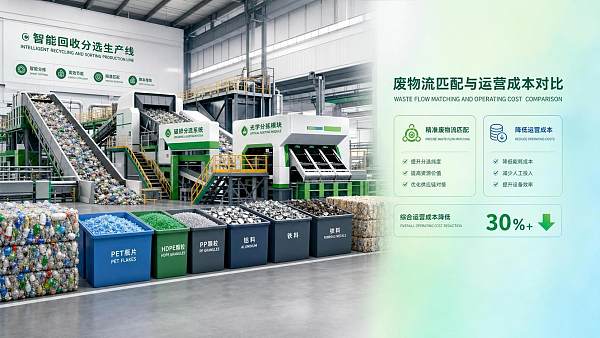
Recycling solutions reduce costs when the total expense of sorting, storing, collecting, and processing materials is lower than the avoided disposal expense.
That comparison must include every relevant cost, not only the recycling vendor’s quoted price or the revenue received from selling materials.
Finance teams should compare the current baseline against a future-state cost model covering collection, labor, equipment, contamination, administration, and reporting.
A program is financially attractive when avoided landfill or incineration charges exceed new operational costs, while recovered materials create additional value.
For some businesses, the main saving comes from reducing waste-haulage frequency rather than receiving significant commodity revenue from recyclables.
For others, especially manufacturers, scrap metal, cardboard, plastics, pallets, and reusable packaging can materially improve the business case.
The central question is therefore not whether recycling is environmentally beneficial, but whether a specific material stream has positive economics locally.
Costs and returns vary by facility location, waste composition, contract terms, contamination levels, market conditions, and the reliability of internal operations.
Rising Disposal Fees Create the Clearest Savings Opportunity
Recycling becomes more compelling when landfill tax, tipping fees, incineration charges, or waste transport costs rise faster than recycling service costs.
Businesses paying by weight, volume, collection frequency, or container size can often identify direct savings from diverting dense materials from general waste.
Heavy materials create an especially strong opportunity because disposal charges can increase quickly even when they occupy limited bin capacity.
Metal offcuts, glass, construction debris, food waste, wet paper, and compacted packaging should be examined separately rather than treated as mixed waste.
Where general-waste containers are frequently overfilled, recycling solutions may also prevent emergency collections, overflow charges, and operational disruption.
Regional regulations can accelerate this shift by restricting landfill access, requiring source separation, or imposing penalties for improperly managed commercial waste.
Financial approvers should request invoices for at least twelve months, since seasonal production patterns may distort a short-term waste-cost comparison.
A clear baseline should identify total tonnes, collections, container rentals, surcharges, contamination penalties, transport fees, and any internal handling expense.
Which Waste Streams Usually Deliver the Best Return?
High-volume, clean, predictable materials usually provide the most reliable savings because collectors and processors can handle them efficiently and consistently.
Corrugated cardboard is often a practical starting point for retailers, warehouses, distributors, and manufacturers with regular inbound packaging flows.
Cardboard creates value when it remains dry, flattened, and separated from food, film, polystyrene, or mixed refuse that lowers recycling quality.
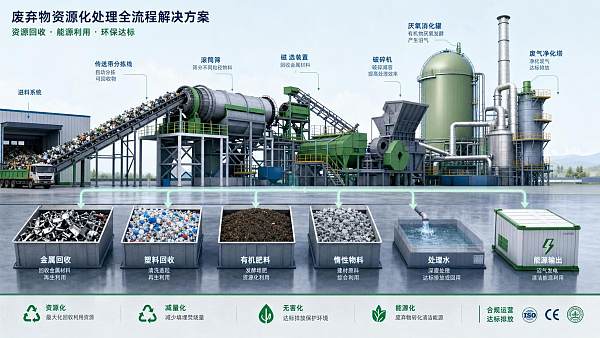
Metals frequently offer stronger recovery economics because scrap markets can support rebates, especially for aluminum, copper, brass, steel, and clean production offcuts.
Plastic recycling economics vary more widely because resin type, color, contamination, baling requirements, and local processing capacity influence the final value.
Organic waste may reduce disposal costs for food service, hospitality, agriculture, and manufacturing sites when organics collection replaces expensive general waste capacity.
Wood pallets, crates, drums, electronics, batteries, textiles, and reusable transit packaging may provide savings through reuse, repair, take-back, or specialist recovery.
Mixed waste is rarely the strongest first target because sorting complexity and contamination can erode value before materials reach a recycling facility.
Collection Efficiency Often Matters More Than Material Revenue
Many recycling programs succeed financially because they redesign collection systems, reducing unnecessary pickups and making better use of available container capacity.
A business that separates cardboard may shrink its general-waste dumpster requirements, allowing fewer collections or smaller containers under its waste contract.
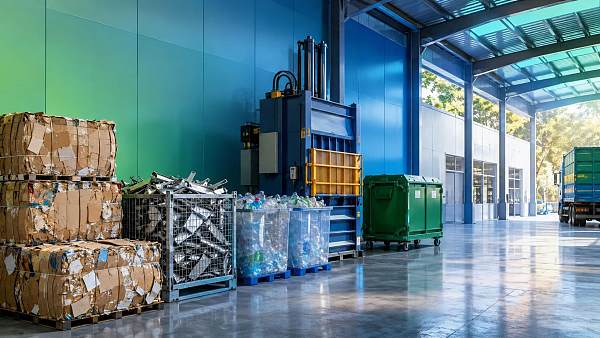
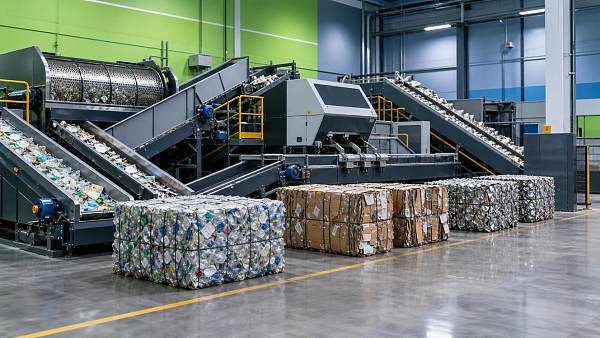
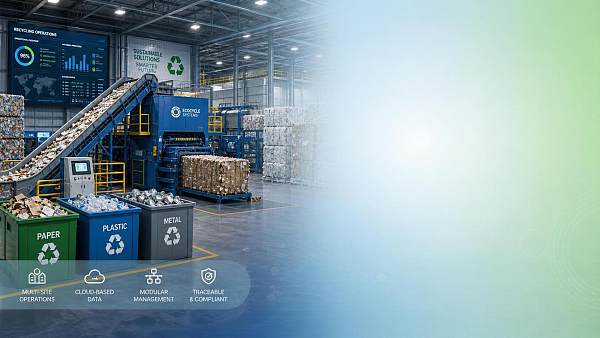
Compactors, balers, cages, and dedicated bins can improve density, but their cost must be matched to site volume and operating discipline.
Equipment is justified when labor savings, reduced collections, lower storage needs, and stronger material quality produce a reasonable payback period.
Finance leaders should distinguish between capital expenditure and service-based alternatives, including leased equipment, vendor-owned balers, or shared collection arrangements.
Collection routes matter because remote sites may face higher transport charges that offset commodity value, particularly for light or low-density materials.
Conversely, facilities near processing infrastructure may secure better terms because haulers can consolidate material loads and reduce empty vehicle movements.
A recycling solution should therefore be assessed at site level before being scaled across a portfolio with different waste volumes and logistics conditions.
How to Build a Credible Return-on-Investment Model
A useful financial model begins with a current-state baseline, then estimates the future waste profile after diversion, improved sorting, and collection redesign.
Start with annual disposal spend, including hauling, landfill charges, container rental, ad hoc collections, internal labor, and compliance-related administrative costs.
Then estimate avoided costs from reduced general waste tonnage, fewer pickups, lower container capacity, reduced overage charges, and avoided disposal taxes.
Add expected recycling costs, such as segregated collections, equipment leases, staff training, signage, storage changes, audits, and contamination management.
Material revenue should be modeled conservatively because commodity prices can fluctuate substantially and may not be guaranteed under every supplier agreement.
Use several scenarios instead of one forecast: conservative, expected, and adverse assumptions provide a clearer view of downside risk and approval thresholds.
Payback period is useful for equipment decisions, while net present value can better reflect multi-year contracts, capital costs, price escalation, and savings timing.
For recurring services, compare total cost per tonne and total cost per unit of output, such as per shipment, product, patient, guest, or order.
Compliance and Risk Savings Should Be Included Carefully
Recycling solutions can generate additional financial value when they reduce exposure to disposal restrictions, reporting requirements, contamination fines, or hazardous-waste misclassification.
These savings should be quantified carefully rather than assumed, using actual incidents, regulatory obligations, audit findings, and likely future compliance costs.
Companies operating across jurisdictions may benefit from standardized recycling data, particularly where environmental reporting requirements differ between facilities, customers, or public authorities.
Better traceability can also support supplier assessments, sustainability disclosures, procurement questionnaires, and customer requests for evidence of responsible materials management.
However, financial approvers should avoid assigning speculative value to reputational benefits unless a credible commercial link can be demonstrated.
Potential links include contract eligibility, customer retention, procurement scorecards, lower insurance risk, or reduced exposure to regulatory enforcement actions.
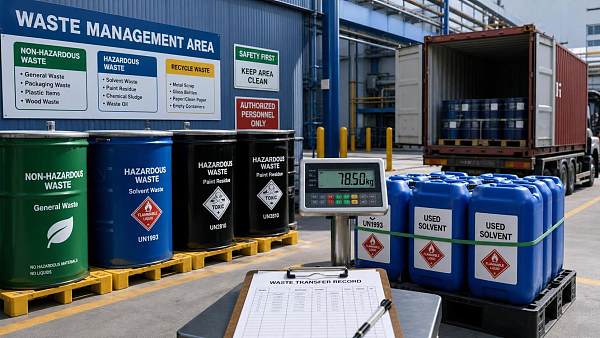
For regulated sectors, specialist waste streams require particular scrutiny because incorrect handling can create liabilities far exceeding ordinary disposal charges.
Medical, electronic, chemical, automotive, and industrial facilities should verify chain-of-custody documentation, treatment standards, permits, and downstream processor credentials.
What Can Undermine the Business Case?
Contamination is one of the most common reasons recycling solutions fail to reduce costs, because mixed materials may be rejected or charged as residual waste.
A program can appear attractive in a spreadsheet but underperform when employees lack convenient bins, clear instructions, ownership, or feedback about sorting quality.
Excessive internal handling can also eliminate savings, particularly where materials must be moved repeatedly, manually sorted, or stored in constrained operational areas.
Commodity-price assumptions create another risk because rebates for paper, plastic, and metal may decline during contract periods or market disruptions.
Contract design deserves careful review, including minimum volumes, collection charges, fuel surcharges, contamination rules, rebate formulas, and termination conditions.
Some vendors offer no material revenue but still deliver lower total costs through dependable collection, reduced general waste capacity, and transparent reporting.
Others offer attractive rebate rates while imposing service fees that make the overall proposal less favorable than a straightforward disposal-cost reduction model.
Decision-makers should compare complete annualized costs rather than selecting a provider solely on a headline recycling rebate or introductory collection price.
A Practical Approval Framework for Financial Decision-Makers
Before approving a recycling initiative, ask whether the business has sufficient material volume, reliable segregation, local processing access, and measurable disposal costs.
Prioritize waste streams that are clean, recurring, expensive to dispose of, easy to isolate, and supported by a credible local recovery market.
Request a pilot where uncertainty is high, especially for multi-site organizations, mixed materials, seasonal operations, or facilities with limited available storage space.
A three-to-six-month pilot can establish actual weights, contamination rates, collection needs, staff time, equipment performance, and realized disposal-cost reductions.
Define success measures before launch, including diversion rate, total waste spend, collection frequency, cost per tonne, rebate income, and contamination incidence.
Assign accountability across finance, facilities, operations, procurement, and sustainability teams, since recycling performance depends on coordinated commercial and operational decisions.
Review results monthly during implementation, then quarterly once the process stabilizes and supplier invoices can be reconciled with operational waste data.
Scale only after the pilot proves repeatable economics, documented compliance, operational feasibility, and a savings profile that meets the organization’s investment criteria.
Conclusion: Treat Recycling as a Cost-Control Decision
Recycling solutions reduce waste disposal costs when they divert valuable or expensive-to-dispose materials while improving collection efficiency and controlling implementation expenses.
The best opportunities are rarely generic. They are tied to a site’s waste composition, disposal contract, labor model, local infrastructure, and regulatory exposure.
For financial decision-makers, the strongest proposal is supported by measured baseline data, conservative assumptions, complete contract analysis, and operationally realistic savings estimates.
When those conditions are present, recycling can move beyond a compliance obligation and become a practical lever for lower operating costs and stronger resource productivity.