


Search News
Global Industrial Intelligence Hub (GIIH)Industry Portal
Global Industrial Intelligence Hub (GIIH)Status
Standard Access
Upgrade to PremiumNewsHow to compare a diagnostic equipment price list fairly
Time
Click Count
Comparing a Medical diagnostic equipment price list fairly takes more than lining up numbers. For procurement teams, the real value lies in matching price with specifications, compliance, service coverage, and long-term operating cost. This guide shows how to evaluate quotes objectively, avoid misleading comparisons, and make smarter purchasing decisions that balance budget, performance, and supplier reliability.
Why a Medical diagnostic equipment price list is often misleading at first glance
A Medical diagnostic equipment price list can look simple, but procurement reality is rarely simple. Two offers may show similar prices while covering very different configurations, software functions, probe types, consumables, warranty periods, or installation responsibilities.
This is especially true in cross-border sourcing, where currency shifts, logistics costs, local registration rules, and after-sales support can change the true purchase value. A lower headline price may lead to a higher total cost within the first year.
For buyers working across hospitals, laboratories, clinics, distributors, or public tenders, fair comparison means standardizing the input variables before judging the output price. Without that discipline, procurement teams risk comparing incomplete offers instead of comparable solutions.
- Base unit price may exclude accessories, calibration tools, carts, monitors, or software licenses.
- Quoted warranty terms may differ in duration, scope, spare parts coverage, or response time.
- Shipping, import duties, and local commissioning may be included by one supplier and excluded by another.
- Regulatory and documentation support may vary depending on destination market requirements.
How procurement teams should normalize quotes before comparing prices
Before reviewing any Medical diagnostic equipment price list, build a normalized comparison sheet. This turns scattered supplier proposals into one decision-ready framework. The goal is not only to compare purchase price, but to compare what the organization will actually receive.
A practical method is to divide each offer into product, compliance, delivery, service, and lifecycle cost. This reflects how experienced procurement units and intelligence teams evaluate industrial purchases under risk and budget pressure.
The table below shows a useful structure for normalizing a Medical diagnostic equipment price list before ranking suppliers.
Once every quote is rebuilt using the same fields, the Medical diagnostic equipment price list becomes far easier to assess fairly. Procurement discussions also become more objective because stakeholders can see where price differences truly come from.
A simple normalization workflow
- Define the intended clinical or laboratory use case first.
- List mandatory technical and regulatory requirements.
- Ask all suppliers to re-quote using the same specification matrix.
- Separate one-time purchase cost from recurring operating cost.
- Score service readiness and delivery risk before final negotiation.
Which technical parameters matter most when reviewing a price list?
Different categories of diagnostic equipment require different evaluation logic, yet several principles remain consistent. Buyers should focus on performance indicators that affect output quality, workflow efficiency, compatibility, and maintenance burden.
A Medical diagnostic equipment price list should never be assessed without checking whether the quoted model meets the intended workload. Equipment for low-volume screening and equipment for continuous hospital use often sit in very different cost bands for good reasons.
Parameters procurement teams should verify
- Throughput or processing speed, especially for laboratory analyzers and high-volume testing environments.
- Accuracy, resolution, sensitivity, or detection consistency, depending on the device category.
- Interface compatibility with hospital information systems, LIS, PACS, or export formats.
- Consumable dependency, including proprietary reagents, probes, cartridges, or calibration kits.
- Power supply, installation environment, and preventive maintenance frequency.
The following table helps buyers connect parameter review with fair price judgment rather than treating all quoted models as equivalent.
A fair Medical diagnostic equipment price list comparison should therefore connect every quoted number to a performance context. Procurement savings are meaningful only when the selected equipment can perform reliably in the target setting.
How to compare total cost instead of unit price alone
Many procurement mistakes happen when buyers focus on acquisition cost but underestimate operational cost. In diagnostic equipment, total cost of ownership often includes installation, validation, consumables, software subscriptions, maintenance visits, spare parts, operator training, and downtime exposure.
This is where a Medical diagnostic equipment price list should be expanded into a lifecycle budget. Even a modest price gap at the beginning can reverse within one to three years, especially when consumables are proprietary or service access is limited in the destination market.
Key cost buckets buyers should calculate
- Initial equipment cost, accessories, software licenses, and documentation package.
- Freight, insurance, customs handling, local taxes, and installation support.
- Annual maintenance, preventive service intervals, and spare part replacement cycles.
- Consumables per test, calibration costs, and wastage risk due to shelf life.
- Productivity impact, including workflow speed and staff time per procedure.
A practical procurement judgment
If Supplier A is 8% cheaper on the quote sheet but requires exclusive consumables, a separate software fee, and overseas maintenance visits, Supplier B may offer the better commercial result. Fair comparison means quantifying the operating model, not assuming the list price tells the full story.
What compliance and certification details should buyers check?
Compliance is one of the most overlooked parts of a Medical diagnostic equipment price list. Procurement teams may discover too late that a lower-cost offer lacks the documentation needed for import registration, hospital acceptance, or local regulatory review.
While exact requirements vary by market and product category, buyers should verify whether the supplier can provide the necessary documentation set for the destination country and the intended use environment.
Common compliance checks
- Product labeling, instruction manuals, and language requirements for the target market.
- Electrical safety and electromagnetic compatibility documentation where applicable.
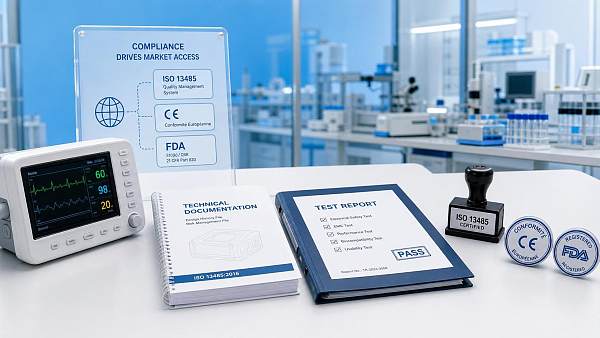
- Quality management documentation commonly requested in medical device trade.
- Importer support documents, declarations, and traceability records.
- Post-sales complaint handling and service records where contractually required.
Teams supported by industrial intelligence platforms such as GIIH gain an advantage here. Cross-border procurement is not only a pricing exercise; it is also a documentation and supply-chain exercise. Market insight, regulatory awareness, and supplier verification help reduce acceptance risk before purchase orders are released.
Common mistakes when comparing suppliers
Procurement teams under time pressure often fall into repeatable traps. These mistakes are understandable, but they distort the meaning of any Medical diagnostic equipment price list and can push organizations toward false savings.
Mistakes to avoid
- Comparing a distributor quote with a factory quote without aligning service scope and responsibilities.
- Treating optional modules as if they were included in every offer.
- Ignoring lead time variability, especially for imported parts or specialized consumables.
- Assuming warranty length alone indicates better support, without checking response time and spare part policy.
- Selecting a system that meets budget limits but fails site, workflow, or training conditions.
Why these mistakes happen
In industrial procurement, information is fragmented. Technical teams focus on function, finance focuses on cost, and operations focuses on delivery. GIIH’s value lies in connecting these silos, helping buyers turn fragmented quote data into a decision framework that reflects market reality, supply-chain risk, and end-use demands.
How different application scenarios change fair price expectations
Not every buyer should expect the same price structure. A Medical diagnostic equipment price list should be interpreted through the intended application scenario. The right quote for a tertiary hospital may not be the right quote for a private clinic, a mobile screening unit, or a regional distributor.
The table below shows how use case changes what “fair value” really means in procurement discussions.
This scenario-based reading of a Medical diagnostic equipment price list helps buyers avoid overbuying, underbuying, or selecting equipment that does not fit the project environment.
FAQ: practical questions buyers ask before finalizing a quote
How many supplier quotes are enough for a fair comparison?
Three is often the practical minimum if the offers are truly comparable. More than that can be useful in strategic sourcing, but only if the specification matrix is standardized. Otherwise, extra quotes create noise rather than clarity.
Should buyers always choose the lowest Medical diagnostic equipment price list?
No. The lowest listed price may exclude critical items such as training, accessories, software, or local technical support. Procurement should judge commercial completeness, compliance readiness, and expected operating cost together.
What is the most common hidden cost in diagnostic equipment purchasing?
Consumables and service dependency are among the most common hidden costs. If a device requires proprietary materials or overseas servicing, the long-term budget impact can exceed the initial purchase difference.
How should procurement teams handle unclear specifications from suppliers?
Ask for a revised quotation using your own comparison template. Require suppliers to confirm included accessories, software versions, warranty scope, lead time, documentation, and installation responsibility in writing before final evaluation.
Why informed buyers use industrial intelligence before issuing purchase decisions
Procurement teams no longer operate in a stable market. Supply chains shift, regulations evolve, and supplier readiness varies by region. A Medical diagnostic equipment price list must therefore be read alongside market intelligence, logistics visibility, and technical interpretation.
This is where GIIH offers a practical advantage. By connecting industrial data, trade insight, and expert analysis across health technology and global supply chains, GIIH helps buyers move from quote collection to decision confidence. The result is better alignment between budget, compliance, delivery planning, and operational fit.
Why choose us for quote evaluation and sourcing support
If your team is reviewing a Medical diagnostic equipment price list and needs a clearer basis for comparison, GIIH can support the decision process with structured market and procurement insight. We focus on turning fragmented supplier information into practical purchasing intelligence.
- Parameter confirmation support for matching quoted models with your intended use scenario.
- Selection guidance to compare entry-level, mid-range, and advanced configuration options fairly.
- Delivery cycle review covering lead time risk, logistics considerations, and supply continuity.
- Compliance discussion for documentation expectations, market entry requirements, and tender readiness.
- Quotation communication support to identify hidden costs, service gaps, and negotiation points.
If you are comparing multiple supplier offers, preparing a tender response, or planning a cross-border sourcing project, contact GIIH to discuss specification alignment, supplier comparison logic, service scope review, and a more reliable path to final procurement.
Recommended News
 Sep 10, 2026Do Health Monitoring Devices Need Local Approval Before Import?Do health monitoring devices need local regulatory approval before import? Explore classifications, market access, labels, software, and compliance steps for safer global launches.
 Sep 07, 2026How Often Should Medical Information Systems Be Updated for Compliance?How often should medical information systems be updated for compliance? Explore risk-based update schedules, security patches, access reviews, testing, and audit-ready documentation.
 Sep 01, 2026Is Digital Health Data Interoperable Across Hospital Platforms?Is digital health data interoperable across different hospital platforms? Explore standards, security, workflows, and practical steps for safer connected care.
 Aug 31, 2026How to verify a diagnostic medical equipment manufacturer's quality systemDiagnostic medical equipment manufacturer quality system verification: uncover essential checks for ISO 13485, traceability, CAPA, risk management, and supplier control.
![]() Aug 14, 2026China temporarily bans the export of helium, putting global medical and semiconductor supply chains under pressureChina’s temporary helium export ban is straining global medical imaging and chip supply chains. See how MRI, semiconductor, and logistics teams can adapt fast.
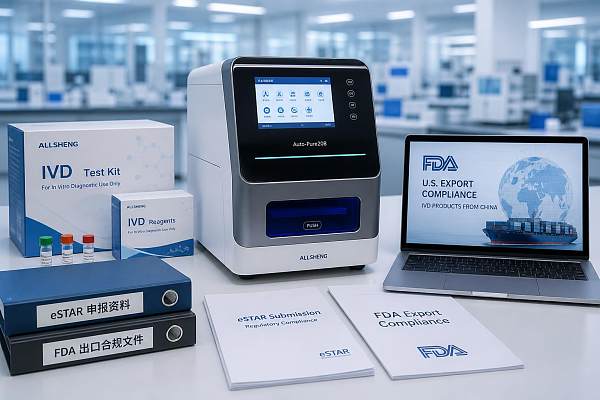
Aug 14, 2026China temporarily bans the export of helium, putting global medical and semiconductor supply chains under pressureChina’s temporary helium export ban is straining global medical imaging and chip supply chains. See how MRI, semiconductor, and logistics teams can adapt fast. Aug 10, 2026FDA Sets eSTAR Filing Rule for China IVD ExportsFDA Sets eSTAR Filing Rule for China IVD Exports: learn how the new FDA eSTAR requirement affects Chinese IVD manufacturers, compliance documents, and U.S. shipment access.
 Aug 09, 2026Patient Monitoring Equipment Research: Which Metrics Matter Most Before You Buy?Patient monitoring equipment research starts with the right metrics. Learn how to compare accuracy, alarms, connectivity, and lifecycle cost before you buy.
 Jul 28, 2026Healthcare Equipment Research in Europe: Key Market Shifts and Buyer SignalsHealthcare equipment research Europe reveals how regulation, procurement, workflow pressure, and service expectations are reshaping buyer decisions across key healthcare markets.
 Jul 11, 2026Compact Medical Technology Solutions for Small Clinics: What to Compare Before BuyingCompact medical technology solutions for small clinics: compare space fit, throughput, connectivity, maintenance, and long-term cost before you buy. Make a smarter, lower-risk equipment decision.
 Jul 10, 2026Medical Technology Solutions Price Guide: What Drives Cost and How to BudgetMedical technology solutions price guide covering key cost drivers, hidden fees, and smart budgeting methods to compare vendors, control total ownership costs, and approve with confidence.
 Jul 09, 2026Medical Supply Chain Risks: How to Prevent Delays in Regulated Device SourcingMedical supply chain risks can cause costly sourcing delays in regulated devices. Learn practical ways to prevent disruption, improve compliance, and keep global procurement moving.
 Jul 08, 2026Medical Device Specification Analysis: Which Performance Parameters Matter Most in Evaluation?Product specification analysis medical devices starts with the parameters that truly affect safety, accuracy, software readiness, and long-term reliability—learn what to prioritize before you evaluate.
 Jul 06, 2026Medical Regulatory for Devices: Which Certifications Matter Before Market Entry?Medical regulatory for devices starts before launch. Learn which certifications—ISO 13485, CE marking, FDA pathways, and risk standards—matter most for faster, safer market entry.
 Jul 03, 2026Category Comparison Under FDA Requirements: How to Evaluate Product Class DifferencesCategory comparison FDA requirements explained: learn how to assess product class differences, avoid costly pathway mistakes, and make faster, smarter regulatory decisions.
 Jul 02, 2026How to Evaluate a Medical Technology Supplier for Quality, Lead Time, and ComplianceMedical technology supplier evaluation made simple: learn how to compare quality systems, lead time reliability, and compliance readiness to reduce risk and choose with confidence.
 Jul 02, 2026How Diagnostic Medical Equipment Supports Better Care Coordination Across Clinical TeamsDiagnostic medical equipment for care coordination helps clinical teams share data faster, reduce delays, and improve outcomes. See how connected diagnostics strengthen workflow efficiency.
 Jun 28, 2026Healthcare Equipment for Patient Monitoring: How to Choose by Care Setting and Data NeedsHealthcare equipment for patient monitoring: learn how to choose the right solution by care setting, data needs, integration, and lifecycle value for safer, smarter deployment.
 Jun 26, 2026Medical Devices Category Introduction: How Products Are Grouped and Why It MattersMedical devices category introduction: learn how products are grouped, why classifications differ by market, and how smarter category insight improves compliance, sourcing, and global market entry.
 Jun 26, 2026Medical Technology Solutions for Healthcare Facilities: What to Evaluate Before BuyingMedical technology solutions for healthcare facilities: learn what to evaluate before buying, from clinical fit and integration to compliance, vendor support, and total cost.
 Jun 25, 2026Surgical Instruments Materials Compared: Stainless Steel, Titanium, and MoreSurgical instruments materials compared: explore stainless steel, titanium, tungsten carbide, and coatings to improve durability, safety, sterilization performance, and smarter sourcing decisions.
 Jun 25, 2026Diagnostic Medical Equipment for Preventive Care: What Clinics Should PrioritizeDiagnostic medical equipment for preventive care: discover what clinics should prioritize to improve early detection, streamline workflows, control costs, and support long-term growth.
 Jun 23, 2026Hospital Furniture Standards: What to Check for Safety, Hygiene, and Ward UseHospital furniture standards explained: learn what to check for safety, hygiene, load capacity, ward fit, and supplier proof before buying for reliable long-term performance.
 Jun 22, 2026How to Choose Blood Pressure Monitors for Home Use: Cuff Size, Accuracy, and MemoryBlood pressure monitors for home use vary in cuff size, accuracy, and memory. Learn how to compare features, avoid common mistakes, and choose a reliable monitor with confidence.
 Jun 20, 2026Wearable Medical Devices: Key Sensors, Data Accuracy, and Regulatory FactorsWearable medical devices explained: explore key sensors, real-world data accuracy, and regulatory factors to compare solutions, reduce risk, and make smarter healthcare decisions.