


Search News
Global Industrial Intelligence Hub (GIIH)Industry Portal
Global Industrial Intelligence Hub (GIIH)Status
Standard Access
Upgrade to PremiumNewsWhy OEM smart home suppliers differ in quality control
Time
Click Count
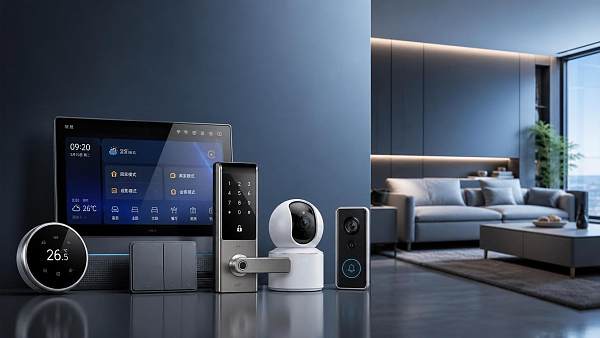
Not all smart home manufacturers manage quality the same way, and those differences can directly affect safety, compliance, and product reliability. For quality control and safety managers, choosing a Smart home devices wholesale OEM supplier means looking beyond price to factory systems, testing standards, traceability, and risk prevention. This article explains why OEM quality control varies and how to identify suppliers that can support stable, scalable, and secure production.
What quality and safety managers are really trying to learn
When buyers search why OEM smart home suppliers differ in quality control, they usually are not asking a theoretical question. They want to know which supplier can reduce failures, recalls, compliance issues, and ongoing operational risk.
For quality control teams and safety managers, the key issue is simple. Two suppliers may offer similar products, pricing, and certifications, but the real factory discipline behind those claims can be very different.
That difference shows up later in unstable incoming quality, inconsistent firmware, failed audits, poor traceability, battery incidents, wireless compliance problems, and weak corrective action when defects appear after shipment.
In smart home categories, these risks are amplified because products combine hardware, software, connectivity, power management, user data, and multiple regional compliance requirements in one consumer-facing device.
So the practical question is not whether a factory has quality control. Almost every OEM says it does. The real question is how mature, repeatable, visible, and preventive that quality system actually is.
Why quality control differs so much between OEM smart home suppliers
The biggest reason is that OEM suppliers do not operate at the same level of system maturity. Some rely on final inspection to catch defects, while others build quality into design, sourcing, assembly, testing, and field feedback loops.
In other words, the difference is not only about inspection effort. It is about whether the factory runs a controlled process or simply reacts when something goes wrong.
Smart home products are especially sensitive to this gap. A connected door sensor, smart plug, gateway, camera, lock, or lighting controller can fail because of electrical design, firmware bugs, poor soldering, weak packaging, or supplier component changes.
Factories with shallow controls often treat these failure sources separately. Stronger OEMs connect them through a full quality management framework, so design validation, supplier qualification, process controls, and post-market improvement all work together.
This is why one Smart home devices wholesale OEM supplier may deliver stable lots for years, while another shows acceptable samples during sourcing but creates costly inconsistency after scale-up.
Factory quality culture matters more than inspection claims
One of the clearest differences between suppliers is culture. In weaker factories, quality is seen as the responsibility of the QC department. In stronger factories, quality is treated as a cross-functional operating requirement.
That sounds abstract, but it has direct implications. If production, purchasing, engineering, and warehouse teams are not aligned, the QC team ends up catching symptoms instead of preventing root causes.
A quality-driven factory usually shows visible discipline. Work instructions are current, line leaders know control points, engineering changes are documented, defect data is reviewed, and operators understand escalation rules.
In a low-maturity environment, quality records may exist, but they are often created for customer review rather than used as active management tools. This is where many sourcing decisions go wrong.
Safety managers should therefore look for evidence that quality is embedded in factory behavior, not only presented in audit binders or certification folders.
Supplier quality starts long before final assembly
Another major reason OEM quality control differs is upstream supplier management. Many smart home defects originate in purchased components such as chips, sensors, relays, PCBs, batteries, housings, connectors, and power modules.
If the OEM has weak incoming controls or loose supplier qualification, variation enters the process before assembly even begins. Final inspection may catch some of it, but not all latent reliability issues.
High-quality OEMs classify critical components, approve vendors formally, verify changes, and maintain incoming inspection criteria tied to risk level. They also monitor supplier performance over time.
Lower-tier factories often switch sources based on availability or price pressure. In volatile supply environments, uncontrolled substitutions can create hidden safety and compliance problems without immediate visual signs.
For smart home devices, even a small change in radio module, battery cell, adapter, insulation material, or plastic grade can affect certification status, thermal behavior, signal stability, or long-term durability.
Testing depth is one of the strongest indicators of OEM quality maturity
Many buyers ask whether a supplier performs testing. The better question is what kind of testing, at what stage, under which standard, and with what response when results fail.
Basic factories may perform only functional checks at the end of assembly. Better OEMs use layered verification, including design validation, pilot-run verification, in-process tests, reliability testing, and shipment release criteria.
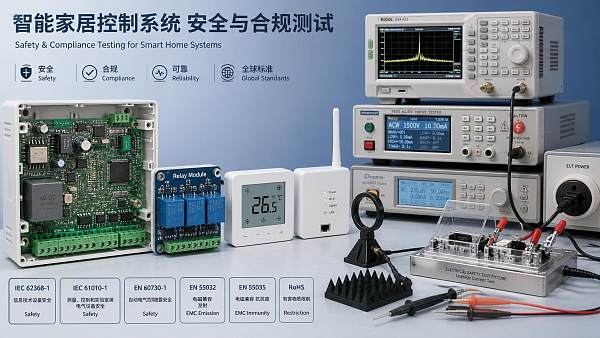
For smart home products, testing should often cover electrical safety, EMC performance, wireless stability, environmental stress, aging, drop resistance, charging behavior, software function, pairing success, and app-device interaction.
Where batteries or power conversion are involved, thermal monitoring and abnormal condition testing become especially important. Safety incidents often emerge from marginal designs that pass routine checks but fail under stress or misuse.
Quality managers should ask not only for test reports, but also for test plans, sample sizes, pass-fail logic, calibration records, and evidence that findings led to design or process improvement.
A Smart home devices wholesale OEM supplier with robust testing discipline is usually more capable of supporting stable volume production and lower field failure rates.
Traceability is a practical risk control, not an administrative extra
Traceability is often underestimated during supplier selection. Yet when a defect appears in the market, traceability determines whether the issue becomes a manageable correction or an expensive, reputation-damaging crisis.
Strong OEMs can connect finished goods to production dates, operator groups, firmware versions, test records, component lots, and sometimes even specific machine conditions or line parameters.
This level of visibility is essential for containment. If a product safety issue appears, the buyer needs to know which shipments are affected, which parts were involved, and whether the cause was isolated or systemic.
Weak traceability creates delay, uncertainty, and overbroad recalls. It also makes root-cause analysis less reliable, because data cannot be trusted or linked across stages.
For connected smart home products, traceability should include software and firmware version control as well as hardware lot identification. Otherwise, hidden version drift can undermine consistency across shipments.
Engineering change control is where many OEMs fail quietly
Not all quality problems come from obvious defects. Some come from unmanaged changes. A supplier may alter a component, process setting, packaging material, firmware build, or subcontractor without full customer visibility.
These changes may appear minor internally, but they can affect compliance, compatibility, reliability, or user safety in the field. Smart home products are especially exposed because integrated systems are sensitive to small variations.
High-maturity OEMs use formal engineering change control processes. They assess impact, document approval, update records, validate outcomes, and notify customers when required.
Less disciplined suppliers may make fast operational substitutions to protect delivery schedules. From a commercial perspective, that may seem efficient. From a quality and safety perspective, it can be dangerous.
When evaluating a Smart home devices wholesale OEM supplier, buyers should ask for actual examples of change control, not only policy statements. Real practice matters far more than procedure documents.
Compliance capability is not the same as certificate possession
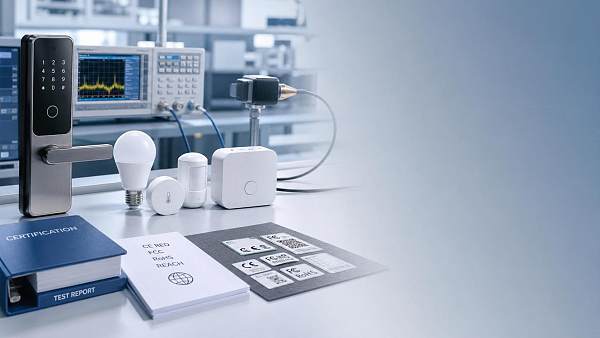
In smart home manufacturing, many buyers are misled by document-based qualification. A supplier may present CE, FCC, RoHS, or other certifications, yet still lack the internal controls needed to maintain ongoing compliance.
Certificates reflect a point in time. Compliance capability reflects whether the factory can keep products aligned with regulatory and technical requirements after engineering updates, sourcing pressure, and production scaling.
This is especially relevant when products include wireless modules, power supplies, batteries, cameras, or data-related functions. Regulatory exposure can span safety, EMC, radio, chemical restrictions, labeling, and cybersecurity expectations.
Quality and safety managers should verify who owns compliance inside the supplier organization, how files are maintained, how changes are reviewed, and whether pre-compliance checks are built into development and mass production.
A factory that treats compliance as a sales document may pass onboarding but create long-term market access and liability risk later.
Software, firmware, and cybersecurity now affect quality control too
Traditional factory audits often focus on hardware processes. But for smart home products, quality control increasingly includes embedded software, firmware management, cloud connectivity behavior, and basic cybersecurity hygiene.
A device can pass hardware inspection and still fail the user if app pairing is unstable, firmware updates break function, or data handling creates safety or privacy concerns.
Higher-quality OEMs manage software versions carefully, validate release packages, control update mechanisms, and test device behavior across realistic use cases. They also coordinate hardware and firmware changes formally.
Lower-tier suppliers may rely on ad hoc software revision practices, limited regression testing, or poorly documented code changes. That creates inconsistency that is difficult to detect during routine receiving inspection.
For safety and quality professionals, this means supplier evaluation should include software governance questions, especially for devices tied to access control, surveillance, power switching, or alarm functions.
What to look for when auditing a potential OEM supplier
If your goal is to reduce supply risk, an audit should go beyond basic housekeeping and certification review. The best audits test whether the supplier can consistently control critical risks in real production conditions.
Start with process flow visibility. Can the factory clearly show how materials move from receiving to assembly, testing, packaging, and shipment? Hidden handoffs often hide hidden quality loss.
Then examine control plans for critical characteristics. Are there defined checkpoints for electrical safety, firmware loading, wireless performance, torque, sealing, or final functional verification where relevant?
Review defect handling. Ask how nonconforming materials are segregated, who can authorize rework, how rework is validated, and how customer complaints feed back into prevention actions.
Check calibration, equipment maintenance, ESD controls, line changeover discipline, and operator training for sensitive processes. In electronics assembly, weak process discipline usually translates into unstable product performance.
Finally, request examples of CAPA execution. A strong factory can explain root cause, corrective action, effectiveness verification, and prevention recurrence measures with evidence, not vague language.
Questions that quickly expose supplier quality weaknesses
Some questions reveal more than a long presentation. Ask the supplier what their top three recurring defect categories were in the last twelve months and what changed afterward.
Ask how they manage component substitutions during shortages. Ask who approves firmware releases. Ask how they trace a field complaint back to a production lot. Ask how they validate reworked products.
Request one recent example of a failed reliability test and the exact disposition taken. If answers are generic, delayed, or inconsistent across departments, that usually signals low system maturity.
Also ask for yield trends, return data, and line-level defect analysis where possible. Reliable OEMs may not disclose everything, but they usually can discuss metrics comfortably and coherently.
What you want is not perfection. You want transparency, process ownership, and proof that the supplier learns systematically instead of hiding instability.
How quality differences affect business outcomes beyond defect rates
For management teams, OEM quality control differences are not only a technical issue. They shape cost, speed, customer satisfaction, compliance exposure, and the scalability of the supply chain.
A lower-priced supplier with weak quality systems can create hidden costs through delayed launches, increased inspection burden, warranty claims, urgent sorting, engineering firefighting, and damaged brand trust.
In contrast, a disciplined Smart home devices wholesale OEM supplier may not always offer the lowest initial quote, but can lower total cost of ownership by preventing avoidable disruption.
This is especially important when programs expand across regions or channels. As shipment volume increases, unmanaged quality variation becomes more expensive and more visible.
For safety-critical or reputation-sensitive smart home categories, the cost of one serious quality incident can outweigh months of nominal purchasing savings.
How to identify suppliers that can support stable and scalable production
The best supplier choice usually combines three strengths. First, the factory must have structured quality systems. Second, it must show technical competence for the specific smart home category. Third, it must act transparently under pressure.
Look for alignment between design controls, incoming quality, in-process discipline, test coverage, traceability, and post-shipment response. Gaps between these areas often predict future instability.
It is also wise to validate the supplier through phased engagement. Start with document review, then audit, then pilot builds, then tighter monitoring during early production before broader scale-up.
During pilot and ramp-up, track not only pass rates but also issue resolution speed, communication quality, change notification discipline, and consistency between reported data and on-site reality.
Suppliers that perform well under initial observation are more likely to support long-term reliability, compliance continuity, and operational resilience.
Conclusion: quality control differences reflect management systems, not marketing language
OEM smart home suppliers differ in quality control because they differ in management maturity, technical depth, supplier control, testing rigor, traceability, change discipline, and compliance ownership.
For quality control personnel and safety managers, the most important takeaway is clear. Do not evaluate a Smart home devices wholesale OEM supplier mainly by price, sample appearance, or certificate availability.
Instead, assess whether the supplier can prevent defects, contain risk, manage changes, support compliance, and provide trustworthy traceability when problems occur. Those capabilities determine real manufacturing reliability.
In smart home manufacturing, quality is not a final inspection result. It is the outcome of the entire factory system. The suppliers worth scaling with are the ones that can prove that system works consistently.
Recommended News
 Sep 02, 2026Which Auto System Parts Fail Most Often in Tropical Climates?What auto systems parts have the highest failure rate in tropical climates? Discover the batteries, cooling, brake, electrical, and A/C parts that need proactive maintenance.
 Aug 18, 2026How to verify whether home control systems testing standards meet safety requirementsHome control systems testing standards: learn how to verify real safety compliance, spot hidden certification gaps, and make smarter release decisions for smart home products.
 Aug 03, 2026Z-Wave Home Control Systems: What to Compare Before You BuyZ-Wave home control systems compared the smart way: learn how to evaluate compatibility, security, mesh stability, automation, and true long-term value before you buy.
 Jul 15, 2026How to Choose a Home Automation Supplier for Multi-Room and Retrofit ProjectsHome automation supplier selection made simple: learn how to compare integration, retrofit readiness, software openness, support, and total cost for scalable multi-room projects.
 Jul 15, 2026Global Home Control Systems Explained: Types, Protocols, and Best-Fit Use CasesGlobal home control systems explained clearly: compare types, protocols like Matter, Zigbee, and Wi-Fi, plus best-fit use cases to choose smarter, safer home automation.
 Jul 14, 2026Connected Home Technology Supplier Comparison: What to Check Before You ShortlistConnected home technology supplier comparison: learn what to check before shortlisting vendors, from interoperability and security to supply resilience and long-term service fit.
 Jul 13, 2026How Energy Efficient Building Automation Cuts HVAC and Lighting Costs in Commercial BuildingsEnergy efficient building automation helps commercial buildings cut HVAC and lighting costs, reduce energy waste, and improve comfort with smarter controls, analytics, and faster ROI.
 Jul 12, 2026Building Automation Data Logging: Which Metrics Matter for Energy Performance?Building automation data logging reveals which metrics truly drive energy performance. Discover key signals, common mistakes, and practical insights to cut waste and optimize operations.
 Jul 04, 2026How to Choose Portable Solar Generators for Home Backup, Camping, or Mobile WorkPortable solar generators buying guide: learn how to choose the right capacity, output, battery type, and charging speed for home backup, camping, or mobile work.
 Jul 02, 2026Building Automation Zigbee vs Wi-Fi: Which Is Better for Stable Device Networks?Building automation Zigbee vs Wi-Fi: discover which delivers more stable, low-maintenance device networks for smart buildings, and choose the right fit for scale, power use, and reliability.
 Jul 01, 2026Prefabricated House Buying Guide: Materials, Cost Drivers, and Build TimePrefabricated house buying guide covering materials, key cost drivers, build time, and supplier risks. Learn how to compare quotes smarter and choose the right solution with confidence.
 Jun 30, 2026Home Control Systems Price Breakdown: Hardware, Installation, and Upgrade CostsHome control systems price explained: compare hardware, installation, subscriptions, and upgrade costs to budget smarter and avoid hidden fees before you buy.
 Jun 27, 2026How to Choose a Smart Living Management System for Multi-Room Energy and Device ControlSmart living management system selection starts with interoperability, room-level energy visibility, and scalability. Learn how to compare vendors, avoid costly mistakes, and choose a platform that improves control and efficiency.
 Jun 26, 2026Smart Living Certification Requirements: Key Standards, Tests, and Compliance StepsSmart living certification requirements explained: key standards, safety and EMC tests, regional marks, and practical compliance steps to speed approval and reduce launch risk.
 Jun 25, 2026Smart Home Gateway vs Hub: What’s the Difference and Which One Do You Need?Smart home gateway vs hub explained: learn the key differences, protocol support, automation benefits, and how to choose the right smart home gateway for a scalable, future-ready home.
 Jun 24, 2026How to Compare Smart Living Systems in the UAE for Villas, Apartments, and Gated HomesSmart living systems UAE guide: compare villa, apartment, and gated home solutions by security, integration, scalability, and long-term value to choose smarter with confidence.
 Jun 23, 2026Smart Home Basics: Which Devices Actually Improve Daily Convenience and Energy Control?Smart home essentials that truly improve daily convenience and energy control: discover which devices deliver real value, cut waste, and fit your routines before you buy.
 Jun 21, 2026Sustainable Home Decor for Eco-Conscious Consumers: Which Materials Are Better for Daily Use?Sustainable home decor for eco-conscious consumers starts with smarter materials. Compare wood, bamboo, metal, textiles, glass, and cork for healthier, durable daily living.
 Jun 14, 2026Prefab Glamping Cost Breakdown: What to Compare Before Choosing a Modular SitePrefab glamping cost breakdown explained: compare hidden site, logistics, compliance, and maintenance costs before choosing a modular site that protects ROI.
 Jun 11, 2026Smart Hotel Systems Explained: What to Automate First for Guest Experience and Energy SavingsSmart hotel systems explained: learn what to automate first—HVAC, lighting, digital check-in, and energy monitoring—to elevate guest experience, cut energy waste, and improve hotel margins.
![]() May 23, 2026Why sustainable home decor is more than a design trendSustainable home decor for eco-conscious consumers goes beyond style trends, offering healthier materials, lasting value, and smarter choices for beautiful, responsible living.
May 23, 2026Why sustainable home decor is more than a design trendSustainable home decor for eco-conscious consumers goes beyond style trends, offering healthier materials, lasting value, and smarter choices for beautiful, responsible living.![]() May 23, 2026Can ergonomic workspace design be installed quickly and wellErgonomic workspace design quick installation is possible without sacrificing quality. Learn how modular planning, compliance, and smart execution create faster, safer, high-performance workspaces.
May 23, 2026Can ergonomic workspace design be installed quickly and wellErgonomic workspace design quick installation is possible without sacrificing quality. Learn how modular planning, compliance, and smart execution create faster, safer, high-performance workspaces.![]() May 23, 2026What makes office furniture work better in coworking spacesModern office furniture for coworking spaces improves flexibility, comfort, and productivity. Discover how smarter furniture choices boost user experience and space value.
May 23, 2026What makes office furniture work better in coworking spacesModern office furniture for coworking spaces improves flexibility, comfort, and productivity. Discover how smarter furniture choices boost user experience and space value. May 22, 2026When do modular office systems save more space and cost?Modern office furniture modular systems save space and cut long-term costs in hybrid, growing, and relocation-prone offices. Learn when they deliver the best ROI.