


Search News
Global Industrial Intelligence Hub (GIIH)Industry Portal
Global Industrial Intelligence Hub (GIIH)Status
Standard Access
Upgrade to PremiumNewsHow energy saving lighting for offices can cut operating costs
Time
Click Count
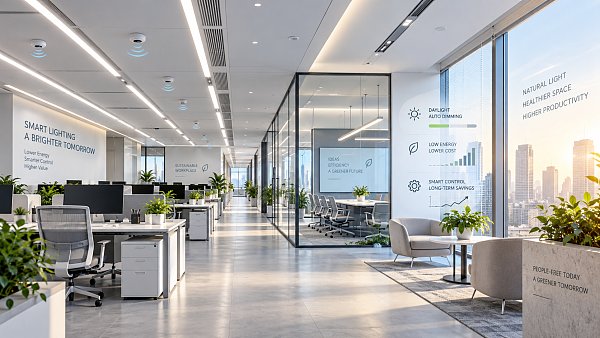
Lighting is a recurring operating expense because it combines electricity use, maintenance labor, replacement parts, access equipment, and disruption to occupied space. Energy saving lighting for offices can reduce that burden when the project is evaluated as a whole operating-cost decision rather than a simple lamp replacement. The strongest business case comes from matching light output to the work being done, reducing unnecessary run time, and avoiding the maintenance problems that often remain hidden in annual facility budgets.
An office with bright fixtures running at full output all day may appear adequately lit while still carrying avoidable cost. Corridors, meeting rooms, storage areas, break spaces, washrooms, reception zones, and perimeter desks rarely have the same occupancy pattern or daylight exposure. Treating every area as if it needs identical illumination creates a permanent energy charge. A well-scoped upgrade separates these conditions and assigns the appropriate fixture, control method, and maintenance approach to each one.
Start with the cost of delivered light
Fixture wattage is useful, but it is not enough to judge cost. A lower-wattage fitting that produces poorly distributed light can lead to dark work surfaces, glare, or a decision to add more fixtures later. The relevant question is how much usable illumination reaches the task plane for each watt consumed, while preserving visual comfort and consistent coverage.
Existing layouts should be surveyed before a replacement specification is issued. Record fixture types, lamp quantities, input wattage, control circuits, operating hours, failed units, ceiling heights, daylight openings, and areas where occupants report glare or insufficient light. A lighting inventory also reveals legacy conditions that distort the baseline. For example, a recessed fluorescent fixture with aging lamps, darkened diffusers, and a worn ballast may consume more power and deliver less light than its nameplate suggests. Replacing it with an LED unit of the same nominal brightness is not automatically a like-for-like result.
LED luminaires commonly reduce electrical demand because they convert a larger share of input power into visible light and direct that light more effectively. Their financial value depends on the total installed system. Driver efficiency, optical design, heat management, dimming behavior, and the ability to maintain light output over time all affect the cost per useful lighting hour. A product comparison based solely on initial wattage can therefore select a cheaper fixture with inferior long-term performance.
Use the existing energy bill as a baseline, not a final answer
Annual lighting energy cost can be estimated from connected load, scheduled operating hours, and the applicable electricity rate. That estimate should then be checked against actual operating behavior. Cleaning staff, security coverage, late meetings, weekend access, and spaces left illuminated after normal hours can materially change the total. Where submeters or building-management data exist, they can show the difference between assumed schedules and real use.
The baseline should include demand-related charges where the local tariff makes peak consumption relevant. Lighting may not be the largest contributor to peak demand, but a broad replacement program can still reduce the electrical load present during occupied periods. This effect should be assessed alongside, rather than confused with, savings from lower kilowatt-hours. Energy prices, demand charges, maintenance labor, and financing costs belong in distinct lines of the analysis.
Controls often determine whether the savings are realized
Replacing fixtures reduces energy per hour. Controls reduce the number of hours and the output level at which the system operates. In many offices, this is where projected savings either become durable or disappear after installation.
Occupancy or vacancy sensing is well suited to enclosed meeting rooms, print areas, washrooms, utility rooms, and other spaces that are frequently empty. Open-plan work areas require more care. A sensor positioned for circulation may detect passing movement yet fail to recognize someone seated quietly at a workstation. Overly aggressive timeouts can cause nuisance switching, prompting occupants to disable controls or request permanent overrides. The cost model should include the commissioning time needed to tune sensor placement, sensitivity, time delay, and zone boundaries.
Daylight-responsive dimming is valuable near windows, atriums, and rooflights, but only when fixtures are grouped according to actual daylight gradients. A single daylight sensor serving a deep floor plate often produces uneven results: perimeter fixtures dim appropriately while interior fixtures follow a signal that does not reflect their location. Separating perimeter rows from interior rows gives the system a more useful control response. Blinds, furniture changes, glass partitions, and seasonal sun angles should be considered during commissioning because they alter how daylight reaches the sensor and work surface.
Scheduling remains important even where sensors are installed. A central schedule can establish normal operating periods, while local controls allow temporary use outside those periods. This avoids full-floor illumination for a small number of late occupants. Emergency lighting, security lighting, and areas with continuous operations need separate treatment; they should not be folded into a general office schedule simply because they share a distribution board.
Maintenance savings need a realistic scope
Longer rated life is often cited as a reason to adopt LED lighting, yet the maintenance benefit depends on the replaceable component and the installation environment. Some fixtures use replaceable LED modules or drivers; others are treated as complete units at end of life. Neither arrangement is universally better. Replaceable parts can lower material waste and support repairs, but only when compatible components remain available and the labor to diagnose and replace them is reasonable. Sealed luminaires can simplify installation and performance consistency, though a failure may require replacing the entire fitting.
Heat is a practical issue. LED components perform best when the fixture can dissipate heat as designed. Installing a luminaire in an insulated ceiling void, enclosing it with unsuitable covers, or placing it near other heat sources can shorten driver or module life. Dust accumulation can also reduce thermal performance and light transmission. In offices with ordinary clean conditions this may be minor, while workshops, loading areas, kitchens, and spaces near exterior entrances may require more frequent cleaning or a more protected fixture construction.
Maintenance cost should account for access. Replacing a lamp above a standard suspended ceiling is different from servicing a fitting above reception features, stairwells, racked storage, or high atriums. The material cost of a failed component may be modest, but labor, access equipment, permits, and scheduling can make each callout expensive. Concentrating critical spares and documenting driver types, control interfaces, and fixture locations reduces the time spent identifying parts after handover.
Payback should be tested against the full installed project
A useful payback calculation compares incremental investment with annual avoided cost. The investment includes fixtures, controls, design, installation, wiring modifications, disposal, testing, commissioning, and any repairs to ceilings or finishes. Avoided cost includes energy and maintenance, with a separate line for costs that are expected to change only under specific conditions. For example, a reduction in cooling load may be relevant where air conditioning runs during lighting hours, but it should not be treated as a universal credit without examining the building system and season.
Simple payback provides a quick screen, yet it does not capture differences in future electricity prices, component replacement timing, financing, or the residual value of equipment. A discounted cash-flow view is more informative for larger projects or multi-site programs. It can also show why a lower-price proposal is not necessarily the lowest-cost option. A fixture with weaker output retention, uncertain driver support, or limited warranty response may shift costs into later years that a simple first-cost comparison misses.
Do not assume every existing fixture should be replaced at once. A targeted approach can be justified where certain zones have long operating hours, high maintenance access cost, or poor lighting quality. Conversely, recently installed equipment in low-use areas may not warrant immediate replacement. The decision should be based on the remaining performance and operating profile of each area, not on the appeal of a uniform procurement package.
Specification details that prevent expensive rework
Color temperature and color rendering influence whether occupants accept the installation, but they should be selected in relation to task and interior finishes rather than as isolated marketing terms. Very cool light can make some office environments feel harsh, while overly warm light can alter the appearance of documents and finishes. Consistency matters across adjacent zones. A mix of visibly different color tones often leads to replacement requests even when each fixture is individually functional.
Glare control deserves equal attention. High-output LED points can create discomfort when installed in shallow diffusers or placed directly in typical sight lines. Workstations near screens, reception desks, and meeting tables are sensitive areas. A layout calculation or sample installation should assess brightness at the task surface and visual discomfort from the fixture itself. Increasing fixture spacing to reduce quantity can erase part of the expected savings if it produces uneven illumination or forces later additions.
Electrical compatibility must be confirmed before ordering. Existing dimmers, occupancy sensors, emergency circuits, and control wiring may not work correctly with every LED driver. Symptoms of a mismatch include flicker, delayed start, audible noise, incomplete dimming, and fixtures that remain faintly illuminated when switched off. These issues are often blamed on the luminaire after installation, although the cause may be the control device, circuit loading, neutral wiring, or a mixed population of driver types on the same circuit.
A small pilot area is particularly useful when a project involves unfamiliar controls, unusual ceiling conditions, or sensitive visual tasks. It exposes installation constraints and lets the commissioning settings be reviewed before the full order is released. The pilot should use the intended fixture, mounting method, control configuration, and furniture layout. A demonstration unit installed in a different room or operated manually does not test the conditions that drive lifetime operating cost.
Procurement should preserve comparability
Bid documents work best when they specify the required lighting outcome and operating conditions, not merely a target wattage. Required information can include delivered light levels, distribution pattern, glare performance, color consistency, control compatibility, driver replacement arrangement, emergency-lighting integration, mounting details, and documentation for commissioning. Suppliers should state assumptions that affect their calculations, especially operating hours, electricity rates, maintenance intervals, and whether existing wiring or ceiling work is included.
Comparing proposals becomes difficult when one includes controls, removal, testing, and commissioning while another lists fixture supply only. Normalize the scope before reviewing price. A low equipment quote can become the highest installed cost after changes for wiring, sensor locations, access equipment, or unplanned ceiling repairs. Lead times for fixtures, drivers, sensors, and compatible replacement parts also matter when phased installation must maintain occupied office areas.
Acceptance should verify more than whether every fixture turns on. Review control response by zone, dimming range, schedule operation, emergency functions where applicable, visible color consistency, glare complaints, and the handover of circuit records and spare-part details. Establish a short post-occupancy review after normal use begins; this is when poorly aimed sensors, inappropriate timeouts, and overlooked dark spots are most likely to appear.
The financial result comes from a system that remains efficient after the installers leave. When fixture performance, control logic, installation scope, and maintenance access are evaluated together, office lighting becomes a manageable operating asset rather than a recurring source of energy and service cost.
Recommended News
 Sep 22, 2026How energy saving lighting for offices can cut operating costsEnergy saving lighting for offices cuts operating costs through efficient LEDs, smart controls, realistic payback analysis, and lower maintenance needs. Explore practical upgrade strategies.
 Sep 04, 2026Are Energy-Efficient Lighting Rebates Available for Industrial Facilities?Are energy efficient lighting rebates available for industrial facilities? Explore eligibility, pre-approval, LED upgrades, controls, and cost-saving incentive tips.
 Aug 21, 2026Do LED lights with low power consumption really cut electricity costsLED lights low power consumption can lower electricity bills, but real savings depend on brightness, usage hours, and quality. Learn how to choose LEDs that cut costs and last longer.
 Jul 20, 2026How Much Does Energy Efficient Lighting Cost and When Does It Pay Off?Energy efficient lighting cost is more than fixture price. Learn what drives payback, hidden lifecycle costs, and when LED upgrades deliver the strongest return.
 Jul 19, 2026How to Choose LED Lights for Cold Storage: Temperature, IP Rating, and EfficiencyLED lights for cold storage: learn how to choose the right fixtures by comparing temperature tolerance, IP rating, visibility, and efficiency for safer, longer-lasting performance.
 Jul 10, 2026Lighting Cost Breakdown: Equipment, Installation, Energy Use, and MaintenanceLighting cost explained from equipment and installation to energy use and maintenance. Compare total ownership factors, avoid hidden expenses, and make smarter buying decisions.
 Jul 08, 2026Custom Lighting for Commercial Projects: How to Specify Output, Beam Angle, and ControlsLighting custom for commercial projects made practical: learn how to specify output, beam angle, and controls to improve performance, reduce risk, and make smarter buying decisions.
 Jul 06, 2026LED Lights Wholesale: How to Check MOQ, Warranty Terms, and Price BreaksLED lights wholesale made simple: learn how to verify MOQ, warranty terms, and price breaks to reduce sourcing risk, protect margins, and choose suppliers with confidence.
 Jul 06, 2026Intelligent Lighting for Factories: Which Control Features Improve Safety and Efficiency?Intelligent lighting for factories improves safety, cuts energy waste, and supports smoother workflows with motion sensing, zoning, daylight control, and emergency-ready features.
 Jul 04, 2026Smart Living for Smart Lighting: Which Controls and Sensors Fit Each Room?Smart living for smart lighting made simple: discover the best controls and sensors for every room to improve comfort, safety, and energy savings with smarter home planning.
 Jul 03, 2026UL Listed Lighting System Requirements: What to Check for Commercial ProjectsUL listed lighting system checks can make or break commercial approvals. Learn what to verify in listings, controls, ratings, and documents to avoid delays and compliance risk.
 Jul 02, 2026LED Lights Lumen Output Explained: How to Compare Brightness Across FixturesLED lights lumen output explained in a clear, practical guide. Learn how to compare fixture brightness, beam spread, efficiency, and color temperature before you buy.
 Jul 01, 2026Commercial LED Lighting in the Middle East: What to Check Before SpecificationCommercial LED lighting Middle East projects need more than price checks. Learn how to verify heat, dust, power, optics, compliance, and maintenance before specification.
 Jun 29, 2026Industrial Lighting Selection Guide: Beam Angle, IP Rating, and Energy Use by Facility TypeIndustrial lighting guide for smarter facility upgrades: compare beam angle, IP rating, and energy use by warehouse, manufacturing, washdown, and outdoor site needs.
 Jun 23, 2026UV Nail Lamps Explained: Wattage, Timer, and Gel Compatibility Before You BuyUVnaillamps explained: compare wattage, timer settings, and gel compatibility to avoid curing issues, choose the right lamp faster, and get smoother, longer-lasting gel manicure results.
 Jun 22, 2026Why LED Lights with Low Heat Emission Work Better for Display Cases and Tight SpacesLED lights low heat emission solutions help display cases and tight spaces stay cooler, safer, and more visually stable. Discover why they improve protection, performance, and long-term efficiency.
 Jun 21, 2026Lighting Technology Analysis for Commercial Spaces: Efficacy, CRI, and Control CompatibilityLighting technology analysis for commercial spaces: compare efficacy, CRI, and control compatibility to cut costs, improve visual quality, and choose smarter future-ready lighting systems.
 Jun 19, 2026Lighting Sourcing Checklist: How to Compare Suppliers, Certifications, and MOQLighting sourcing made simple: compare suppliers, certifications, MOQ, lead times, and quality risks before choosing a quote. Use this checklist to source smarter and avoid costly mistakes.
 Jun 15, 2026How to Use Lighting in Small Rooms: Placement Tips, Layering, and Common MistakesHow to use lighting in small rooms: discover smart placement, layered lighting ideas, bulb tips, and common mistakes to avoid for a brighter, bigger-feeling space.
 Jun 05, 2026How to Evaluate a Lighting Exporter: Certifications, MOQ, Lead Time, and QA ChecklistLighting exporter evaluation starts with certifications, MOQ, lead time, and QA. Use this practical checklist to reduce sourcing risk, protect margins, and choose reliable partners.
![]() May 23, 2026Smart street lighting now matters beyond energy savingsSmart street lighting for urban areas now goes beyond energy savings—improving safety, maintenance efficiency, and smart city readiness. Discover the long-term ROI and strategic value.
May 23, 2026Smart street lighting now matters beyond energy savingsSmart street lighting for urban areas now goes beyond energy savings—improving safety, maintenance efficiency, and smart city readiness. Discover the long-term ROI and strategic value. May 22, 2026Do smart street lights cut energy costs enough to matter?Smart street lighting energy-saving solutions cut power and maintenance costs through LEDs, dimming, and remote monitoring. See when the savings are material enough to justify investment.
 May 21, 2026Are smart street lights really the lower cost optionSmart street lighting cost-effective solutions can cut energy and maintenance costs, but only in the right projects. See when smart street lights deliver true lifecycle savings.
![]() May 19, 2026What makes waterproof LED lighting last outdoors longer?Commercial LED lighting waterproof design determines how outdoor fixtures withstand water, heat, UV, and corrosion. Discover what truly extends service life and lowers maintenance risk.
May 19, 2026What makes waterproof LED lighting last outdoors longer?Commercial LED lighting waterproof design determines how outdoor fixtures withstand water, heat, UV, and corrosion. Discover what truly extends service life and lowers maintenance risk.