


Search News
Global Industrial Intelligence Hub (GIIH)Industry Portal
Global Industrial Intelligence Hub (GIIH)Status
Standard Access
Upgrade to PremiumNewsDo smart street lights cut energy costs enough to matter?
Time
Click Count
For finance approvers, innovation alone does not justify a project.
The stronger question is whether smart street lighting energy-saving solutions create measurable cost reductions over time.
In many cities, lighting is a large and predictable electricity expense.
That makes street lighting a practical target for efficiency upgrades, digital controls, and maintenance reform.
Smart street lighting energy-saving solutions can lower power consumption, reduce failure rates, and improve operational visibility.
Yet the answer to whether savings matter depends on tariff structure, asset age, deployment design, and financing terms.
Across the broader industrial landscape, connected lighting also reflects a larger move toward data-led infrastructure decisions.
This is why the topic matters beyond municipal engineering and fits wider sustainability and asset modernization agendas.
What smart street lighting energy-saving solutions actually include
Smart street lighting energy-saving solutions are not limited to LED lamp replacement.
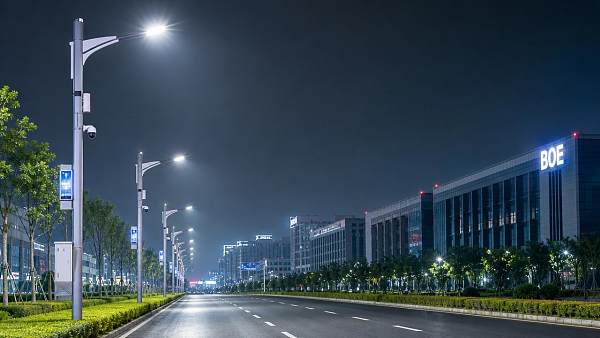
They combine efficient luminaires, sensors, communication modules, and software that manages lighting performance in real time.
A basic project usually includes LED fixtures, dimming capability, remote monitoring, and fault alerts.
A more advanced system may add traffic sensing, adaptive schedules, weather response, and asset analytics.
The financial logic comes from stacking several savings layers rather than expecting one dramatic source alone.
- Lower wattage through LED conversion
- Reduced burn hours through dimming schedules
- Lower truck-roll frequency through remote diagnostics
- Longer fixture life through smarter operating profiles
- Better inventory planning through connected asset data
When these elements are integrated well, smart street lighting energy-saving solutions become both an energy strategy and an operations strategy.
Why the market is paying closer attention
Energy costs remain volatile in many regions, while infrastructure budgets face strong scrutiny.
At the same time, cities are being asked to improve safety, reduce emissions, and modernize public assets.
These pressures make smart street lighting energy-saving solutions more relevant than standard lighting replacement programs.
The sector also benefits from falling technology costs and maturing interoperability standards.
From an industrial intelligence perspective, street lighting is becoming a gateway asset for wider smart city deployment.
That gives the investment a strategic dimension beyond direct utility savings.
Do the savings cut energy costs enough to matter
In many cases, yes, but not automatically.
LED conversion alone often reduces electricity use significantly compared with legacy sodium or metal halide systems.
Adding adaptive dimming can deepen those savings, especially during low-traffic hours.
Remote monitoring then contributes indirect savings by lowering maintenance labor and reducing outage duration.
The result can be material enough to affect operating budgets, especially across large lighting networks.
Where the financial impact usually comes from
- Electricity reduction from lower fixture wattage
- Additional savings from timed or sensor-based dimming
- Maintenance savings from longer fixture life
- Operational savings from fault localization and remote control
- Planning value from better asset condition data
However, smart street lighting energy-saving solutions matter most when old systems are inefficient and maintenance practices are reactive.
If a network was already modernized recently, marginal gains may be narrower.
If local power prices are high, savings become more visible in annual budget lines.
If prices are low, the business case may rely more on maintenance, resilience, and long-term policy alignment.
Business value beyond the utility bill
A narrow electricity comparison can understate the full value of smart street lighting energy-saving solutions.
Connected lighting improves how infrastructure is operated, audited, and upgraded over time.
That broader value often shapes final approval decisions.
Operational gains that influence long-term economics
Real-time alerts reduce the time between failure and repair.
Usage data helps optimize maintenance cycles instead of relying on fixed schedules.
Centralized dashboards support better budget forecasting and replacement planning.
Connected poles can also support future services, including environmental sensing, cameras, or public connectivity.
This multi-use potential strengthens the capital case in integrated urban development programs.
For organizations tracking emissions, the carbon benefit is also financially relevant.
Lower power consumption can support ESG reporting, green financing narratives, and public sustainability targets.
Typical deployment scenarios and expected relevance
Not every environment produces the same return profile.
The strongest cases usually combine high energy use, dispersed assets, and costly manual maintenance.
These scenarios show why smart street lighting energy-saving solutions should be evaluated in context, not as a uniform commodity upgrade.
What can weaken the business case
The technology can underperform financially when project assumptions are too optimistic.
Several common issues reduce realized savings or delay payback.
- Overspecifying controls for low-value streets
- Ignoring communication and software lifecycle costs
- Using weak baseline energy data
- Underestimating installation complexity
- Neglecting cybersecurity and interoperability requirements
A poor procurement model can also lock owners into expensive maintenance dependencies.
That is why technology selection and contract structure matter as much as fixture efficiency.
Practical evaluation steps before approval
A strong review process turns smart street lighting energy-saving solutions from a promising concept into an accountable investment.
- Establish a reliable baseline for energy use, outage frequency, and maintenance cost.
- Segment the lighting network by road type, traffic pattern, and service criticality.
- Model several control strategies instead of assuming full-feature deployment everywhere.
- Calculate total cost of ownership, including software, connectivity, and replacement cycles.
- Test interoperability, data access, and cybersecurity obligations before final specification.
- Use pilot results to validate actual dimming savings and maintenance assumptions.
This staged method improves confidence in ROI and reduces the risk of overbuilding the system.
A grounded conclusion for infrastructure planning
So, do smart street lights cut energy costs enough to matter?
In many networks, they do, especially when old fixtures, high tariffs, and manual maintenance create obvious inefficiencies.
The most credible returns come from combining LED efficiency, adaptive controls, and data-driven maintenance.
Smart street lighting energy-saving solutions are therefore not just a utility upgrade.
They are a practical infrastructure modernization tool with measurable financial and operational effects.
The next step is to compare baseline costs, map high-value zones, and run a realistic total-cost model.
That approach turns abstract efficiency claims into evidence-based planning and more durable capital decisions.
For organizations following global industrial trends, this is exactly the kind of asset intelligence that supports stronger long-term choices.
Recommended News
 Sep 25, 2026When does energy efficient lighting pay back its higher upfront cost?Energy efficient lighting payback explained: assess energy savings, maintenance, tariffs, incentives, controls, and ROI to build a confident investment case.
 Sep 22, 2026How energy saving lighting for offices can cut operating costsEnergy saving lighting for offices cuts operating costs through efficient LEDs, smart controls, realistic payback analysis, and lower maintenance needs. Explore practical upgrade strategies.
 Sep 04, 2026Are Energy-Efficient Lighting Rebates Available for Industrial Facilities?Are energy efficient lighting rebates available for industrial facilities? Explore eligibility, pre-approval, LED upgrades, controls, and cost-saving incentive tips.
 Aug 21, 2026Do LED lights with low power consumption really cut electricity costsLED lights low power consumption can lower electricity bills, but real savings depend on brightness, usage hours, and quality. Learn how to choose LEDs that cut costs and last longer.
 Jul 20, 2026How Much Does Energy Efficient Lighting Cost and When Does It Pay Off?Energy efficient lighting cost is more than fixture price. Learn what drives payback, hidden lifecycle costs, and when LED upgrades deliver the strongest return.
 Jul 19, 2026How to Choose LED Lights for Cold Storage: Temperature, IP Rating, and EfficiencyLED lights for cold storage: learn how to choose the right fixtures by comparing temperature tolerance, IP rating, visibility, and efficiency for safer, longer-lasting performance.
 Jul 10, 2026Lighting Cost Breakdown: Equipment, Installation, Energy Use, and MaintenanceLighting cost explained from equipment and installation to energy use and maintenance. Compare total ownership factors, avoid hidden expenses, and make smarter buying decisions.
 Jul 08, 2026Custom Lighting for Commercial Projects: How to Specify Output, Beam Angle, and ControlsLighting custom for commercial projects made practical: learn how to specify output, beam angle, and controls to improve performance, reduce risk, and make smarter buying decisions.
 Jul 06, 2026LED Lights Wholesale: How to Check MOQ, Warranty Terms, and Price BreaksLED lights wholesale made simple: learn how to verify MOQ, warranty terms, and price breaks to reduce sourcing risk, protect margins, and choose suppliers with confidence.
 Jul 06, 2026Intelligent Lighting for Factories: Which Control Features Improve Safety and Efficiency?Intelligent lighting for factories improves safety, cuts energy waste, and supports smoother workflows with motion sensing, zoning, daylight control, and emergency-ready features.
 Jul 04, 2026Smart Living for Smart Lighting: Which Controls and Sensors Fit Each Room?Smart living for smart lighting made simple: discover the best controls and sensors for every room to improve comfort, safety, and energy savings with smarter home planning.
 Jul 03, 2026UL Listed Lighting System Requirements: What to Check for Commercial ProjectsUL listed lighting system checks can make or break commercial approvals. Learn what to verify in listings, controls, ratings, and documents to avoid delays and compliance risk.
 Jul 02, 2026LED Lights Lumen Output Explained: How to Compare Brightness Across FixturesLED lights lumen output explained in a clear, practical guide. Learn how to compare fixture brightness, beam spread, efficiency, and color temperature before you buy.
 Jul 01, 2026Commercial LED Lighting in the Middle East: What to Check Before SpecificationCommercial LED lighting Middle East projects need more than price checks. Learn how to verify heat, dust, power, optics, compliance, and maintenance before specification.
 Jun 29, 2026Industrial Lighting Selection Guide: Beam Angle, IP Rating, and Energy Use by Facility TypeIndustrial lighting guide for smarter facility upgrades: compare beam angle, IP rating, and energy use by warehouse, manufacturing, washdown, and outdoor site needs.
 Jun 23, 2026UV Nail Lamps Explained: Wattage, Timer, and Gel Compatibility Before You BuyUVnaillamps explained: compare wattage, timer settings, and gel compatibility to avoid curing issues, choose the right lamp faster, and get smoother, longer-lasting gel manicure results.
 Jun 22, 2026Why LED Lights with Low Heat Emission Work Better for Display Cases and Tight SpacesLED lights low heat emission solutions help display cases and tight spaces stay cooler, safer, and more visually stable. Discover why they improve protection, performance, and long-term efficiency.
 Jun 21, 2026Lighting Technology Analysis for Commercial Spaces: Efficacy, CRI, and Control CompatibilityLighting technology analysis for commercial spaces: compare efficacy, CRI, and control compatibility to cut costs, improve visual quality, and choose smarter future-ready lighting systems.
 Jun 19, 2026Lighting Sourcing Checklist: How to Compare Suppliers, Certifications, and MOQLighting sourcing made simple: compare suppliers, certifications, MOQ, lead times, and quality risks before choosing a quote. Use this checklist to source smarter and avoid costly mistakes.
 Jun 15, 2026How to Use Lighting in Small Rooms: Placement Tips, Layering, and Common MistakesHow to use lighting in small rooms: discover smart placement, layered lighting ideas, bulb tips, and common mistakes to avoid for a brighter, bigger-feeling space.
 Jun 05, 2026How to Evaluate a Lighting Exporter: Certifications, MOQ, Lead Time, and QA ChecklistLighting exporter evaluation starts with certifications, MOQ, lead time, and QA. Use this practical checklist to reduce sourcing risk, protect margins, and choose reliable partners.
![]() May 23, 2026Smart street lighting now matters beyond energy savingsSmart street lighting for urban areas now goes beyond energy savings—improving safety, maintenance efficiency, and smart city readiness. Discover the long-term ROI and strategic value.
May 23, 2026Smart street lighting now matters beyond energy savingsSmart street lighting for urban areas now goes beyond energy savings—improving safety, maintenance efficiency, and smart city readiness. Discover the long-term ROI and strategic value. May 22, 2026Do smart street lights cut energy costs enough to matter?Smart street lighting energy-saving solutions cut power and maintenance costs through LEDs, dimming, and remote monitoring. See when the savings are material enough to justify investment.
 May 21, 2026Are smart street lights really the lower cost optionSmart street lighting cost-effective solutions can cut energy and maintenance costs, but only in the right projects. See when smart street lights deliver true lifecycle savings.