
Evaluating Software Support Before You Buy Connected Security Devices
A connected security camera or smart lock is only as dependable as its software support. Evaluate documented commitments, demonstrated patch performance, and service continuity together.
When assessing an IoT home security manufacturer, technical specifications alone cannot reveal how effectively devices will withstand emerging threats throughout their intended deployment life.
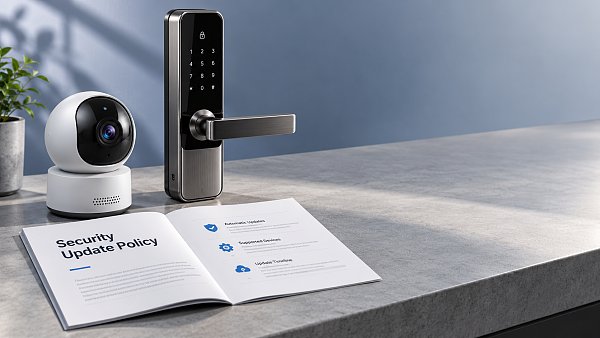
A credible update policy should define support timelines, vulnerability disclosure processes, patch delivery practices, and end-of-life provisions across firmware, mobile applications, and cloud services.
This guide explains how technical evaluators can verify those commitments, distinguish measurable guarantees from vague promises, and convert findings into defensible procurement decisions for connected security deployments.
Start With Evidence You Can Tie to the Exact Product
The central question is whether the manufacturer can maintain your specific deployment securely for its planned lifetime, including dependencies outside the device itself and foreseeable operational changes.
Request the public update policy, a model-specific support statement, recent security advisories, firmware release notes, and the relevant contractual commitments before approving a purchase.
Record hardware revisions, firmware branches, sales regions, and deployment configurations. A policy covering one product family may exclude older chipsets, regional variants, or discontinued gateways.
Check which legal entity supplies updates. A consumer-facing brand may depend on an original design manufacturer, platform vendor, or third-party cloud operator for remediation.
Public promises establish expectations, but technical records demonstrate execution. Procurement terms should identify which commitments apply if website language changes after your organization purchases equipment.
Will Security Support Last Through Your Deployment?
A useful policy states a minimum support period and explains its starting point. Purchase date, product launch, and final shipment produce materially different coverage.
Prefer an explicit support end date for each model and revision. If support runs from purchase, confirm registration requirements and acceptable proof of purchase.
Calculate remaining support at expected installation, accounting for inventory delays and phased rollouts. A five-year promise from launch may leave substantially less usable coverage.
Separate security maintenance from feature development, warranty service, and subscriptions. A valid warranty or active recording plan does not automatically guarantee continued vulnerability remediation.
For a five-year deployment, require support through that period plus a realistic migration allowance. Treat this as your procurement requirement, not a universal industry minimum.
Ask whether published dates can move earlier and what remedies apply. Material changes should trigger notice, replacement options, or contractual rights appropriate to your purchase.
Does the Commitment Cover the Complete Security System?
Security maintenance must address every component required for dependable operation. Updating a camera while abandoning its management application leaves a significant gap in coverage.
Map device firmware, bootloaders, hubs, mobile applications, desktop clients, cloud APIs, authentication services, and third-party software components against named owners and stated support periods.
For mobile applications, verify supported operating system versions and how quickly compatibility issues receive attention. An unavailable application can prevent configuration changes or recovery.
For cloud services, examine authentication updates, API retirement notices, certificate renewal, and dependencies on external identity providers. These changes can disable otherwise functional hardware.
Request a software bill of materials where available, alongside the manufacturer's component monitoring process. An inventory helps investigation but does not prove timely remediation.
Ask how suppliers handle vulnerabilities in inherited libraries and chipsets. The manufacturer should own customer communication and resolution even when another company produces the fix.
How Quickly Are Vulnerabilities Assessed and Fixed?
“Regular updates” offers little procurement value without defined processes. Look for a vulnerability reporting channel, acknowledgement targets, triage responsibilities, and a coordinated disclosure policy.
A security contact or security.txt file helps researchers report problems. Verify that the channel works and that reports receive tracking references and meaningful follow-up.
Distinguish acknowledgement, assessment, mitigation, patch availability, and installation. A response within two business days says nothing about when vulnerable devices will actually receive protection.
Require severity-based remediation targets that consider exploit availability, remote reachability, authentication requirements, and impact. A numerical vulnerability score alone cannot capture your deployment's exposure.
Check whether active exploitation triggers an emergency process. The policy should explain interim mitigations, customer notifications, accelerated testing, and escalation when deadlines cannot be met.
Ask for historical examples with reporting and release dates. Where disclosure dates are incomplete, document uncertainty instead of assuming publication marks the original report.
Can Updates Be Installed Without Creating New Security Gaps?
A credible IoT home security manufacturer should explain how devices verify update authenticity and integrity before installation. Transport encryption alone does not establish package authenticity.
Ask about signed firmware, verification keys, secure boot where applicable, and key rotation procedures. Determine how compromised signing credentials would be contained and replaced.
Examine rollback protection carefully. Devices should resist unauthorized downgrades to vulnerable firmware while retaining a controlled recovery path when a legitimate update causes failures.
Require resilient installation behavior during power loss or interrupted downloads. Recovery mechanisms should preserve a trusted software state without exposing undocumented administrative access paths.
Automatic updates reduce dependence on user action, but deployment controls matter. Evaluate maintenance windows, staged rollout, emergency overrides, and limits on how long installation can be deferred.
For locks and alarms, establish expected behavior during updates. Verify physical access, local alarms, event buffering, and recovery procedures under the intended power configuration.
Check how offline devices catch up after reconnecting. Administrators need visibility into failed installations, outdated versions, and devices that cannot reach the update service.
Does the Manufacturer's Track Record Support Its Claims?
Review release history across several products, including older models. Recent flagship activity may conceal weak maintenance for hardware approaching the end of its sales cycle.
Look for advisories that identify affected versions, fixed versions, severity, mitigations, and deployment instructions. Release notes stating only “improved stability” provide limited security assurance.
Do not equate frequent releases with strong security, or few public vulnerabilities with safety. Disclosure practices, product complexity, and researcher attention affect those signals.
Compare a sample of disclosed issues against promised response targets. Record exceptions and explanations, distinguishing manufacturer delays from coordinated release timing or incomplete public evidence.
Use standards and certifications as supporting evidence. ETSI EN 303 645 and NISTIR 8259A provide useful references for consumer IoT security and device capabilities.
Verify the assessed model, software version, assessment date, and scope. Conformance claims do not independently establish future support duration or compliance in every market.
What Happens When Support or Cloud Service Ends?
End of support should trigger a planned transition, with clear notice and documented consequences. Ask how customers and administrators receive notices and subsequent reminders.
Distinguish firmware support ending from cloud service shutdown. A device might continue receiving no patches while subscriptions remain active, or lose essential functionality when servers close.
Identify functions that survive without the vendor cloud, including local recording, live viewing, unlocking, alarm activation, and account administration. Test each relevant function directly.
Open protocols may improve migration options, but verify supported features and authentication behavior. Basic video compatibility does not guarantee continued analytics, notifications, or secure management.
Review data export, retention, deletion, and account closure procedures. Determine whether recordings, access logs, and configuration records remain retrievable during the announced transition period.
Ask what happens after acquisition, insolvency, or platform replacement. Where continuity guarantees are unavailable, price replacement hardware, installation work, and operational disruption into ownership costs.
Turn the Policy Review Into a Practical Acceptance Test
Run a controlled evaluation using the intended hardware revision and network configuration. Keep a record of starting versions, policy documents, test conditions, and results.
Install an available update and inspect version reporting, administrator notifications, and retained settings. Confirm that the device reports completion rather than merely downloading a package.
In an isolated test environment, interrupt a permitted update and assess recovery. Follow vendor guidance and use spare equipment where testing could disable hardware.
Temporarily block cloud connectivity to evaluate documented offline behavior. Confirm whether local functions, event storage, and administrator access match the manufacturer's written operational claims.
Check fleet management capabilities where relevant. Evaluators should be able to identify unsupported devices, export software inventories, and confirm patch coverage across sites and tenants.
Convert findings into purchase conditions with named owners and review dates. Missing evidence should remain an explicit unresolved requirement until documentation or testing resolves it.
Make the Procurement Decision Around Verifiable Commitments
Use mandatory gates before comparing optional features: adequate remaining support, accountable vulnerability handling, authenticated updates, recoverable installation, and an acceptable service exit plan for your deployment.
Reject or escalate products that fail a mandatory gate. For remaining candidates, compare demonstrated patch performance, administrative visibility, contractual remedies, and total lifecycle costs.
The strongest update policy connects a specific product to measurable obligations and observable results. Choose the manufacturer whose evidence supports your operational lifetime and risk requirements.