


Search News
Global Industrial Intelligence Hub (GIIH)Industry Portal
Global Industrial Intelligence Hub (GIIH)Status
Standard Access
Upgrade to PremiumNewsSmart Technology Access Control: Which System Fits Multi-Entrance Buildings Best?
Time
Click Count
Smart Technology Access Control: Which System Fits Multi-Entrance Buildings Best?
For multi-entrance buildings, access control is now an operational decision, not just a security purchase.
A weak setup creates bottlenecks, blind spots, and avoidable service calls.
A well-matched smart technology access control system improves flow, simplifies administration, and supports future upgrades.
The challenge is that there is no universal best option. The right choice depends on traffic patterns, tenant turnover, integration needs, and risk tolerance.
Why Multi-Entrance Buildings Need a Different Evaluation Model
Single-door sites are simpler. Multi-entrance buildings behave more like ecosystems.
There may be public entrances, staff doors, delivery points, parking access, restricted floors, and service zones.
Each entry point has different risk levels, user groups, and operating hours.
That changes the buying criteria for smart technology access control.
In practice, selection should balance five factors:
- credential flexibility across different users
- centralized management for all entrances
- fast throughput during peak traffic
- integration with video, elevators, alarms, and visitor systems
- scalability without major rewiring or software replacement
This is where many projects go off track. They compare devices first, when they should compare operating models first.
The Main Smart Technology Access Control Options
Most current systems fall into four practical categories. Each suits a different building profile.
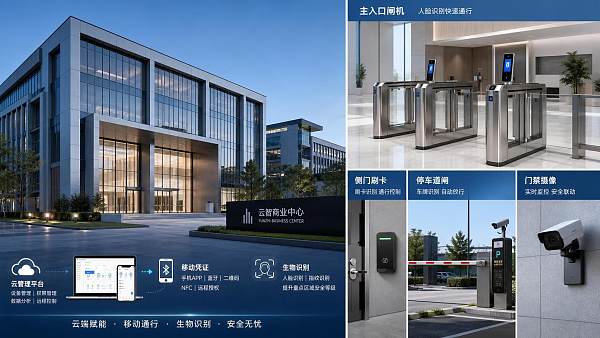
1. Cloud-Based Access Control
Cloud systems are attractive for distributed sites and buildings with frequent credential changes.
They support remote administration, faster updates, and easier audit reporting.
For multi-entrance buildings, that means fewer manual interventions at each doorway.
The tradeoff is dependence on network stability, vendor platform quality, and cybersecurity governance.
2. On-Premise Access Control
On-premise platforms still fit buildings with strict data control requirements.
They are common in regulated environments and sites with internal security teams.
However, expansion can be slower, and maintenance often requires more specialized support.
3. Mobile Credential Systems
Mobile-based smart technology access control is growing quickly.
Users open doors through smartphones, digital wallets, or Bluetooth and NFC credentials.
This reduces card replacement costs and helps with temporary access issuance.
It works especially well in office towers, mixed-use properties, and innovation campuses.
Still, battery concerns, device compatibility, and user adoption need early testing.
4. Biometric Access Systems
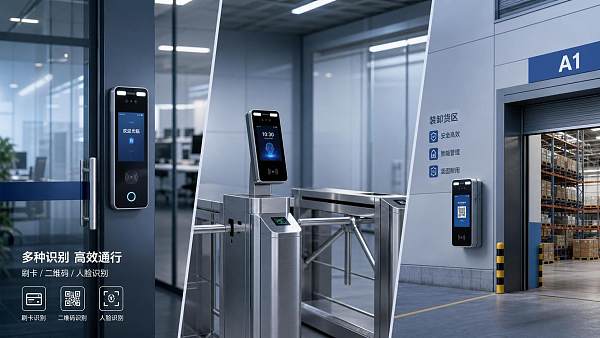
Biometric smart technology access control includes fingerprint, facial recognition, and iris-based verification.
It offers stronger identity assurance at high-security entrances.
But biometrics are rarely ideal as the only method across every entrance.
Privacy regulation, enrollment effort, and throughput limits can become issues in busy lobbies.
Which System Usually Works Best?
For most multi-entrance buildings, the best answer is a hybrid model.
That typically means cloud-managed software, mobile or card credentials for daily users, and biometrics only at selected sensitive zones.
This approach matches how modern buildings actually operate.
It keeps the main entrances fast, avoids overengineering low-risk doors, and preserves tighter control where needed.
From a lifecycle cost perspective, hybrid smart technology access control often delivers the best balance between flexibility and resilience.
How to Evaluate Smart Technology Access Control for Real Projects
A useful evaluation process starts with traffic and risk mapping, not vendor brochures.
- List every entrance by user type, opening schedule, and risk profile.
- Separate public flow, employee flow, visitor flow, and logistics flow.
- Estimate daily credential changes, contractor access, and after-hours exceptions.
- Check integration points with CCTV, fire systems, elevators, parking, and HR databases.
- Define response requirements for outages, forced entry events, and network loss.
- Compare total cost over five years, not just hardware price.
This process quickly reveals whether a simple credential system is enough or whether a broader smart building access platform is justified.
Key Questions to Ask Vendors
- Can the smart technology access control platform manage all entrances from one dashboard?
- How does the system perform when internet connectivity drops?
- What is the average provisioning time for new users?
- Does it support mixed credentials, including mobile, cards, and biometrics?
- How are software updates, backups, and cybersecurity patches handled?
- Which APIs or native integrations are already proven in similar buildings?
Decision Matrix for Common Building Types
Common Mistakes That Increase Cost Later
Several selection mistakes appear again and again.
- Choosing one credential type for every door without considering traffic differences
- Ignoring visitor and contractor workflows during system design
- Underestimating integration costs with elevators, turnstiles, and video systems
- Buying closed systems with weak upgrade paths
- Treating cybersecurity as a later phase instead of a procurement requirement
These issues often make a low-cost system expensive within two years.
Final Recommendation
If the goal is long-term value, smart technology access control should be selected as part of the building operating strategy.
For most multi-entrance buildings, a hybrid, cloud-managed system is the strongest default option.
It supports faster administration, flexible credentialing, and easier scaling across entrances.
Biometrics should be added selectively, where identity assurance clearly matters.
The most reliable decisions come from mapping building flows first, then matching technology to actual operational pressure points.
That is usually the difference between a system that looks advanced and one that performs well for years.
Recommended News
 Sep 05, 2026Which Smart Living Device Categories Are Growing Fastest in 2026?What Smart Living device categories are growing fastest in 2026? Explore high-demand opportunities in security, energy management, automation, care monitoring, and smart appliances.
 Aug 24, 2026US Imposes 100% Additional Tariff on Certain Drones Effective August 13US imposes 100% additional tariff on certain drones effective August 13. Learn which drone products are covered, the compliance risks, and how importers and exporters should respond now.
 Aug 23, 2026When does facial recognition access make sense for home entry security?Facialrecognitionaccess makes sense when your home needs fast, hands-free entry for multiple residents. Discover when it improves convenience, privacy, and daily security.
 Aug 20, 2026What drives IoT home security price from basic setups to smart systemsIoT home security price depends on hardware, connectivity, AI features, installation, and subscriptions. Learn what raises costs and how to choose smarter value.
 Aug 10, 2026What Range and Signal Factors Matter Most in Long Range Home Systems?Long range home systems perform best when range, frequency, interference, wall materials, and placement work together. Learn what really affects reliable coverage before you buy.
 Aug 09, 2026EU CE Rule Takes Effect for IoT Home Security DevicesEU CE Rule for IoT Home Security Devices takes effect: learn how EN 303 645:2026 impacts CE marking, compliance, cybersecurity, suppliers, and EU market access.
 Aug 08, 2026EU Enforces EN 303 645:2026 v2.1 for IoT Security DevicesEN 303 645:2026 v2.1 now shapes EU access for IoT security devices. Learn how the new certification rules affect customs clearance, firmware checks, and shipment timelines.
 Aug 07, 2026EU CE Rule Takes Effect for IoT Home Security DevicesEU CE Rule takes effect for IoT home security devices in 2026. Learn how EN 303645-2, ETSI TS 103 645, and Notified Body certification will impact EU market access.
 Aug 06, 2026EU EN 303645-2:2026 Takes Effect for Home IoT SecurityEU EN 303645-2:2026 takes effect for home IoT security on Nov 1, 2026. Learn how CE-RED+Cybersecurity Module and remote diagnostic interface rules impact EU market access.
 Aug 05, 2026EU WEEE Rules Add Remote Diagnostics for IoT Home DevicesEU WEEE rules now require remote diagnostics and firmware upgrade interfaces for IoT home devices. Learn the compliance risks, CE impact, and how exporters can avoid EU customs rejection.
 Aug 04, 2026EU Tightens RoHS Lead Limits for IoT Home DevicesEU Tightens RoHS Lead Limits for IoT Home Devices: learn how the new EU RoHS amendment impacts smart lighting, home security, testing, sourcing, and compliance timelines.
 Aug 03, 2026EU Extends WEEE Duties to IoT Home ExportersEU Extends WEEE Duties to IoT Home Exporters: learn how the 2027 EU WEEE revision impacts smart home compliance, authorized representatives, costs, and market access.
 Aug 02, 2026EU Tightens Cybersecurity Certification for IoT Home DevicesEU Tightens Cybersecurity Certification for IoT Home Devices: learn how CRA and CRPA rules affect CE+CR marking, customs clearance, and EU market access before 2026.
 Aug 01, 2026EU Requires CRA Certification for IoT Home DevicesEU CRA certification for IoT home devices is now critical for smart locks, cameras, and alarms entering the EU. Learn the compliance risks, CE+CRA marking needs, and supply chain actions to protect market access.
 Jul 22, 2026How to Choose a Smart Access Control Terminal for Offices, Factories, and WarehousesSmart access control terminal buying guide for offices, factories, and warehouses. Learn how to compare security, integration, resilience, and scalability for smarter site decisions.
 Jul 15, 2026Commercial Office Home Control Systems: What Features Matter Most in Daily UseCommercial office home control systems work best when daily use stays simple. Learn which features improve efficiency, reduce errors, and support smarter office operations.
 Jul 14, 2026Smart Home Protection App Control: Key Functions, Setup Steps, and Common IssuesSmart home protection app control made simple: explore key functions, setup steps, common issues, and practical fixes to improve security, reliability, and peace of mind.
![]() Jul 07, 2026Smart Access Control Price Guide: What Affects System Cost for Homes, Offices, and Sites?Smart access control price guide for homes, offices, and multi-site projects. Learn what drives system cost, from hardware and installation to software, integration, and long-term value.
Jul 07, 2026Smart Access Control Price Guide: What Affects System Cost for Homes, Offices, and Sites?Smart access control price guide for homes, offices, and multi-site projects. Learn what drives system cost, from hardware and installation to software, integration, and long-term value. Jul 04, 2026Flame Retardant Home Systems: Key Ratings, Materials, and Installation MistakesFlame retardant home systems explained: compare key fire ratings, common materials, and costly installation mistakes to choose safer, compliant solutions.
 Jul 03, 2026Smart Technology Access Control: Which System Fits Multi-Entrance Buildings Best?Smart technology access control for multi-entrance buildings: compare cloud, mobile, biometric, and hybrid systems to find the best fit for security, flow, scalability, and cost.
 Jul 02, 2026Metal Housing Smart Access Control: What to Check for Outdoor and High-Traffic SitesMetal housing smart access control: learn what to check for outdoor and high-traffic sites, from weather resistance to integration and lifecycle cost, before you choose.
 Jun 29, 2026Global Connected Home Technology Standards: Interoperability, Security, and Certification BasicsGlobal connected home technology standards shape interoperability, security, and certification success. Learn the basics to reduce launch risk, speed approvals, and improve cross-market product reliability.
 Jun 25, 2026Flame Retardant Connected Home Technology: Which Standards and Materials MatterFlame retardant connected home technology explained: compare key standards, materials, and compliance risks to build safer smart devices and speed market access.
 Jun 08, 2026How to Choose Wireless Security Systems for Homes: Cameras, Sensors, and CoverageWireless security systems for homes made simple: learn how to choose cameras, sensors, and coverage that fit your layout, budget, and daily routine for smarter protection.