


Search News
Global Industrial Intelligence Hub (GIIH)Industry Portal
Global Industrial Intelligence Hub (GIIH)Status
Standard Access
Upgrade to PremiumNewsElectric vehicle parts with the widest margin swings
Time
Click Count
From EV battery and EV motor pricing to aftermarket demand for electric vehicle parts, margin volatility is reshaping procurement, inventory control, logistics management, and supply chain decisions. This analysis explores which auto parts, precision parts, and automotive components see the widest swings, helping buyers, distributors, and market researchers identify high-quality parts, custom components, and car replacement parts with stronger commercial potential.
For B2B buyers and channel operators, margin swings are not just a pricing story. They affect reorder timing, supplier qualification, stocking strategy, warranty exposure, and the viability of cross-border trade. In the EV ecosystem, a part that delivers a 12% gross margin one quarter may move to 25% or fall below 8% in the next, depending on raw materials, localization, software content, and replacement cycles.
At GIIH, the focus is on turning fragmented market signals into decision-grade intelligence. In precision automotive parts and mobility, understanding where margins widen or compress helps procurement teams avoid overcommitting to unstable SKUs and helps distributors identify product categories with resilient aftermarket demand. The sections below examine the EV parts categories with the widest margin swings, why volatility happens, and how buyers can respond with more disciplined sourcing and inventory controls.
Where the biggest margin swings appear in the EV parts chain
Margin volatility in electric vehicle parts is not evenly distributed. It tends to cluster in components influenced by three forces at once: fast technology iteration, uneven supplier concentration, and uncertain aftermarket replacement timing. In practical terms, that means battery-related parts, power electronics, thermal systems, and sensor-rich modules often show wider margin bands than conventional stamped metal items or generic fasteners.
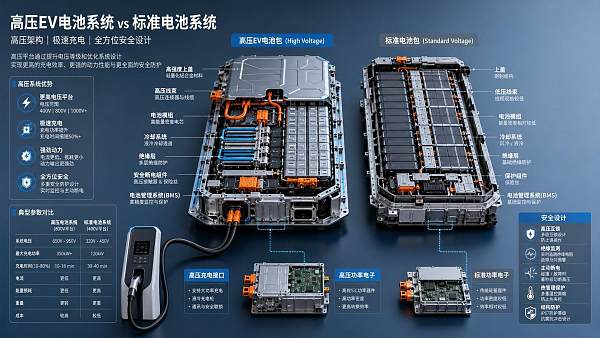
The most visible category is battery system content. Battery packs themselves are usually scale-driven and margin-sensitive, but subcomponents such as battery management system boards, cooling plates, busbars, current sensors, connectors, and pack sealing materials can experience swings of 10 to 20 percentage points depending on chemistry transitions, safety regulation changes, and supplier qualification cycles that may last 8 to 16 weeks.
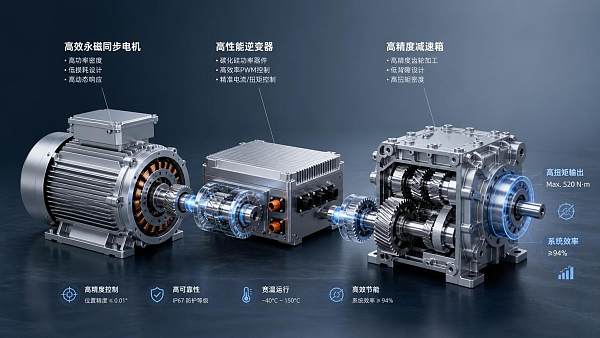
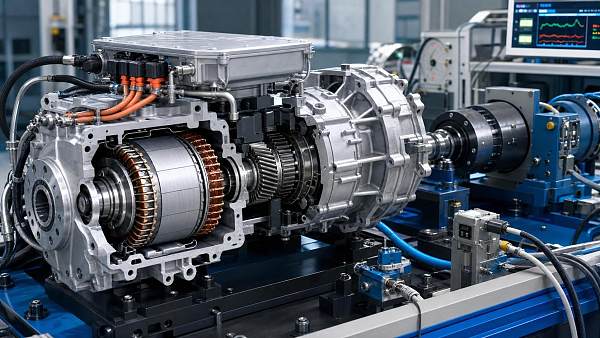
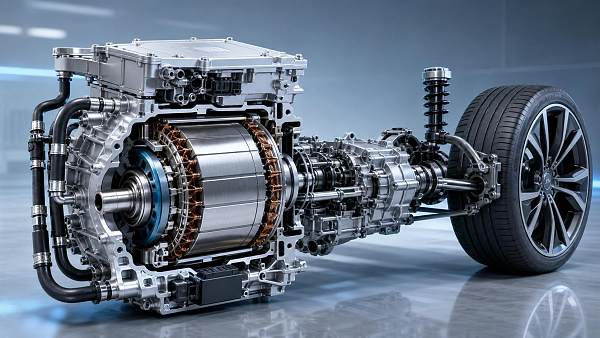
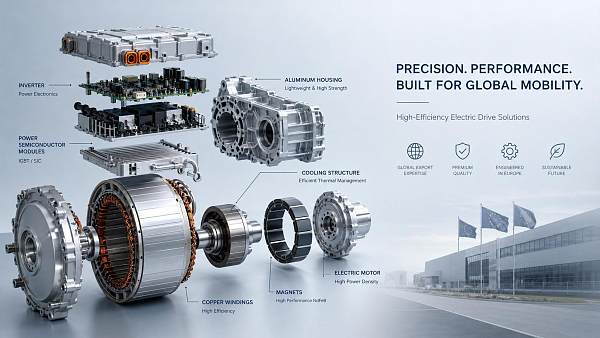
EV motors and e-axle components also move sharply. Rotor shafts, stator assemblies, rare-earth magnet exposure, precision bearings, and inverter-adjacent parts may benefit when OEM production ramps quickly, yet margins can contract when new entrants flood the market with lower-cost alternatives. In many sourcing environments, a precision motor subassembly may carry very different economics between OEM programs and aftermarket channels.
Thermal management is another high-variance area. Heat pumps, electric compressors, coolant valves, battery chillers, and thermal interface materials are sensitive to climate-spec requirements and platform design changes. When one vehicle platform standardizes a module, supplier margins can improve for 2 to 4 quarters. When architecture shifts, inventory can age rapidly and erode profits.
High-volatility EV part groups
The table below summarizes where distributors and procurement teams most often encounter wide margin swings and what usually drives those changes.
A useful takeaway is that the widest swings usually occur in parts combining electronics, thermal demands, and custom integration. Simpler mechanical auto parts may still be profitable, but the sharpest margin movement is more common in modules where engineering content and replacement uncertainty overlap.
Why basic mechanical parts often behave differently
Items such as brackets, housings, standard bushings, and non-specialized fasteners usually operate within narrower ranges, often 3% to 8%. They face intense competition and lower differentiation. For sourcing teams, these parts matter for total cost control, but they are less likely to produce dramatic upside unless bundled into custom components or region-specific replacement kits.
Why EV batteries, motors, and power electronics create unstable margins
Battery and motor pricing attract attention because they shape the economics of the entire electric vehicle parts market. However, the real margin story often lies one level below the headline components. Procurement teams that only track pack prices or motor assembly quotes can miss hidden volatility in auxiliary modules, test requirements, packaging standards, and low-volume variants.
A major reason is raw material sensitivity. Copper, aluminum, electrical steel, and magnet-related inputs can shift procurement cost within a 30- to 90-day window. Even when core materials stabilize, second-order effects remain. A supplier that secured inventory at an earlier price point may enjoy temporary margin expansion, while another supplier delivering on a just-in-time basis sees compression.
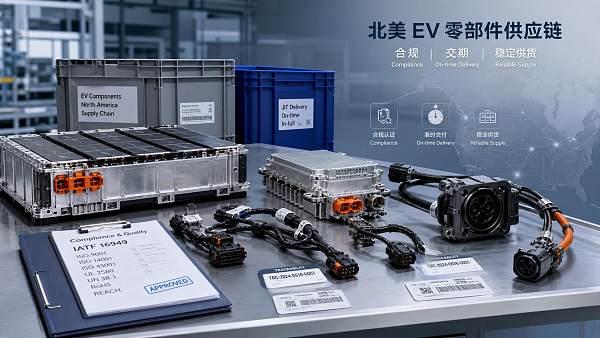
Another factor is certification and reliability burden. High-voltage connectors, charging modules, and inverter components may require additional validation, traceability records, and failure analysis capacity. The cost of quality is not linear. If return rates move from 0.5% to 2%, the impact on distributor profitability can be disproportionate because warranty handling, diagnostics, and reverse logistics add hidden cost layers.
Software and firmware also change margin logic. A hardware module with integrated control logic may command stronger pricing during the early life of a platform, then weaken when software compatibility becomes standardized or open to more third-party suppliers. This is especially visible in charging electronics and battery monitoring devices.
Core drivers that widen or compress part margins
- Short product refresh cycles, often every 12 to 24 months for EV platforms, which can quickly reclassify a part from strategic to slow-moving.
- High tooling and qualification costs, especially where tolerances, insulation standards, or thermal durability must be documented across multiple test stages.
- Localized supply imbalances, where one region has strong assembly capacity but weak aftermarket coverage, creating temporary pricing gaps.
- Aftermarket uncertainty, because some EV components last longer than expected while others fail earlier under heat, charging stress, or road conditions.
For buyers, these conditions mean landed cost analysis should include more than invoice pricing. It should cover validation cost, packaging for hazardous or high-voltage parts, claims handling, and expected resupply cycle. A component that appears 6% cheaper at purchase may become 4% more expensive after logistics and service cost are included.
A practical sourcing signal
When a part category depends on both semiconductor content and thermal management, it often deserves tighter review. Those two variables together frequently signal wider margin swings than standard metalworking parts. This is why many commercial teams now separate EV electronics procurement from traditional car replacement parts purchasing workflows.
Aftermarket demand: the hidden source of profit expansion and margin risk
The EV aftermarket remains less mature than the internal combustion engine aftermarket, but that is exactly why margin opportunities can be larger. In categories where replacement standards are still forming, distributors may find stronger gross profit on selected electric vehicle parts than on highly commoditized conventional items. The trade-off is greater forecasting risk.
Not every EV part will become a strong aftermarket product. Some are tied closely to OEM service channels, while others are constrained by safety protocols or software pairing. The best margin performers are often adjacent components rather than the most obvious flagship parts. Cooling pumps, charge-port assemblies, battery seals, DC contactors, and specialized sensors can deliver attractive returns when availability is inconsistent and cross-platform demand builds.
For commercial evaluators, the key question is not only whether replacement demand exists, but whether it is repeatable across models, regions, and service networks. A part with a 20% margin in one quarter may not be scalable if fitment coverage is too narrow or if repair procedures require tools that only authorized workshops possess.
The most resilient aftermarket opportunities often have three features: manageable certification burden, moderate replacement frequency, and a service pathway that independent repair networks can realistically support within 24 to 72 hours. If all three conditions are present, the category may justify broader stocking and private-label evaluation.
Aftermarket attractiveness by EV part type
The comparison below helps buyers distinguish between high-margin potential and operational complexity in the EV aftermarket.
This comparison shows that the highest nominal margin does not always mean the best business case. A 22% margin on a technically demanding part can underperform a 14% margin item with broader fitment, faster turnover, and lower return risk. That distinction is critical for distributors building EV portfolios over a 6- to 18-month horizon.
Common aftermarket mistakes
- Stocking high-value battery assemblies without a clear reverse logistics process.
- Assuming all EV motor or charging parts are universal across platforms.
- Ignoring workshop capability, especially where installation needs insulated tools, calibration, or software authorization.
- Overestimating replacement frequency in early EV fleets with still-limited field failure history.
For market researchers, the aftermarket signal is strongest when replacement data, service procedure accessibility, and regional parts availability all point in the same direction. That triad usually matters more than headline enthusiasm around electrification alone.
How procurement teams should evaluate high-swing EV components
When margins are unstable, procurement discipline becomes a profit protection tool. Buyers should move from single-price comparison to multi-factor evaluation. In EV sourcing, four dimensions tend to matter most: technical fit, supply continuity, compliance readiness, and service cost. If one of these is weak, margin gains can disappear after claims, delays, or emergency resupply.
A practical starting point is SKU segmentation. Separate electric vehicle parts into three groups: strategic electronics, high-turn mechanical support items, and experimental or region-specific components. Review strategic electronics every 30 to 45 days, stable mechanical items every 60 to 90 days, and new or uncertain SKUs with tighter trial quantities until field performance is confirmed.
Supplier evaluation should also be different from traditional auto parts procurement. A supplier of EV precision parts may have acceptable factory capability but weak traceability, firmware support, or packaging for sensitive modules. Buyers should request documentation on testing scope, serial identification methods, return diagnosis process, and engineering response time. A reasonable benchmark is technical feedback within 24 to 48 hours for urgent cases.
Commercial teams should also define margin guardrails. For example, if a part category historically fluctuates between 9% and 19%, a purchasing plan can set reorder thresholds based on both stock cover and expected resale spread. This reduces the risk of buying aggressively at the wrong point in the cycle.
A procurement checklist for volatile EV parts
The checklist below is useful for buyers, business evaluators, and distributors that need a more stable approach to sourcing custom components and car replacement parts in the EV segment.
This kind of framework helps organizations avoid the common trap of chasing only the highest visible margin. Sustainable procurement performance comes from repeatable supply and controlled post-sale cost, not from short-term price advantage alone.
Implementation steps for cross-border buyers
- Screen 5 to 10 candidate SKUs by turnover potential and technical accessibility.
- Run small-batch validation over 30 to 60 days rather than committing to full seasonal volume immediately.
- Align logistics, returns, and labeling rules before expanding into new regions.
- Reassess gross margin after landed cost, claims cost, and average storage days are known.
For global sourcing networks, this staged model reduces capital lock-up and helps convert fragmented market knowledge into more defensible purchasing decisions.
What buyers, distributors, and researchers should watch over the next 12 to 24 months
Over the next 12 to 24 months, margin swings in electric vehicle parts are likely to remain broad rather than normalize fully. Platform standardization will improve in some areas, but the market is still balancing rapid product evolution with uneven service readiness. That creates a mixed landscape where some categories commoditize while others gain temporary pricing power.
One trend to monitor is the separation between flagship components and support modules. Batteries and major drive units may see stronger cost-down pressure, while adjacent precision parts with thermal, electrical, or sealing functions can retain healthier margins. For channel partners, this means the best opportunities may sit in smaller but technically important automotive components rather than headline assemblies.
Another trend is the growing importance of serviceability. Products that are easier to identify, replace, and validate in independent repair networks should attract stronger aftermarket interest. Parts requiring less software locking, fewer special tools, and shorter installation windows often have better commercial scalability, even if unit margin is slightly lower.
Finally, intelligence quality will become a competitive differentiator. Procurement teams and distributors that combine pricing signals, technical documentation, and logistics visibility will respond faster to margin changes than those relying on historical auto parts playbooks. In volatile categories, faster interpretation is often as valuable as lower cost.
FAQ for commercial decision-makers
Which EV parts are most suitable for distributors seeking stable growth?
Parts with medium technical complexity and repeatable service demand are often the best starting point. Thermal management items, selected charge-port parts, high-voltage connectors, and certain sensor modules can offer a better balance between margin and operational control than full battery assemblies or highly locked electronic control units.
How long should a buyer test a new EV replacement part before scaling orders?
A practical trial period is 30 to 90 days, depending on turnover speed and technical risk. During that period, buyers should track fitment success, return reasons, packaging performance, and supplier response time. For higher-value electronics, extending review to one full quarter is often justified.
What is the biggest risk when chasing high-margin EV components?
The biggest risk is underestimating downstream cost. A part with attractive purchase margin can become unprofitable if it has narrow fitment, high return handling needs, or poor documentation. In EV categories, post-sale support can materially change the true margin outcome.
How can market researchers identify commercially promising EV parts faster?
Focus on categories where three signals overlap: growing installed base, repair feasibility outside OEM-only channels, and recurring demand for adjacent modules or consumable support parts. When those factors align, the commercial case is usually stronger than in categories driven only by market hype.
Electric vehicle parts with the widest margin swings are usually those at the intersection of electronics, thermal control, safety validation, and still-maturing aftermarket demand. For buyers and distributors, the opportunity is real, but so is the risk. The winning approach is to evaluate not only headline pricing, but also fitment coverage, lead time, traceability, return burden, and service accessibility.
GIIH helps information researchers, procurement teams, commercial evaluators, and channel partners interpret these moving signals with a deeper industrial lens. If you need support in screening EV parts categories, comparing supplier risk, or identifying automotive components with stronger commercial potential, contact us to discuss tailored market intelligence, sourcing insight, and cross-border decision support.
- procurement cost
- health
- precision automotive
- cross-border trade
- supply chain
- logistics management
- inventory control
- procurement
- auto parts
- automotive components
- car replacement parts
- EV components
- electric vehicle parts
- EV battery
- EV motor
- precision parts
- custom components
- high-quality parts
- aftermarket
- replacement parts
Recommended News
 Sep 12, 2026What does UN 38.3 testing cover for EV battery shipments?EV battery UN 38.3 testing covers altitude, thermal, vibration, shock, short-circuit, overcharge, and discharge risks. Learn key compliance steps for safer EV battery shipments.
 Aug 24, 2026How to compare electric drive components for torque and efficiencyElectric drive components comparison starts with real load profiles. Learn how to evaluate torque, efficiency, motor-inverter-gearbox fit, and avoid costly selection mistakes.
 Jul 29, 2026400V EV Battery Components Explained: Key Parts, Functions, and System Design BasicsEV battery components 400V explained clearly: discover key parts, core functions, safety logic, thermal design, and system basics to evaluate EV battery packs with confidence.
 Jul 18, 2026Automotive Component Rating Standards Explained: How to Compare Load, Temperature, and Safety LimitsAutomotive component rating standards explained clearly: learn how to compare load, temperature, and safety limits to reduce sourcing risk, improve compliance, and choose parts with confidence.
 Jul 15, 2026EV Components North America: Sourcing Priorities, Compliance, and Lead Time FactorsEV components North America buyers now face tougher sourcing decisions. Explore compliance risks, lead time pressures, and smarter strategies to reduce disruption and improve EV supply chain performance.
 Jul 13, 2026How to Evaluate a Battery Components Exporter for Quality, Traceability, and Lead TimeBattery components exporter selection goes beyond price. Learn how to assess quality control, traceability, and lead time to reduce supply risk and choose a reliable partner.
 Jul 12, 2026High Voltage EV Batteries vs Standard Packs: Key Design and Safety DifferencesHigh voltage EV batteries vs standard packs: explore the key design, charging, efficiency, and safety differences to choose the right EV battery architecture with confidence.
![]() Jul 07, 2026EV Accessories Buying Guide: Which Add-Ons Matter for Safety, Charging, and Daily Use?EV accessories buying guide: discover which add-ons truly improve charging, safety, and daily convenience, so you can choose smarter, safer gear with confidence.
Jul 07, 2026EV Accessories Buying Guide: Which Add-Ons Matter for Safety, Charging, and Daily Use?EV accessories buying guide: discover which add-ons truly improve charging, safety, and daily convenience, so you can choose smarter, safer gear with confidence. Jun 30, 2026EV Motor Selection Guide: Torque, Efficiency, Cooling, and Cost Trade-OffsEV motor selection guide covering torque, efficiency, cooling, and cost trade-offs. Learn how to choose the right EV motor for better range, reliability, and total value.
 Jun 29, 2026Permanent Magnet EV Motor Selection: Torque, Efficiency, Cooling, and Cost Trade-OffsPermanent magnet EV motor selection explained: compare torque, efficiency, cooling, and total cost trade-offs to choose the right EV drive solution with confidence.
 Jun 27, 2026Sourcing Guide for EV Components: How to Compare Suppliers, Lead Times, and MOQSourcing guide EV components for procurement teams: compare suppliers, lead times, MOQ, quality, and total cost to reduce risk and make smarter EV sourcing decisions.
 Jun 27, 2026Electric Drive Components Price in Europe: What Drives Cost by Motor, Inverter, and VolumeElectric drive components price Europe explained: see how motor design, inverter technology, and order volume shape real costs in Europe, and compare suppliers with greater confidence.
 Jun 25, 2026How Long Life Mobility Components Reduce Maintenance in High-Use EquipmentLong life mobility components cut maintenance by matching real load, floor, and cleaning conditions. See how smarter selection improves uptime, lowers service costs, and extends equipment life.
 Jun 23, 2026Spark Plugs OEM Sourcing Guide: Key Specs, Compatibility Checks, and Supplier RisksSpark plugs OEM sourcing guide covering key specs, compatibility checks, total cost, and supplier risks—learn how to avoid fitment errors, returns, and costly quality issues.
 Jun 13, 2026Vehicle Electronics Selection Guide: Key Standards, Interfaces, and Reliability FactorsVehicle electronics selection starts with standards, interfaces, and reliability. Learn how to compare components, reduce integration risk, and choose smarter for long-term performance.
 Jun 06, 2026What Is a BMS in Battery Systems? Functions, Key Components, and Selection BasicsBMS explained: learn what a Battery Management System does, its key components, and how to choose the right BMS for safer, longer-lasting, better-integrated battery systems.
 Jun 02, 2026Solid-State Battery Breakthroughs: What to Verify Before EV AdoptionSolid-state battery breakthroughs are reshaping EV strategy—learn what to verify in energy density, cycle life, safety, cost, and supplier readiness before adoption.
 May 31, 2026Why is EV battery tech reshaping range expectations?EV battery tech is redefining real-world range through smarter chemistry, thermal control, fast charging, and software—discover what matters beyond mileage.
![]() May 19, 2026Why long-lifespan solid-state batteries matter nowSolid-state battery breakthroughs long lifespan are reshaping EVs, grid storage, and industry. Discover why longer life, safer performance, and lower total cost matter now.
May 19, 2026Why long-lifespan solid-state batteries matter nowSolid-state battery breakthroughs long lifespan are reshaping EVs, grid storage, and industry. Discover why longer life, safer performance, and lower total cost matter now.![]() May 19, 2026Is off-grid lithium storage worth the upfront cost?Lithium battery storage for off-grid applications can justify higher upfront costs through lower maintenance, better efficiency, and stronger long-term ROI. See when it pays off.
May 19, 2026Is off-grid lithium storage worth the upfront cost?Lithium battery storage for off-grid applications can justify higher upfront costs through lower maintenance, better efficiency, and stronger long-term ROI. See when it pays off.![]() May 19, 2026Are solid-state battery breakthroughs finally lifting energy density?Solid-state battery breakthroughs in high energy density are moving beyond hype. Learn what technical evaluators should verify on cycle life, safety, cost, and scalable commercialization.
May 19, 2026Are solid-state battery breakthroughs finally lifting energy density?Solid-state battery breakthroughs in high energy density are moving beyond hype. Learn what technical evaluators should verify on cycle life, safety, cost, and scalable commercialization. May 18, 2026Why portable lithium battery storage needs better designLithium battery storage portable design matters more than ever. Discover how better safety, mobility, and charging design improve backup, travel, and field power performance.
 May 17, 2026What next-gen EV charging must solve beyond faster speedNext-gen wireless charging for electric vehicles must solve efficiency, safety, interoperability, and real-world deployment fit—not just speed. Explore what makes EV charging scalable and investment-ready.
 May 17, 2026How close are solid-state batteries to real EV production?Solid-state battery breakthroughs for electric vehicles are moving beyond the lab. Discover how close they are to real EV production, what still blocks scale-up, and which milestones matter most.