


Search News
Global Industrial Intelligence Hub (GIIH)Industry Portal
Global Industrial Intelligence Hub (GIIH)Status
Standard Access
Upgrade to PremiumNewsThe sourcing risk hidden inside common EV components
Time
Click Count
From EV battery cells to the EV motor and other EV components, sourcing risk often hides in the most common electric vehicle parts. For procurement teams, distributors, and market researchers, weak supplier visibility can disrupt inventory control, logistics management, and the wider supply chain. This article explores how precision engineering, aftermarket demand, and quality consistency across automotive components and car spare parts can shape smarter industrial parts decisions.
Why common EV components create uncommon sourcing risk
Many buyers focus on high-profile items such as battery packs, yet procurement exposure often starts with standard-looking EV components: connectors, busbars, thermal interface materials, bearings, inverters, wire harnesses, sensors, relays, housings, and cooling parts. These components look replaceable on paper, but in practice they sit inside tightly linked electrical, thermal, and mechanical systems. A tolerance drift of ±0.2 mm, an insulation grade mismatch, or a lead-time stretch from 3 weeks to 9 weeks can quickly move from a purchasing issue to a production stoppage.
This is why sourcing risk in electric vehicle parts is rarely just a price problem. It is a multi-layer issue involving supplier concentration, process stability, traceability, logistics resilience, and aftermarket continuity. For distributors and agents, the risk is even broader: one unstable component can affect warranty claims, reorder reliability, and channel reputation across several customer groups at once.
In the EV supply chain, common parts become critical because they are ordered repeatedly, consumed across multiple platforms, and expected to remain stable over 12–36 months of vehicle program life. A component with low unit cost but high replacement frequency can create a larger commercial risk than a premium assembly with tighter supplier control. This is especially true when industrial parts sourcing spans different regions, trade terms, and compliance frameworks.
For information researchers and business evaluators, the hidden issue is visibility. A supplier may quote competitively, but can they maintain batch consistency over 6 shipments, handle engineering changes within 2–4 weeks, and support documentation needed for cross-border delivery? These questions define whether a sourcing decision is operationally sound, not merely commercially attractive.
Where procurement teams usually underestimate exposure
- They treat common automotive components as interchangeable, even when material grade, thermal resistance, connector fit, or vibration durability differs by supplier.
- They rely on a single approved source for items with 8–12 week replenishment cycles, creating preventable single-point failure.
- They assess sample quality but not process repeatability, missing the gap between prototype success and volume production stability.
- They overlook aftermarket demand, where smaller lots, faster dispatch, and broader SKU coverage place different pressure on the supply chain.
Which EV parts are most likely to hide supplier instability?
Not every EV component carries the same sourcing profile. Some parts have a relatively stable specification and a mature supplier base. Others depend on process know-how, material purity, tooling life, or exact integration with adjacent systems. For procurement planning, it is useful to divide risk into four practical categories: functional criticality, validation burden, supply continuity, and service replacement complexity.
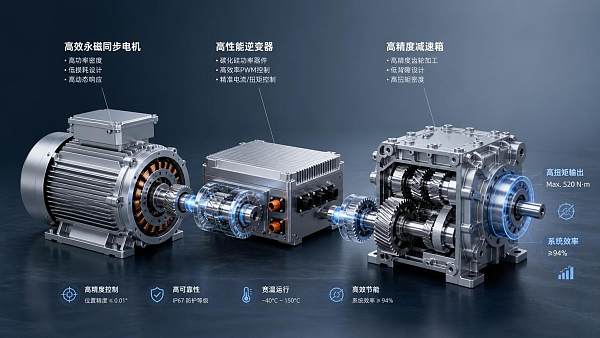
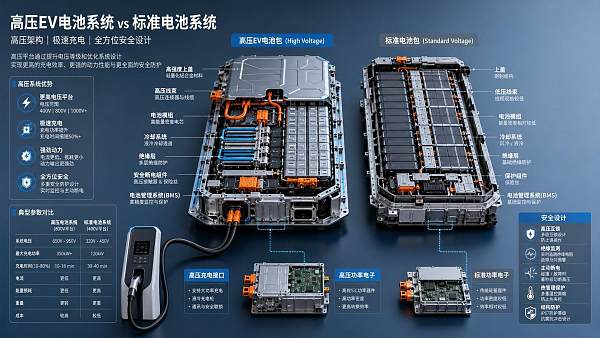
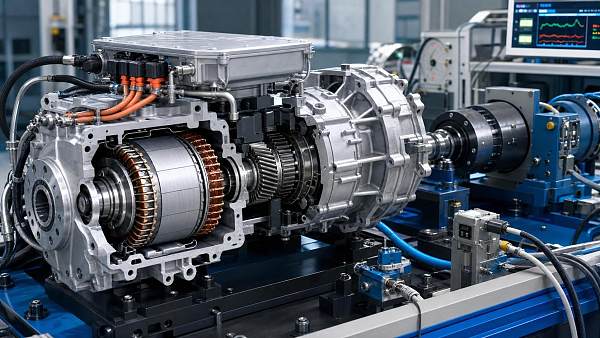
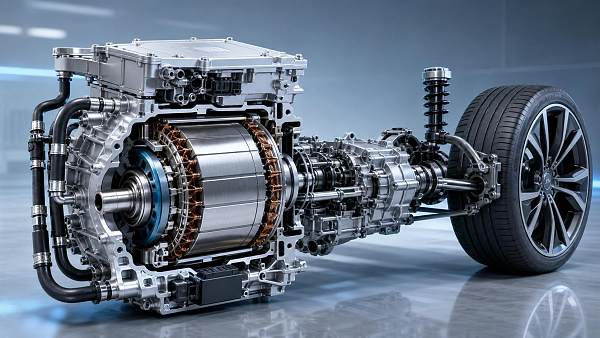
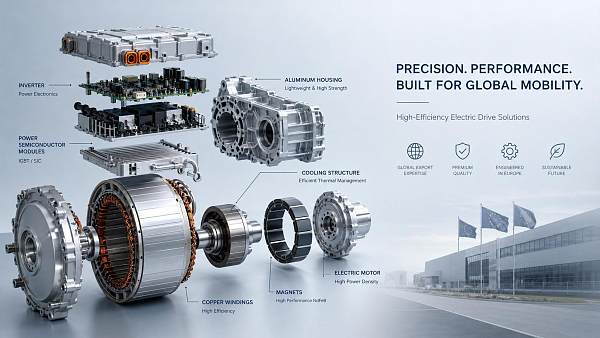
Battery-adjacent parts often rank high because they influence safety, thermal performance, or assembly precision. This includes cell interconnects, insulation films, seals, cooling plates, pressure relief components, and battery management system subparts. The EV motor side also carries hidden exposure through magnets, bearings, laminations, shafts, resolver-related items, and insulating materials that must perform under heat, vibration, and repeated load cycles.
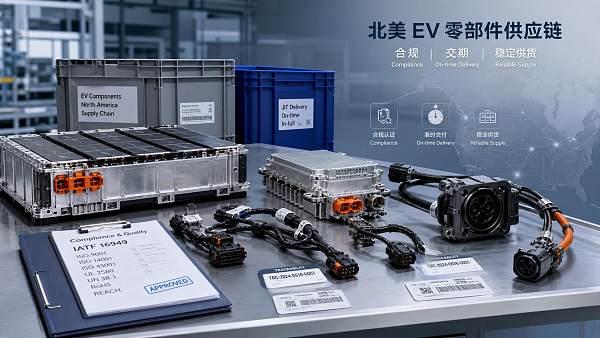
Power electronics and charging-related components can also become procurement bottlenecks. Inverters, on-board chargers, DC-DC modules, contactors, high-voltage connectors, and harness assemblies depend on both electrical performance and stable manufacturing control. Small changes in plating quality, sealing, or cable routing can affect field performance, especially in demanding operating ranges such as -30°C to 85°C or under long vibration exposure.
For distributors serving the aftermarket, common car spare parts used in EV repair can be more difficult than OE-oriented purchasing. Demand is fragmented, failure patterns are still evolving, and many buyers need mixed orders across 20–50 SKUs rather than one large production batch. In that context, supplier responsiveness matters almost as much as the technical specification.
Risk map by component category
The table below helps compare how sourcing risk typically appears across common electric vehicle parts. It is not a fixed ranking for every program, but it gives procurement teams a practical screening tool before RFQ release or supplier consolidation.
The procurement lesson is straightforward: risk does not always follow unit price. It often follows process sensitivity, substitution difficulty, and the cost of disruption. A low-cost connector that fails incoming inspection on two batches can consume more time and budget than a much more expensive but tightly controlled assembly.
How to evaluate EV component suppliers before risk becomes inventory loss
A practical supplier review for EV components should combine technical screening and trade execution screening. Many organizations perform one without the other. Engineering may validate fit and function, while procurement checks price and lead time, but neither side fully tests how the supplier behaves under demand fluctuation, specification updates, or logistics disruptions. That gap is where hidden sourcing risk grows.
For most automotive components, a useful first pass is a 5-point review: manufacturing consistency, documentation readiness, logistics flexibility, change management, and aftermarket support. These points can be checked within a 2–3 week supplier assessment cycle if the buyer requests structured evidence rather than sales claims. Examples include process flow charts, incoming material controls, lot coding practice, packaging standards, and corrective action timing.
Distributors and agents should add a sixth point: channel support capability. Can the supplier support low-volume mixed orders, urgent replacement demand within 7–15 days, and technical clarification on superseded parts? An EV parts supplier that performs well in OE supply may still be weak in service parts responsiveness. This distinction matters for cash flow, customer retention, and regional inventory planning.
For business evaluators, the strongest sign of supplier maturity is not perfect language in the quotation. It is disciplined control of changes. When a material source changes, a die is refurbished, or a sub-tier provider is replaced, how quickly is that communicated? Is the part number stable? Is there a revised drawing or validation note? The shorter and clearer that chain, the lower the sourcing ambiguity.
A procurement checklist for common electric vehicle parts
- Confirm whether the supplier can support pilot, ramp-up, and steady-state demand separately. A supplier able to ship 500 units may struggle at 5,000 units per month.
- Ask for standard lead-time ranges for both normal orders and expedited orders, such as 3–5 weeks versus 7–10 days where feasible.
- Review lot traceability down to material batch or production date for critical EV motor and battery-adjacent parts.
- Verify documentation needed for cross-border trade, including packing consistency, labeling accuracy, and routine test reports where applicable.
- Assess whether the supplier can manage engineering change notifications without confusing old and new stock in the warehouse.
Supplier scorecard example
The next table converts sourcing questions into an operational scorecard. Procurement teams can assign internal weights based on whether they are buying for OE production, regional warehousing, or EV aftermarket distribution.
Using a scorecard like this helps teams compare suppliers beyond ex-works pricing. It also creates a documented basis for internal approval, which is valuable when sourcing decisions must satisfy procurement, operations, engineering, and commercial stakeholders at the same time.
What standards, documentation, and quality signals should buyers ask for?
For EV components, compliance questions should be practical rather than decorative. Buyers do not need a stack of unrelated certificates. They need the documents that reduce ambiguity in fit, function, materials, and shipment acceptance. Depending on part type, this can include drawing revisions, routine inspection records, material declarations, dimensional reports, packaging instructions, and lot traceability. The right document set often changes between prototype orders, SOP supply, and aftermarket replenishment.
Common automotive quality language may involve systems such as IATF-oriented manufacturing practices, APQP or PPAP-style submissions in customer-driven contexts, and core tools for process control. Not every transaction requires the full formal package, especially in distribution or replacement channels, but buyers should still ask what level of process discipline exists. A supplier that cannot explain revision control or nonconforming product handling presents a measurable risk.
High-voltage and safety-adjacent parts also require attention to labeling, insulation characteristics, temperature range, and intended use boundaries. If a component is used in environments from -40°C to 105°C, the documentation should not be vague. The same applies to sealing classes, connector mating cycles, torque specifications, or vibration conditions where relevant. Even if the final vehicle maker owns the full validation process, the buyer still needs clear supplier declarations.
For cross-border buyers, documentation quality affects logistics as much as engineering. Mismatched labels, inconsistent part descriptions, or changing carton quantities can trigger receiving delays and inventory errors. In fast-moving industrial parts supply, a clean packing list and stable SKU definition can save more time than a marginal unit-price concession.
Minimum documentation set by sourcing stage
The following table shows a practical way to align documentation requirements with sourcing stage. It helps avoid two common problems: under-checking critical parts and overloading routine purchases with unnecessary paperwork.
This staged approach keeps procurement realistic. It avoids the mistake of treating every EV part as a full validation program, while still protecting the business from avoidable quality and supply chain surprises.
How aftermarket demand changes sourcing strategy for distributors and agents
Aftermarket sourcing for electric vehicle parts does not behave like factory sourcing. Demand is less predictable, replacement cycles are still developing, and field diagnostics can vary by region. A distributor may need a low volume of 30 units for one sensor, 120 units for a cooling component, and only 8 units for a specific relay, all within the same month. This makes inventory control more sensitive to minimum order quantity, packaging breaks, and response time.
The hidden risk here is not only stockout. It is dead stock caused by poor interchange logic. If two visually similar automotive components carry different firmware, sealing specs, or connector keys, the wrong stocking decision can freeze working capital for 90–180 days. Distributors need suppliers that provide clean cross-reference guidance and lifecycle visibility, not just attractive spot pricing.
Service expectations are also different. End customers often want replacement timing in days, not standard production cycles. A lead time that is acceptable for OE planning may be commercially unusable for workshop networks or regional agents. In many channels, a realistic target is to separate stock items, replenishment items, and special-order items into 3 operating bands so sales teams can quote accurately and avoid overpromising.
This is where industrial intelligence becomes commercially valuable. GIIH helps buyers connect technical signals with trade signals: which component families are becoming more repair-driven, where supply bottlenecks are forming, and how demand structure differs between mature and emerging EV markets. That combined view is more useful than isolated product data because it supports both purchasing control and channel strategy.
Three operating bands for EV aftermarket inventory
- Fast-moving stock items: parts with stable replacement demand and short decision cycles. These should be managed with stricter reorder points and weekly review.
- Planned replenishment items: parts with moderate turnover and 3–6 week sourcing windows. These fit monthly forecast adjustment and supplier reservation models.
- Special-order items: low-frequency parts with uncertain interchangeability or long validation needs. These should be quoted with controlled lead-time disclosure and low inventory exposure.
A distributor that applies these three bands can improve fill rate discipline without carrying excessive slow-moving stock. It also makes supplier negotiations more specific, because ordering logic is tied to actual service behavior rather than generic annual volume estimates.
FAQ: practical questions buyers ask about sourcing EV components
How should buyers choose between a lower-cost supplier and a more stable supplier?
Compare total sourcing exposure, not only unit cost. If the cheaper supplier adds 4–6 weeks to replenishment, has weak documentation, or cannot hold dimensional stability across repeat lots, the savings may disappear through expediting, inspection cost, or service delays. For critical EV components, many buyers use a blended decision model that weighs price, lead time, batch consistency, and change-control responsiveness together.
What are the most overlooked checks when purchasing common electric vehicle parts?
Three checks are often missed: revision consistency, packaging discipline, and sub-tier dependence. Buyers may approve a sample but fail to control future revision changes. They may also ignore carton labeling and quantity stability, which later creates warehouse errors. Finally, many risks sit one tier deeper, where a supplier depends heavily on one material source or one machining subcontractor.
How long is a typical sourcing validation cycle for automotive components?
For standard non-safety-critical parts, an initial commercial and technical screening may take 1–2 weeks. Sample review and basic confirmation may add another 2–4 weeks, depending on tooling and shipping. More sensitive EV motor, battery-adjacent, or high-voltage parts often require a longer cycle because lot validation, documentation review, and customer approval steps are more demanding.
Which buyers benefit most from industrial intelligence support instead of product-only sourcing?
Information researchers, procurement managers, business evaluators, and channel partners benefit the most when they need to compare supplier stability, regional trade risks, aftermarket demand patterns, and category trends together. Product-only sourcing may solve an immediate RFQ, but industrial intelligence helps avoid repeated sourcing mistakes across multiple programs and markets.
Why work with GIIH when sourcing risk is broader than one quotation?
When EV components move through global trade networks, the real challenge is not simply finding a supplier. It is understanding how technical specifications, manufacturing discipline, logistics volatility, and market demand interact. GIIH addresses that gap by connecting industrial intelligence, trade insight, and component-level analysis across precision automotive parts, mobility systems, and supply chain operations.
For procurement teams, GIIH can help clarify sourcing questions before they become operational losses: which EV parts categories deserve dual-source planning, which supplier signals indicate future instability, and how to balance OE and aftermarket priorities. For distributors and agents, the value is equally practical: identifying SKU risk, regional replacement trends, and supply continuity pressure before inventory capital is committed.
Our cross-sector intelligence approach is especially useful when decisions involve more than one variable. A buyer may need guidance on parameter confirmation, part selection logic, expected delivery windows, compliance documentation, and sample support at the same time. That is where fragmented information usually fails and structured industry interpretation matters most.
If you are evaluating electric vehicle parts suppliers, planning a sourcing transition, or building an EV aftermarket portfolio, contact GIIH for focused support on component screening, supplier comparison, lead-time assessment, documentation requirements, replacement demand mapping, sample coordination, and quotation discussions. Clearer intelligence at the start usually costs less than emergency correction later.
- industrial intelligence
- aftermarket service
- technical specifications
- precision automotive
- cross-border trade
- warehousing
- supply chain
- logistics management
- inventory control
- procurement
- car spare parts
- automotive components
- EV components
- electric vehicle parts
- EV battery
- EV motor
- precision engineering
- industrial parts
- aftermarket
Recommended News
 Sep 12, 2026What does UN 38.3 testing cover for EV battery shipments?EV battery UN 38.3 testing covers altitude, thermal, vibration, shock, short-circuit, overcharge, and discharge risks. Learn key compliance steps for safer EV battery shipments.
 Aug 24, 2026How to compare electric drive components for torque and efficiencyElectric drive components comparison starts with real load profiles. Learn how to evaluate torque, efficiency, motor-inverter-gearbox fit, and avoid costly selection mistakes.
 Jul 29, 2026400V EV Battery Components Explained: Key Parts, Functions, and System Design BasicsEV battery components 400V explained clearly: discover key parts, core functions, safety logic, thermal design, and system basics to evaluate EV battery packs with confidence.
 Jul 18, 2026Automotive Component Rating Standards Explained: How to Compare Load, Temperature, and Safety LimitsAutomotive component rating standards explained clearly: learn how to compare load, temperature, and safety limits to reduce sourcing risk, improve compliance, and choose parts with confidence.
 Jul 15, 2026EV Components North America: Sourcing Priorities, Compliance, and Lead Time FactorsEV components North America buyers now face tougher sourcing decisions. Explore compliance risks, lead time pressures, and smarter strategies to reduce disruption and improve EV supply chain performance.
 Jul 13, 2026How to Evaluate a Battery Components Exporter for Quality, Traceability, and Lead TimeBattery components exporter selection goes beyond price. Learn how to assess quality control, traceability, and lead time to reduce supply risk and choose a reliable partner.
 Jul 12, 2026High Voltage EV Batteries vs Standard Packs: Key Design and Safety DifferencesHigh voltage EV batteries vs standard packs: explore the key design, charging, efficiency, and safety differences to choose the right EV battery architecture with confidence.
![]() Jul 07, 2026EV Accessories Buying Guide: Which Add-Ons Matter for Safety, Charging, and Daily Use?EV accessories buying guide: discover which add-ons truly improve charging, safety, and daily convenience, so you can choose smarter, safer gear with confidence.
Jul 07, 2026EV Accessories Buying Guide: Which Add-Ons Matter for Safety, Charging, and Daily Use?EV accessories buying guide: discover which add-ons truly improve charging, safety, and daily convenience, so you can choose smarter, safer gear with confidence. Jun 30, 2026EV Motor Selection Guide: Torque, Efficiency, Cooling, and Cost Trade-OffsEV motor selection guide covering torque, efficiency, cooling, and cost trade-offs. Learn how to choose the right EV motor for better range, reliability, and total value.
 Jun 29, 2026Permanent Magnet EV Motor Selection: Torque, Efficiency, Cooling, and Cost Trade-OffsPermanent magnet EV motor selection explained: compare torque, efficiency, cooling, and total cost trade-offs to choose the right EV drive solution with confidence.
 Jun 27, 2026Sourcing Guide for EV Components: How to Compare Suppliers, Lead Times, and MOQSourcing guide EV components for procurement teams: compare suppliers, lead times, MOQ, quality, and total cost to reduce risk and make smarter EV sourcing decisions.
 Jun 27, 2026Electric Drive Components Price in Europe: What Drives Cost by Motor, Inverter, and VolumeElectric drive components price Europe explained: see how motor design, inverter technology, and order volume shape real costs in Europe, and compare suppliers with greater confidence.
 Jun 25, 2026How Long Life Mobility Components Reduce Maintenance in High-Use EquipmentLong life mobility components cut maintenance by matching real load, floor, and cleaning conditions. See how smarter selection improves uptime, lowers service costs, and extends equipment life.
 Jun 23, 2026Spark Plugs OEM Sourcing Guide: Key Specs, Compatibility Checks, and Supplier RisksSpark plugs OEM sourcing guide covering key specs, compatibility checks, total cost, and supplier risks—learn how to avoid fitment errors, returns, and costly quality issues.
 Jun 13, 2026Vehicle Electronics Selection Guide: Key Standards, Interfaces, and Reliability FactorsVehicle electronics selection starts with standards, interfaces, and reliability. Learn how to compare components, reduce integration risk, and choose smarter for long-term performance.
 Jun 06, 2026What Is a BMS in Battery Systems? Functions, Key Components, and Selection BasicsBMS explained: learn what a Battery Management System does, its key components, and how to choose the right BMS for safer, longer-lasting, better-integrated battery systems.
 Jun 02, 2026Solid-State Battery Breakthroughs: What to Verify Before EV AdoptionSolid-state battery breakthroughs are reshaping EV strategy—learn what to verify in energy density, cycle life, safety, cost, and supplier readiness before adoption.
 May 31, 2026Why is EV battery tech reshaping range expectations?EV battery tech is redefining real-world range through smarter chemistry, thermal control, fast charging, and software—discover what matters beyond mileage.
![]() May 19, 2026Why long-lifespan solid-state batteries matter nowSolid-state battery breakthroughs long lifespan are reshaping EVs, grid storage, and industry. Discover why longer life, safer performance, and lower total cost matter now.
May 19, 2026Why long-lifespan solid-state batteries matter nowSolid-state battery breakthroughs long lifespan are reshaping EVs, grid storage, and industry. Discover why longer life, safer performance, and lower total cost matter now.![]() May 19, 2026Is off-grid lithium storage worth the upfront cost?Lithium battery storage for off-grid applications can justify higher upfront costs through lower maintenance, better efficiency, and stronger long-term ROI. See when it pays off.
May 19, 2026Is off-grid lithium storage worth the upfront cost?Lithium battery storage for off-grid applications can justify higher upfront costs through lower maintenance, better efficiency, and stronger long-term ROI. See when it pays off.![]() May 19, 2026Are solid-state battery breakthroughs finally lifting energy density?Solid-state battery breakthroughs in high energy density are moving beyond hype. Learn what technical evaluators should verify on cycle life, safety, cost, and scalable commercialization.
May 19, 2026Are solid-state battery breakthroughs finally lifting energy density?Solid-state battery breakthroughs in high energy density are moving beyond hype. Learn what technical evaluators should verify on cycle life, safety, cost, and scalable commercialization. May 18, 2026Why portable lithium battery storage needs better designLithium battery storage portable design matters more than ever. Discover how better safety, mobility, and charging design improve backup, travel, and field power performance.
 May 17, 2026What next-gen EV charging must solve beyond faster speedNext-gen wireless charging for electric vehicles must solve efficiency, safety, interoperability, and real-world deployment fit—not just speed. Explore what makes EV charging scalable and investment-ready.
 May 17, 2026How close are solid-state batteries to real EV production?Solid-state battery breakthroughs for electric vehicles are moving beyond the lab. Discover how close they are to real EV production, what still blocks scale-up, and which milestones matter most.