


Search News
Global Industrial Intelligence Hub (GIIH)Industry Portal
Global Industrial Intelligence Hub (GIIH)Status
Standard Access
Upgrade to PremiumNewsWaste reduction plans often miss the hardest stream first
Time
Click Count
Many waste reduction strategies target easy wins first, yet the toughest waste stream often holds the greatest gains for emissions control, CO2 reduction, and truly sustainable solutions. For researchers and operators alike, this article explores how climate technology and eco-friendly waste handling can turn overlooked challenges into practical progress—while connecting waste reduction with broader goals such as clean water, drinking water safety, and smarter water filter and water purifier systems.
Why the hardest waste stream should be addressed first

In many industrial and commercial settings, waste reduction plans begin with the most visible or easiest materials: cardboard, office plastics, or light packaging. Those steps matter, but they rarely address the stream that creates the highest operational burden. The hardest waste stream is usually mixed, contaminated, wet, hazardous, or logistically complex. It may sit at the intersection of waste management, water purification, emissions control, and compliance. That is exactly why it deserves priority.
For information researchers, the challenge is not a lack of data. It is the fragmentation of data across production, utilities, wastewater, logistics, and environmental reporting. For operators, the issue is different. They face daily decisions about segregation, storage time, contamination thresholds, equipment uptime, and disposal schedules. A plan that ignores the hardest 10%–20% of waste by handling complexity often misses a large share of avoidable cost, treatment difficulty, and carbon-related impact.
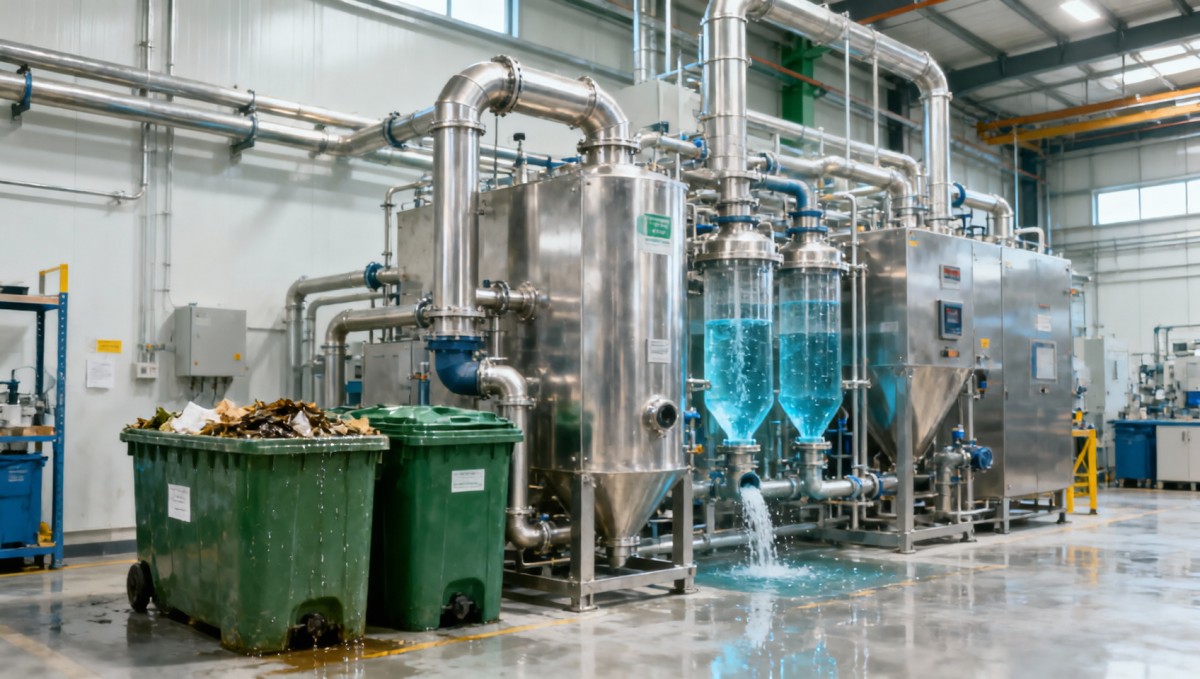
This is especially relevant in sectors linked to environmental technology and sustainability. A difficult waste stream can affect landfill exposure, wastewater loading, odor control, energy use, and downstream water filter performance. In some facilities, poor handling of one high-moisture or chemically variable stream can disrupt clean water recovery, raise maintenance frequency from quarterly to monthly, and shorten the service interval of a water purifier system or pre-treatment unit.
The practical lesson is simple: if a waste reduction strategy starts only with easy wins, it may produce tidy reports but limited transformation. If it starts with the hardest stream, it can unlock measurable gains across 3 linked areas: waste volume reduction, process stability, and environmental compliance readiness.
What usually makes a waste stream “hard”?
The answer is rarely just toxicity. In day-to-day operations, the most difficult stream often combines several of the following factors:
- Variable composition across shifts, batches, or seasons, making standard treatment parameters unreliable.
- High moisture content that increases transport cost, complicates thermal treatment, and affects residue handling.
- Cross-contamination with packaging, sludge, solvents, oils, fines, or organics that lowers recycling value.
- Storage and odor risks when material must remain on-site for 24–72 hours before collection or treatment.
- Direct influence on wastewater treatment, drinking water safety systems, or membrane fouling in water purification lines.
Facilities that identify these conditions early are in a better position to choose the right mix of segregation, dewatering, pre-treatment, recovery, and disposal. That is where structured industrial intelligence becomes more valuable than isolated vendor claims.
How to identify the toughest stream without wasting 6 months on analysis
A full-site environmental review can take 4–12 weeks depending on process complexity, but most organizations do not need to map everything before taking action. A faster approach is to classify waste streams using four operational lenses: handling difficulty, disposal cost, environmental risk, and process interaction. This method works well in mixed-industry environments where production, utility systems, and water treatment are closely connected.
Researchers should gather data from waste manifests, production logs, maintenance records, and water treatment performance reports. Operators should validate that data on the floor. A stream that looks minor in tonnage may still be the hardest if it triggers frequent filter replacement, emergency storage, unplanned downtime, or non-conforming discharge parameters. In practice, the key is not only “how much waste is generated,” but “how much disruption this stream creates per week or per production cycle.”
The table below offers a practical screening structure for teams that need to prioritize waste reduction projects in 2–4 weeks rather than wait for a long audit process.
A stream that scores high in at least 3 of these 4 dimensions is usually a better first target than a large but simple material. This approach also helps procurement teams justify why a complex treatment or segregation upgrade may outperform a cheaper but narrower recycling initiative.
A practical 4-step prioritization workflow
- Map the top 5–8 waste streams by process origin, not only by disposal code.
- Score each stream on labor burden, contamination, environmental interaction, and treatment cost.
- Run a 2–6 week observation window to confirm seasonality, shift variation, and equipment effect.
- Select one priority stream for pilot action and define 3–5 measurable KPIs before rollout.
This workflow is efficient because it balances analytical discipline with field reality. It also supports stronger internal communication between EHS, production, utilities, procurement, and sustainability teams.
Which solutions work best: segregation, treatment, or system redesign?
Once the hardest waste stream is identified, the next question is solution design. Many teams jump directly to disposal contracts or end-of-pipe treatment. That can be necessary, but it is not always the most effective route. In many cases, the better decision comes from comparing 3 intervention levels: source segregation, process-side treatment, and system redesign. Each has different implications for CO2 reduction, labor use, utility demand, and water quality stability.
Source segregation is often the fastest to implement, typically within 2–8 weeks if container logic, operator training, and handling paths are clear. Process-side treatment may require 4–12 weeks depending on equipment lead time and site integration. System redesign takes longer, often one or two budget cycles, but may create the best total result where waste, wastewater, and reusable water systems are tightly connected.
The comparison below is useful for operators deciding what to test first and for information researchers preparing a business case across multiple plants or regions.
The most important insight is that the right solution is often hybrid. A plant may need tighter segregation at the source, dewatering before transport, and better pre-filtration before water reuse. Looking at waste reduction in isolation usually leads to underperformance. Looking at it as a systems issue often creates broader climate technology value.
Where clean water and waste reduction meet
Difficult waste streams frequently have a water dimension. Slurries, wash-down residues, process effluent solids, and contaminated rinse water can increase suspended solids, organic loading, or fouling pressure. When that happens, the burden shifts to clarification, filtration, membrane protection, and water purifier stability. A waste project then becomes a water project as well.
For operators, this means one decision can affect multiple maintenance intervals: screen cleaning every shift, cartridge replacement every 2–4 weeks, membrane cleaning every 1–3 months, or sludge handling every week. For researchers, this creates a stronger total-cost narrative because cleaner source control can improve drinking water safety applications, reclaimed water consistency, and downstream water filter efficiency at the same time.
Procurement and implementation: what should buyers and operators check first?
If the hardest waste stream is now the priority, the next risk is buying the wrong solution. This happens when teams select equipment or service providers based only on price, disposal rate, or nominal capacity. In reality, procurement should focus on fit-for-stream performance. The same nominal system can behave very differently depending on particle size, moisture variability, oil content, solids loading, cleaning method, and available floor space.
A useful purchasing framework is to divide evaluation into 5 checkpoints: feed characteristics, operational stability, integration needs, compliance handling, and support model. These checkpoints matter whether the project involves sorting systems, compactors, dewatering units, wastewater pre-treatment, or support components for water purification and reuse.
Five checkpoints before requesting a quotation
- Confirm the input range. Ask for acceptable moisture, particle, pH, or contamination ranges instead of only nominal capacity.
- Check maintenance rhythm. Clarify daily, weekly, and quarterly tasks, and whether operators can complete them without specialist attendance.
- Review utility demand. Power, compressed air, water use, drainage, and ventilation can change project economics.
- Verify compliance pathway. Determine whether the solution affects storage rules, discharge quality, transport classification, or internal EHS procedures.
- Ask about commissioning and support. Typical installation and training windows may range from 2 days to 2 weeks depending on complexity.
Below is a practical comparison table for procurement teams that need to balance technical fit with execution risk.
In procurement terms, the best option is not the most complex one. It is the one that reduces total process friction over 6–12 months. That includes handling time, consumables, transport frequency, treatment stability, and effect on adjacent systems such as clean water loops and water purifier performance.
Common implementation mistakes
The most common mistake is treating a variable stream as if it were stable. The second is underestimating operator behavior. The third is ignoring secondary impacts, especially on wastewater and filter systems. A project that lowers solid waste but increases clogging, wash water demand, or emergency maintenance is not a true efficiency gain.
Good implementation therefore needs a short but disciplined trial phase. In many facilities, a 14–30 day pilot with operator feedback, maintenance logging, and sample checks is enough to reveal whether the proposed route will hold under real working conditions.
Standards, misconceptions, and what decision-makers often overlook
Waste reduction projects often fail not because the technology is wrong, but because the decision frame is too narrow. Teams may focus on recycling rate, disposal fee, or visible waste bins, while missing storage limits, wastewater discharge obligations, worker handling requirements, or internal quality constraints. In cross-border operations, this becomes even more complex because site rules, reporting expectations, and service ecosystems differ by region.
A sound decision should reference common compliance categories rather than rely on assumptions. Depending on the process, organizations may need to review waste classification, wastewater discharge parameters, on-site storage procedures, transport documentation, machinery safety, and worker exposure controls. If the stream touches clean water or reuse, then monitoring plans for filtration performance and drinking water safety applications may also need review.
Three misconceptions that delay real progress
First, “easy wins are always the smartest start.” Not necessarily. Easy wins improve visibility, but hard streams often offer deeper structural gains. Second, “disposal outsourcing solves the problem.” It may remove material from site, but it does not remove contamination, water loading, or process inefficiency. Third, “water treatment is separate from waste reduction.” In many industries, that separation is artificial. Residues, sludge, and unstable influent directly affect water filter life, water purifier stability, and reuse economics.
For this reason, the best-performing teams use a combined review cycle. Every month or every quarter, they compare waste generation, maintenance hours, filter replacement frequency, treatment interruptions, and contractor cost trends. Even a simple dashboard with 5–6 indicators can reveal whether a waste reduction plan is delivering true operational value or only shifting burden from one part of the site to another.
FAQ for researchers and operators
How do I know whether the hardest waste stream is worth prioritizing?
Prioritize it when the stream creates repeated cost, downtime, contamination, odor, or compliance issues. If one stream affects at least 3 areas such as disposal invoices, operator time, and water treatment stability, it is often a stronger starting point than a simpler high-volume stream.
What implementation period is realistic for a first project?
A practical first phase is usually 2–6 weeks for mapping and pilot setup, followed by a 14–30 day observation period. More integrated projects involving dewatering or water purification connections may require 6–16 weeks including installation, operator training, and adjustment.
Should operators or researchers lead the project?
Both are necessary. Researchers organize the decision framework, supplier comparison, and cross-site intelligence. Operators validate actual handling conditions, contamination patterns, maintenance burden, and floor-level practicality. Projects fail when either side works alone.
Can waste reduction improve clean water and water purifier performance?
Yes, especially when the difficult stream contributes suspended solids, organics, oils, or variable loading to water systems. Better segregation and pre-treatment can stabilize influent quality, reduce fouling, extend filter service intervals, and improve the economics of water reuse or drinking water safety support systems.
Why work with GIIH when planning difficult waste reduction projects
Difficult waste streams rarely belong to a single department. They cut across production, utilities, logistics, environmental management, and procurement. That is why decision-makers need more than isolated product information. They need structured industrial intelligence, practical comparison logic, and cross-sector context. GIIH supports that process by turning fragmented technical, market, and operational signals into decision-ready insight.
Our strength is particularly relevant where waste reduction overlaps with environmental technology, water purification, supply chain execution, and sustainability targets. Instead of viewing the issue as a narrow disposal problem, we help teams assess the full chain: source conditions, treatment options, compliance implications, service model, and long-term operational fit. That matters for global manufacturers, R&D institutions, cross-border traders, and policy-aware industrial users who cannot afford fragmented decision-making.
If you are evaluating a difficult waste stream, GIIH can support practical questions such as parameter confirmation, solution comparison, typical implementation windows, regional market differences, vendor-screening logic, and the interaction between waste handling and clean water or water filter systems. We can also help frame discussions around custom solution pathways, sample evaluation criteria, and quotation preparation points.
Contact GIIH when you need a clearer basis for product selection, delivery planning, technical due diligence, or multi-site strategy. A stronger waste reduction plan begins when the hardest stream is no longer treated as an exception, but as the starting point for better industrial decisions.
Recommended News
 Sep 08, 2026When do recycling solutions reduce waste disposal costs for businesses?Recycling solutions can lower business waste costs when diversion, efficient collections, and compliance savings exceed implementation expenses. Discover how to build a stronger ROI case.
 Jul 13, 2026How to Compare a Recycling Solutions Manufacturer for Waste Stream Fit and Operating CostRecycling solutions manufacturer comparison starts with waste stream fit and operating cost. Learn how to evaluate energy, maintenance, uptime, and service for smarter recycling investments.
 Jul 12, 2026What Are Garbagesortingplants Used for in Modern Waste Management Systems?garbagesortingplants help recover valuable materials, cut landfill use, and improve recycling efficiency. Discover how they support smarter, cleaner modern waste management.
 Jul 05, 2026How AI Waste Recycling Systems Work in MRFs: Sorting Accuracy, Sensors, and ROIAI waste recycling systems in MRFs use sensors, machine vision, and automation to boost sorting accuracy, cut contamination, and improve ROI. See how they work.
 Jul 03, 2026Waste Management Systems in Southeast Asia: Key Market Drivers and Buyer PrioritiesWaste management systems Southeast Asia are being reshaped by regulation, ESG pressure, and resource recovery demand. Explore key market drivers and buyer priorities to identify smarter, scalable opportunities.
 Jul 01, 2026How to Evaluate Waste Recycling Systems in North America for Multi-Site OperationsWaste recycling systems North America for multi-site operations: learn how to compare vendors, control lifecycle costs, strengthen compliance, and scale smarter recycling decisions.
 Jun 28, 2026Outdoor Garden Supplies for Commercial Landscaping: What to Buy for Durability and Low UpkeepOutdoor garden supplies for commercial landscaping: discover what to buy for durability, low upkeep, smarter sourcing, and long-term value across demanding commercial sites.
 Jun 27, 2026What Does a Waste Treatment Plant Do? Key Processes, Equipment, and Output StandardsWaste treatment plant guide: learn key processes, core equipment, output standards, and how modern facilities recover value, reduce risk, and meet strict compliance requirements.
 Jun 24, 2026Biomass Energy Project Evaluation: Feedstock Costs, ROI, and Operational Risks ExplainedBiomass energy project evaluation starts with feedstock costs, ROI sensitivity, and operational risk. Learn how to spot weak assumptions, compare options, and make smarter investment decisions.
 Jun 20, 2026Eco-Friendly Innovations in Manufacturing: Which Solutions Are Practical to Adopt First?Eco-friendly innovations in manufacturing: discover the most practical solutions to cut waste, lower energy costs, strengthen compliance, and improve resilience without disrupting production.
 Jun 17, 2026Waste Management Compliance: Key Standards, Tracking Methods, and Audit RisksWaste management compliance explained: learn key standards, tracking methods, and top audit risks to strengthen control, avoid costly gaps, and improve operational resilience.
 Jun 12, 2026Eco Tech in Waste Management: Which Solutions Improve Sorting and Energy Efficiency?Eco Tech in waste management: discover which solutions improve sorting accuracy and energy efficiency across mixed, organic, and industrial waste streams for smarter, higher-value recovery.
 Jun 07, 2026Sustainable Waste Disposal Methods: How to Choose the Right Option for Business OperationsSustainable waste disposal starts with the right fit. Learn how businesses can compare methods, cut risk, stay compliant, and choose cost-effective options that support ESG goals.
 May 31, 2026Is Sustainable Board ready for high-volume packaging?Sustainable Board can scale high-volume packaging when performance, compliance, supply, and recovery are validated by real scenarios. Learn how to reduce risk and improve ROI.
 May 30, 2026Can recycled materials meet strict quality standards?Recycled materials can meet strict quality standards with traceability, testing, and supplier control. Learn how to reduce risk, prove compliance, and build sustainable value.
![]() May 23, 2026How to choose garden supplies for commercial landscapingOutdoor garden supplies for commercial landscaping: learn how to compare durability, supplier reliability, lifecycle cost, and compliance to make smarter, lower-risk purchasing decisions.
May 23, 2026How to choose garden supplies for commercial landscapingOutdoor garden supplies for commercial landscaping: learn how to compare durability, supplier reliability, lifecycle cost, and compliance to make smarter, lower-risk purchasing decisions. Apr 30, 2026Recycling solutions that struggle with inconsistent waste streamsDiscover recycling solutions for inconsistent waste streams with sustainable waste disposal, environmental innovation, Eco Tech, and green energy strategies that improve recovery and ROI.
 Apr 29, 2026Eco Tech monitoring tools that catch waste leaks earlierEco Tech monitoring tools detect waste leaks earlier, improving sustainable waste disposal, recycling solutions, and environmental innovation with eco-friendly solutions that cut risk and cost.
 Apr 25, 2026Eco Tech tools helping waste audits become more accurateEco Tech improves sustainable waste disposal and recycling solutions with environmental innovation and sustainable technology, helping businesses cut costs, boost compliance, and scale eco-friendly solutions.
 Apr 22, 2026Recycling solutions facing stricter material traceability rulesRecycling solutions for stricter traceability: discover sustainable waste disposal, Eco Tech, and sustainable technology that reduce compliance risk and unlock greener growth.
 Apr 22, 2026Are closed-loop recycling solutions worth the extra setup?Sustainable waste disposal and recycling solutions: find out when closed-loop systems pay off through environmental innovation, eco-friendly solutions, and stronger supply value.
 Apr 22, 2026What makes recycling solutions scalable across multiple sitesDiscover how recycling solutions scale across multiple sites through sustainable waste disposal, environmental innovation, Eco Tech data visibility, and eco-friendly solutions that also support replacement parts and vehicle upgrades.
 Apr 22, 2026Recycling solutions for materials that are hard to sortExplore recycling solutions for hard-to-sort materials, from sustainable waste disposal and environmental innovation to eco-friendly solutions, green energy, and sustainable technology trends.
 Apr 22, 2026How to compare recycling solutions beyond recovery ratesCompare recycling solutions beyond recovery rates with a practical guide to sustainable waste disposal, environmental innovation, eco-friendly solutions, and sustainable technology for smarter, lower-risk decisions.