


Search News
Global Industrial Intelligence Hub (GIIH)Industry Portal
Global Industrial Intelligence Hub (GIIH)Status
Standard Access
Upgrade to PremiumNewsCustom Precision Parts for Electronics: Tolerance, Material, and Process Basics
Time
Click Count
Custom Precision Parts for Electronics: Tolerance, Material, and Process Basics
For technical evaluations, custom precision parts electronics decisions usually begin with three basics: tolerance, material, and process.
These factors shape part fit, signal reliability, thermal behavior, and production repeatability.
In practice, even a small mismatch can create assembly issues, unstable contact, or unexpected field failures.
That is why custom precision parts electronics sourcing should move beyond drawings alone.
It should connect specification details with the real conditions inside the final device.
This article explains the basics clearly, so supplier comparison becomes faster, cleaner, and less risky.
Why custom precision parts electronics need a tighter review framework
Electronics assemblies pack more functions into smaller spaces than ever before.
That trend raises sensitivity to dimensional drift, heat buildup, and material instability.
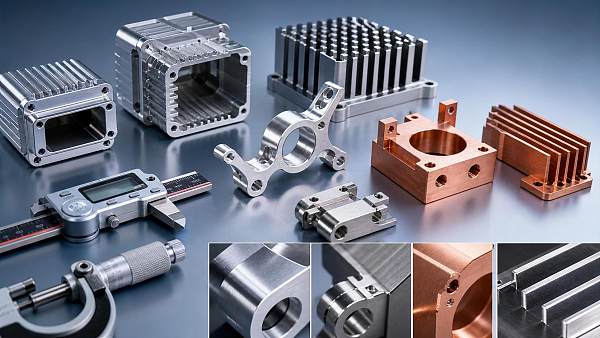
A connector shell, shielding cover, heat spreader, bracket, or micro-machined housing may look simple.
Still, each part can influence EMC behavior, insertion force, grounding quality, or long-term durability.
More importantly, custom precision parts electronics projects rarely fail because of one dramatic defect.
They often fail through small variations that accumulate across machining, finishing, and assembly.
A stronger review framework helps catch those risks early.
- Check whether tolerances match actual functional surfaces.
- Confirm material behavior under electrical and thermal loads.
- Verify that the chosen process can hold the specification consistently.
- Review finishing, plating, and inspection as part of the full requirement.
Tolerance basics: where fit becomes function
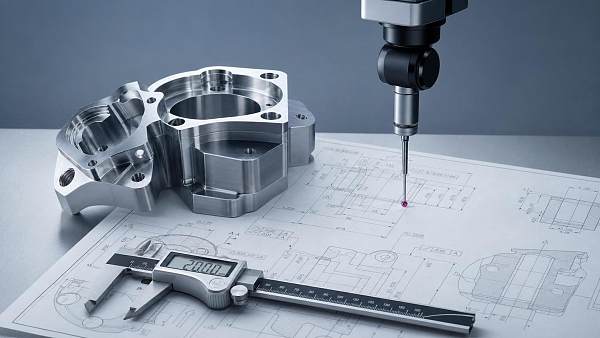
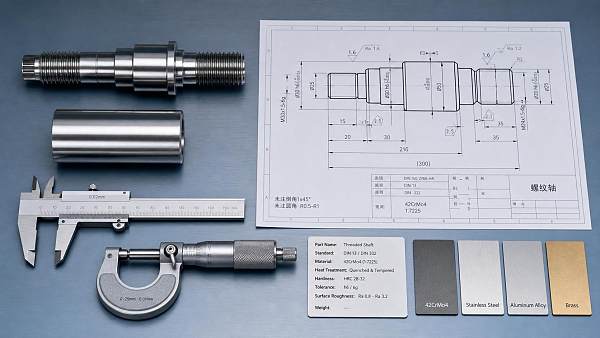
Tolerance defines the acceptable dimensional variation of a part feature.
In custom precision parts electronics, tolerance is never just a drawing exercise.
It directly affects assembly fit, alignment, contact pressure, and mechanical stress distribution.
The key is to tighten only what matters.
Overly strict tolerances increase cost and lead time without improving device performance.
On the other hand, loose control on critical interfaces can break the whole design intent.
Critical tolerance areas to review
- Mating surfaces for connectors, enclosures, and shielding components.
- Hole positions that drive board mounting or fastener alignment.
- Flatness on thermal contact faces and heat transfer surfaces.
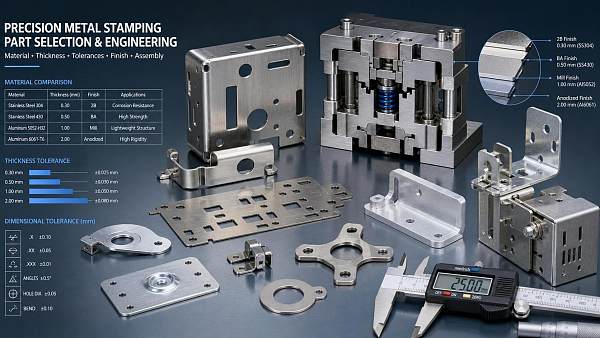
- Wall thickness in thin stamped or machined electronic components.
- Burr control on edges near cables, seals, or conductive interfaces.
From a decision standpoint, geometric tolerances often matter as much as linear dimensions.
Position, parallelism, and flatness can determine whether a part works under real assembly conditions.
This is especially true for compact devices with stacked tolerances.
Practical tolerance questions for supplier review
- Which dimensions are function-critical, and which are reference only?
- How is measurement performed, and what gaging method is used?
- Can the process hold tolerance at prototype and mass production stages?
- How are burrs, warpage, and deformation addressed after finishing?
Material basics: performance starts before manufacturing
Material choice is another core filter in custom precision parts electronics selection.
It influences conductivity, shielding, corrosion resistance, heat flow, weight, and process stability.
A material that looks economical on paper may create hidden cost through plating issues or dimensional movement.
So the right question is not only, “What material is common?”
The better question is, “What material stays stable in this application and process path?”
Common material groups in electronics precision parts
Material selection should also consider compliance and supply continuity.
For many programs, RoHS, REACH, flammability, and traceability requirements are not optional.
This becomes more important when custom precision parts electronics move into medical, automotive, or industrial control environments.
Process basics: the same drawing behaves differently across methods
The manufacturing process determines how well a design can be repeated in volume.
In custom precision parts electronics, process choice often decides cost, lead time, and consistency.
Machining, stamping, die casting, metal injection molding, and precision molding each create different risk profiles.
How major processes compare
- CNC machining suits low-volume, tight-feature, high-flexibility programs.
- Stamping works well for thin metal parts at scale.
- Die casting supports complex shapes and efficient production volumes.
- Injection molding fits insulating plastic parts with stable repeat demand.
- Secondary operations often decide the final functional quality.
That last point is easy to underestimate.
Deburring, plating, anodizing, passivation, polishing, and laser marking can shift the final result significantly.
For example, plating thickness may improve conductivity but also alter fit on tight interfaces.
That means process planning should be reviewed as a complete chain, not as isolated steps.
How tolerance, material, and process interact in real electronics applications
The most useful evaluations treat these three factors as one system.
A tolerance target may be realistic in aluminum machining but difficult after anodizing.
A conductive alloy may perform well electrically but deform during thin-wall stamping.
A plastic insulator may reduce weight but expand beyond the connector stack limit under heat.
This is where custom precision parts electronics review becomes a genuine engineering task.
The goal is not simply to approve a vendor capability sheet.
The goal is to confirm that the full manufacturing route supports the required function over time.
Typical application checks
- For shielding parts, review conductivity, flatness, and spring-back together.
- For heat sinks, compare thermal conductivity, flatness, and surface finish.
- For brackets, check fastener alignment, vibration resistance, and coating durability.
- For contact parts, study plating, wear cycles, and dimensional consistency.
Supplier evaluation points that reduce sourcing risk
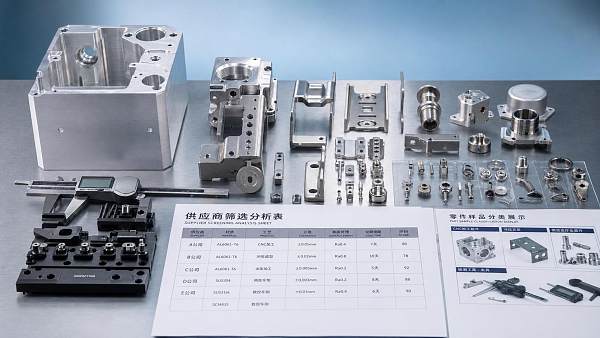
When comparing suppliers for custom precision parts electronics, capability claims should be translated into evidence.
A fast quote is useful, but a stable process matters more.
In actual business decisions, a few review points usually reveal most hidden problems.
- Ask for process-specific tolerance capability, not generic precision statements.
- Review incoming material certifications and finishing control records.
- Check whether the supplier manages pilot runs before volume release.
- Confirm inspection methods for critical dimensions and cosmetic requirements.
- Assess change control for tooling, subcontracted finishing, and raw material substitutions.
This approach aligns well with the broader industrial intelligence mindset promoted by GIIH.
Better decisions come from linking technical detail with process visibility and supply chain context.
A simple decision path for custom precision parts electronics projects
If a project is still early, a simple sequence can keep evaluation practical.
- Define the part’s actual job inside the electronic system.
- Mark critical dimensions linked to fit, signal, heat, or sealing.
- Shortlist materials based on function, compliance, and durability.
- Match the design to a process that can repeat the requirement.
- Validate finishing and inspection before production approval.
This sequence sounds basic, but it prevents many expensive revisions later.
It also makes supplier discussions more specific and more productive.
Closing perspective
Strong custom precision parts electronics decisions rarely depend on one impressive specification.
They depend on how tolerance, material, and process support each other in the final application.
When these basics are reviewed together, sourcing becomes more predictable and technical risk drops quickly.
For teams navigating supplier choices, the most effective next move is simple.
Use every drawing review, sample check, and quotation round to test whether custom precision parts electronics requirements are truly manufacturable, stable, and aligned with product reality.
Recommended News
 Sep 22, 2026How Brake Drum Material and Machining Affect Semi Trailer Service LifeSemi trailer spare parts guide: discover how brake drum material and precision machining improve braking reliability, reduce wear, and extend trailer service life.
 Sep 10, 2026Evaluating Compatibility and Certification Requirements for Replacement Brake Drums on BPW-Axle Semi-TrailersDiscover certified semi trailer spare parts for BPW-axle trailers—ensuring brake drum compatibility, EN 15085-2 certification & optimal thermal performance.
 Sep 09, 2026When does shaft runout require custom precision parts?Custom precision parts shafts become essential when runout affects bearings, seals, vibration, or assembly accuracy. Learn how to specify reliable, high-performance shaft solutions.
 Jul 14, 2026RoHS Precision Parts Explained: Compliance Requirements, Test Reports, and Buying RisksRoHS precision parts explained: learn compliance requirements, how to read test reports, spot supplier gaps, and avoid costly buying risks before shipment approval.
 Jul 14, 2026Precision Machining Factory Selection Guide: Tolerances, Materials, and Inspection CapabilityPrecision machining factory selection starts with tolerance control, material expertise, and inspection capability. Learn how to compare suppliers, reduce risk, and choose with confidence.
 Jul 13, 2026Forged Engineered Components Explained: When Forging Outperforms Casting or MachiningForged engineered components deliver superior strength, fatigue resistance, and reliability. Discover when forging outperforms casting or machining for critical industrial parts.
 Jul 12, 2026Laminated Core Components: How to Choose Grades, Thickness, and ApplicationsLaminated core components explained: learn how to choose steel grades, thickness, and application fit to cut losses, improve efficiency, and make smarter design decisions.
 Jul 11, 2026Diamond Saw Blades for Stone, Tile, and Concrete: How to Choose the Right Typediamondsawblades buying guide for stone, tile, and concrete. Learn how to match blade type, cutting method, and machine for cleaner cuts, longer life, and fewer costly mistakes.
 Jul 09, 2026Product Selection Criteria for Stamped Parts: 7 Factors That Affect Fit and CostProduct selection criteria for stamped parts: discover 7 key factors that shape fit, tolerance, tooling, and total cost—make smarter sourcing decisions with less risk.
 Jul 09, 2026Sheet Metal Custom Parts: How to Choose Tolerances, Finishes, and Lead TimesSheet metal custom parts guide: learn how to choose the right tolerances, finishes, and lead times to reduce cost, improve fit, and avoid sourcing delays.
 Jul 08, 2026How to Do Product Category Analysis for Precision Parts Sourcing and Supplier ShortlistingProduct category analysis precision parts helps buyers classify components, compare true supplier fit, and shortlist faster with better cost, lead time, and compliance accuracy.
![]() Jul 07, 2026How to Evaluate a Battery Protection Parts Supplier for Quality, Testing, and Supply StabilityBattery protection parts supplier evaluation starts with quality, testing, and supply stability. Learn the key checks, red flags, and sourcing criteria for safer, more reliable decisions.
Jul 07, 2026How to Evaluate a Battery Protection Parts Supplier for Quality, Testing, and Supply StabilityBattery protection parts supplier evaluation starts with quality, testing, and supply stability. Learn the key checks, red flags, and sourcing criteria for safer, more reliable decisions. Jul 04, 2026Custom Precision Parts Prototype: Tolerance, Material, and Lead Time BasicsCustom precision parts prototype basics made practical: learn how tolerance, material, and lead time choices reduce risk, improve testing, and speed smarter production decisions.
 Jul 04, 2026Custom Engineered Components vs Standard Parts: When Is Customization Worth It?Custom engineered components vs standard parts: discover when customization lowers lifecycle cost, reduces downtime, and creates stronger competitive advantage.
 Jul 03, 2026How to Source Precision Machined Parts in the Middle East: Tolerances, Materials, and Supplier ChecksPrecision machined parts Middle East sourcing starts with tighter supplier checks. Learn how to compare tolerances, materials, certifications, and total cost for safer, smarter procurement.
 Jul 02, 2026Performance Factor Analysis for Surface Treatment: Key Variables That Affect Coating ResultsPerformance factor analysis for surface treatment reveals how substrate condition, cleanliness, profile, environment, and process settings shape coating results. Learn the key variables to improve adhesion, consistency, and production decisions.
 Jun 29, 2026Material Selection Analysis by Weight: When Lighter Parts Improve Total System PerformanceMaterial selection analysis by weight reveals when lighter parts truly improve total system performance, cutting energy, load, and lifecycle cost while avoiding hidden tradeoffs.
 Jun 27, 2026Engineered Components Drawing Review: 8 Checks to Catch Tolerance and DFM Issues EarlyEngineered components drawing review made practical: discover 8 smart checks to catch tolerance, GD&T, and DFM issues early, reduce rework, and improve launch readiness.
 Jun 26, 2026DIN Precision Parts: Tolerances, Materials, and How to Read Spec RequirementsDIN precision parts explained clearly: learn tolerances, material selection, surface requirements, and how to read DIN specs to reduce sourcing risk and choose suppliers with confidence.
 Jun 25, 2026Custom Precision Parts for Electronics: Tolerance, Material, and Process BasicsCustom precision parts electronics guide covering tolerance, material, and process basics. Learn how to reduce sourcing risk, improve fit and reliability, and choose suppliers with confidence.
 Jun 24, 2026Rapid Prototyping Near Me: How to Compare Lead Time, Materials, and Tolerance OptionsRapid prototyping near me: compare lead time, materials, and tolerance options with a practical framework to choose faster, smarter suppliers and reduce costly prototype delays.
 Jun 23, 2026Sheet Metal Components Manufacturing: Tolerance, Finish, and Process Options ExplainedSheet metal components manufacturing explained: compare tolerance, finish, and process options to reduce sourcing risk, control cost, and choose suppliers with confidence.
 Jun 23, 2026Ballscrews Selection Guide: How Lead, Accuracy, and Load Affect Motion PerformanceBallscrews selection guide covering lead, accuracy, and load. Learn how to improve speed, repeatability, and service life with practical tips for better motion performance.
 Jun 22, 2026PCB Assembly Process Explained: SMT, THT, Testing, and Common Defects to Watch ForPCB assembly explained clearly: learn SMT, THT, testing methods, and common defects that affect reliability, compliance, and product performance across industries.