


Search News
Global Industrial Intelligence Hub (GIIH)Industry Portal
Global Industrial Intelligence Hub (GIIH)Status
Standard Access
Upgrade to PremiumNewsUS Extends Antidumping and Countervailing Duty Orders on Chinese Chassis
Time
Click Count
The date of the underlying event is not specified in the information provided, but a Federal Register notice dated November 13, 2026, announces that the United States will continue its antidumping and countervailing duty orders on certain chassis and subassemblies from China. For exporters, importers and buyers, the notice keeps trade measures relevant to sourcing, pricing and market access. The practical question is how the existing orders apply to particular products and transactions, details that the supplied summary does not establish.
Commerce announcement follows an injury determination
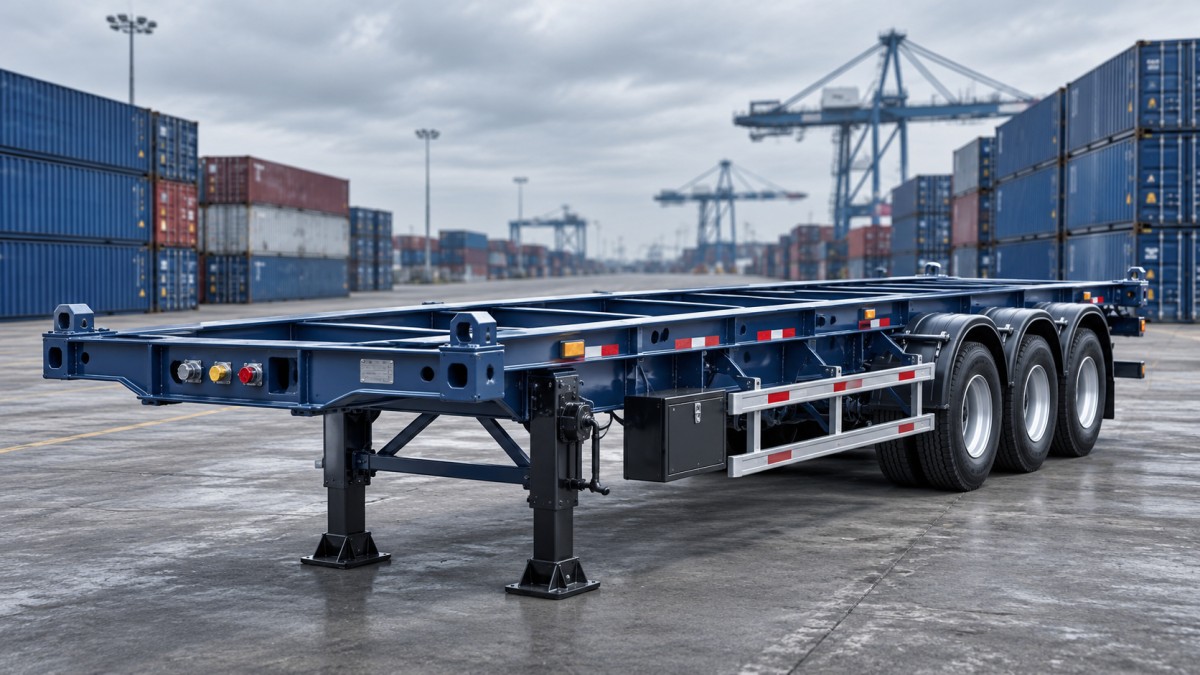
According to the supplied event summary, the International Trade Administration (ITA) of the US Department of Commerce published the notice in the Federal Register on November 13, 2026. It announced the continuation of antidumping and countervailing duty orders covering certain chassis and subassemblies originating in China.
The decision was based on a final determination by the US International Trade Commission (ITC) that revoking the existing trade remedies would likely lead to the continuation or recurrence of material injury to the US domestic industry. The measures therefore remain in place under the announced continuation.
While the notice date is provided, the input does not specify a separate date for the underlying event. It also does not provide the text of the orders, product descriptions detailed enough to determine coverage, duty rates or transaction-specific requirements.

Where continued duties may affect the supply chain
Exporters and manufacturers face product-level questions
For manufacturers and exporters of Chinese-origin chassis and subassemblies, the central issue is whether a particular product falls within the orders. Analysis suggests that a commercial product name alone may not be enough to answer that question: the relevant description and characteristics would need to be checked against the applicable order documents. The supplied summary does not establish which individual products are covered.
That uncertainty may affect quotation and order planning. A seller that assumes a product is outside the orders could encounter a different cost calculation from a buyer or importer. Conversely, treating every related part as covered without checking could distort a quotation. Product specifications, origin information and consistent descriptions across commercial records may therefore be useful starting points for a review.
Manufacturers that supply parts for further processing may also need to examine how their products are described throughout the transaction. From an industry perspective, the relevant question is not simply where a component is sold, but whether the applicable rules bring the product and its origin within the orders. The input provides no basis for deciding the treatment of any processing arrangement.
Importers and buyers may revisit landed-cost assumptions
Importers and buyers may need to account for the continued possibility of antidumping and countervailing duty costs when evaluating covered products. Those costs could affect supplier comparisons, purchase prices and the commercial terms offered to customers. The announcement confirms continuation of the orders, but the information supplied does not identify rates or establish what any particular shipment will owe.
Analysis suggests that buyers assessing competing quotations could benefit from asking whether each quotation includes potential trade-remedy costs and which party is expected to bear them. A price comparison that uses different assumptions may obscure the cost of a purchase. It would also be prudent to distinguish an estimate from an amount verified under the applicable rules.
For buyers with longer procurement commitments, continued duties may be relevant to how orders are priced and reviewed over time. Whether a contract permits a price adjustment, and how any adjustment would operate, depends on its terms; no contract terms are provided here. The notice alone does not establish that existing agreements must be changed.
Logistics and distribution depend on consistent information
Distributors and supply-chain service providers may see additional coordination needs if the goods they handle could fall within the orders. Product descriptions and origin information may need to move consistently from the supplier to the importer and other parties preparing shipment documents. Inconsistent descriptions could make it harder to assess a transaction or resolve questions before delivery.
From an operational perspective, businesses may wish to build time into their planning for any product review or clarification. A delay is not established by the announcement, and the input does not describe a new clearance procedure. The practical concern is that unresolved questions about coverage or cost could affect a planned shipment or customer commitment.
Turning the notice into a transaction review
Check coverage before relying on a product label
Companies handling potentially affected chassis or subassemblies can start by identifying the exact products, their specifications and their stated origin, then comparing those details with the authoritative order documents. A review may be especially useful where a product has several commercial descriptions or is sold as part of a larger assembly.
This is a suggested verification step, not a new requirement established by the summary. The announcement as described does not supply the scope language needed to determine whether an individual item is covered. Where the answer remains unclear, a business may need further review before relying on a particular treatment in a quotation or shipment plan.
Document the basis for cost estimates
Procurement and sales teams may wish to record the assumptions behind each cost estimate: the product being assessed, the origin information available, the sources consulted and the party expected to bear any applicable duties. Keeping those assumptions visible can help teams update a quote if verified information changes.
Particular care may be useful when a buyer compares a finished chassis with subassemblies or alternative products. The summary identifies certain chassis and subassemblies as the subject of the orders, but it does not establish that alternatives are outside their scope or that they would meet the buyer's technical needs. Any alternative would require its own product and commercial assessment.
Align purchase documents and delivery plans
Businesses may also want to compare supplier descriptions, purchase orders and shipping information for consistency. The purpose is to make a product-level assessment easier to communicate among the parties involved. The input does not specify a new document, certification or test requirement, so any additional documentation need should be verified against the applicable rules and transaction.
For planned deliveries, buyers and suppliers could discuss who will check coverage, when that review should be completed and how unresolved cost questions will be handled. Those discussions may help avoid misunderstandings, although they cannot establish the legal treatment of a shipment or guarantee a delivery date.
Monitor official details and market responses
The continuation announcement is a reason to follow the underlying official documents and subsequent trade information. Matters to verify include the precise products covered, applicable rates and any relevant implementation details for a specific transaction. None of those details can be determined from the supplied summary alone.
Companies may also observe how suppliers and customers reflect the continued orders in quotations and procurement plans. Such responses could differ by product and commercial arrangement. They should be treated as market feedback, not as proof that a particular duty applies or that an official rule has changed.
A continuation with details still to verify
Editorial analysis suggests that the announcement is best understood as a confirmed continuation of existing trade remedies, rather than evidence of a newly created product rule. The ITC determination described in the input explains the basis for that continuation. It does not, by itself, answer every question a business may have about an individual product, shipment or contract.
The distinction matters for planning. Businesses that already considered the orders in their sourcing may need to revisit their assumptions, while those assessing a potentially covered product may need to establish coverage first. The announcement does not support a conclusion that all Chinese chassis-related products face identical treatment, or that every participant will experience the same cost or delivery effect.
What deserves closer attention is the connection between the official scope of the orders and the products actually traded. Further official details and observed commercial responses may change how confidently a company can estimate a transaction's cost or timing. At this stage, the supplied information supports review and preparation, not a forecast of a specific market outcome.
Keeping sourcing decisions grounded in verified details
The continuation keeps antidumping and countervailing duty considerations relevant to trade in the chassis and subassemblies covered by the orders. Its significance for any business will depend on the products and transactions involved. A measured response is to verify coverage, make cost assumptions explicit and coordinate the information used in procurement and delivery planning.
For the industry, the notice is an established policy action with transaction-level implications that remain to be checked. Continued attention to official implementation information and market feedback can help companies distinguish confirmed obligations from preliminary estimates as they make sourcing decisions.
Basis for this report and continuing verification
This article is based on the user-provided news title, event-time field and event summary. The input identifies a Federal Register announcement and an ITC final determination, but it does not provide a specific official source link. That link and the underlying documents still need to be verified.
Relevant materials for follow-up may include official announcements, trade authority information and other authoritative reporting. Subsequent verification should focus on the order details, trade execution, industry feedback and how businesses apply the measures to their transactions.
Next :NoneRecommended News
 Nov 13, 2026US Extends Antidumping and Countervailing Duty Orders on Chinese ChassisUS antidumping and countervailing duties on certain Chinese chassis remain in place. Explore potential sourcing and pricing impacts and what buyers should verify.
 Nov 08, 2026How to choose stamped parts for high-vibration applicationsChoose application based stamped parts for high-vibration environments. Explore fatigue risks, material selection, joint design, and testing to improve reliability.
 Oct 18, 2026Which automotive fastener standards define bolt strength classes?Explore automotive fastener standards ISO 898-1, SAE J429, and ISO 3506-1. Compare bolt strength classes, decode markings, and learn what to verify before approving substitutions.
 Sep 22, 2026How Brake Drum Material and Machining Affect Semi Trailer Service LifeSemi trailer spare parts guide: discover how brake drum material and precision machining improve braking reliability, reduce wear, and extend trailer service life.
 Sep 10, 2026Evaluating Compatibility and Certification Requirements for Replacement Brake Drums on BPW-Axle Semi-TrailersDiscover certified semi trailer spare parts for BPW-axle trailers—ensuring brake drum compatibility, EN 15085-2 certification & optimal thermal performance.
 Sep 09, 2026When does shaft runout require custom precision parts?Custom precision parts shafts become essential when runout affects bearings, seals, vibration, or assembly accuracy. Learn how to specify reliable, high-performance shaft solutions.
 Jul 14, 2026RoHS Precision Parts Explained: Compliance Requirements, Test Reports, and Buying RisksRoHS precision parts explained: learn compliance requirements, how to read test reports, spot supplier gaps, and avoid costly buying risks before shipment approval.
 Jul 14, 2026Precision Machining Factory Selection Guide: Tolerances, Materials, and Inspection CapabilityPrecision machining factory selection starts with tolerance control, material expertise, and inspection capability. Learn how to compare suppliers, reduce risk, and choose with confidence.
 Jul 13, 2026Forged Engineered Components Explained: When Forging Outperforms Casting or MachiningForged engineered components deliver superior strength, fatigue resistance, and reliability. Discover when forging outperforms casting or machining for critical industrial parts.
 Jul 12, 2026Laminated Core Components: How to Choose Grades, Thickness, and ApplicationsLaminated core components explained: learn how to choose steel grades, thickness, and application fit to cut losses, improve efficiency, and make smarter design decisions.
 Jul 11, 2026Diamond Saw Blades for Stone, Tile, and Concrete: How to Choose the Right Typediamondsawblades buying guide for stone, tile, and concrete. Learn how to match blade type, cutting method, and machine for cleaner cuts, longer life, and fewer costly mistakes.
 Jul 09, 2026Product Selection Criteria for Stamped Parts: 7 Factors That Affect Fit and CostProduct selection criteria for stamped parts: discover 7 key factors that shape fit, tolerance, tooling, and total cost—make smarter sourcing decisions with less risk.
 Jul 09, 2026Sheet Metal Custom Parts: How to Choose Tolerances, Finishes, and Lead TimesSheet metal custom parts guide: learn how to choose the right tolerances, finishes, and lead times to reduce cost, improve fit, and avoid sourcing delays.
 Jul 08, 2026How to Do Product Category Analysis for Precision Parts Sourcing and Supplier ShortlistingProduct category analysis precision parts helps buyers classify components, compare true supplier fit, and shortlist faster with better cost, lead time, and compliance accuracy.
![]() Jul 07, 2026How to Evaluate a Battery Protection Parts Supplier for Quality, Testing, and Supply StabilityBattery protection parts supplier evaluation starts with quality, testing, and supply stability. Learn the key checks, red flags, and sourcing criteria for safer, more reliable decisions.
 Jul 04, 2026Custom Precision Parts Prototype: Tolerance, Material, and Lead Time BasicsCustom precision parts prototype basics made practical: learn how tolerance, material, and lead time choices reduce risk, improve testing, and speed smarter production decisions.
 Jul 04, 2026Custom Engineered Components vs Standard Parts: When Is Customization Worth It?Custom engineered components vs standard parts: discover when customization lowers lifecycle cost, reduces downtime, and creates stronger competitive advantage.
 Jul 03, 2026How to Source Precision Machined Parts in the Middle East: Tolerances, Materials, and Supplier ChecksPrecision machined parts Middle East sourcing starts with tighter supplier checks. Learn how to compare tolerances, materials, certifications, and total cost for safer, smarter procurement.
 Jul 02, 2026Performance Factor Analysis for Surface Treatment: Key Variables That Affect Coating ResultsPerformance factor analysis for surface treatment reveals how substrate condition, cleanliness, profile, environment, and process settings shape coating results. Learn the key variables to improve adhesion, consistency, and production decisions.
 Jun 29, 2026Material Selection Analysis by Weight: When Lighter Parts Improve Total System PerformanceMaterial selection analysis by weight reveals when lighter parts truly improve total system performance, cutting energy, load, and lifecycle cost while avoiding hidden tradeoffs.
 Jun 27, 2026Engineered Components Drawing Review: 8 Checks to Catch Tolerance and DFM Issues EarlyEngineered components drawing review made practical: discover 8 smart checks to catch tolerance, GD&T, and DFM issues early, reduce rework, and improve launch readiness.
 Jun 26, 2026DIN Precision Parts: Tolerances, Materials, and How to Read Spec RequirementsDIN precision parts explained clearly: learn tolerances, material selection, surface requirements, and how to read DIN specs to reduce sourcing risk and choose suppliers with confidence.
 Jun 25, 2026Custom Precision Parts for Electronics: Tolerance, Material, and Process BasicsCustom precision parts electronics guide covering tolerance, material, and process basics. Learn how to reduce sourcing risk, improve fit and reliability, and choose suppliers with confidence.
 Jun 24, 2026Rapid Prototyping Near Me: How to Compare Lead Time, Materials, and Tolerance OptionsRapid prototyping near me: compare lead time, materials, and tolerance options with a practical framework to choose faster, smarter suppliers and reduce costly prototype delays.
{item.publish_time}{item.title}{item.description}