


Search News
Global Industrial Intelligence Hub (GIIH)Industry Portal
Global Industrial Intelligence Hub (GIIH)Status
Standard Access
Upgrade to PremiumNewsCustom components are easier to approve than to replace
Time
Click Count
In the aftermarket, custom components often win approval faster than they can be replaced, especially when precision engineering, procurement, inventory control, logistics management, and supply chain stability are on the line. For buyers of industrial parts, automotive components, EV motor, EV battery, and other high-quality parts, understanding this trade-off is essential to reducing risk, protecting uptime, and making smarter sourcing decisions.
For information researchers, sourcing managers, commercial evaluators, and distributors, the issue is not whether custom parts can be approved. In many cases, they can. The harder question is what happens 12 months, 24 months, or 36 months later when lead times extend, tooling ownership becomes unclear, or a single-source supplier changes capacity priorities. That is where replacement risk becomes a business issue, not just an engineering issue.
Across industrial supply chains, especially in precision automotive parts, electrified mobility systems, and high-spec replacement components, custom approval can look efficient in the short term. Yet replacement requires new validation, fitment checks, procurement realignment, stock planning, and often cross-functional signoff from engineering, quality, logistics, and finance. For organizations operating under tight service-level targets, even a 2- to 4-week disruption can create outsized downstream costs.
This article examines why custom components are often easier to approve than to replace, what that means for aftermarket decision-making, and how buyers can build more resilient sourcing strategies. Drawing on the industrial intelligence perspective associated with GIIH, the focus is practical: lifecycle risk, procurement control, supplier evaluation, and execution methods that support continuity in global trade.
Why Custom Components Gain Approval Quickly
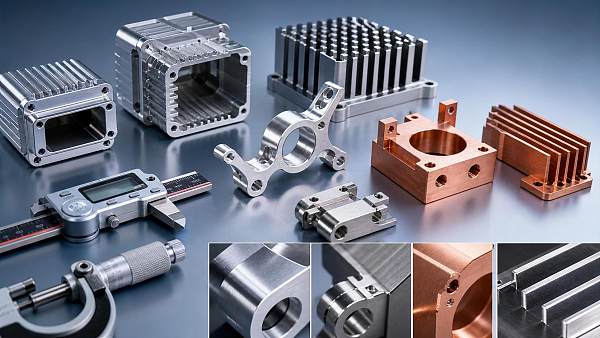
Custom components usually enter the approval process because they solve an immediate operational problem. A buyer may need a non-standard shaft, housing, connector, bracket, battery enclosure, or motor subassembly that fits an existing platform with tight dimensional tolerance such as ±0.1 mm to ±0.5 mm. If the part meets performance needs and passes basic validation, the organization often prioritizes speed over future interchangeability.
In the aftermarket, the pressure is even stronger. A distributor supporting multiple SKUs, or a service network responsible for vehicle uptime, may need to restore availability within 7 to 15 days. Under those conditions, a custom part that works can secure internal approval faster than a standardized alternative that requires a broader sourcing search, tooling changes, or catalog reclassification.
Another reason approval moves quickly is that engineering validation and commercial validation are often misaligned. Engineering may confirm fit, function, and durability within 3 stages: sample review, pilot testing, and limited-run verification. Procurement, however, may not fully assess second-source readiness, material traceability, MOQ flexibility, or logistics resilience until much later. By then, the custom component has already been embedded in service operations.
For EV motor and EV battery related parts, the approval path can be especially narrow. Thermal performance, vibration tolerance, sealing level, and electrical compatibility can make a custom design appear indispensable. But what starts as technical necessity may become long-term dependence if replacement pathways are not documented during the initial sourcing cycle.
Short-term approval drivers in B2B aftermarket purchasing
- Urgent maintenance or service commitments with downtime penalties measured in hours rather than weeks.
- Legacy equipment or vehicle platforms with limited standard part compatibility.
- Low-volume but high-value applications where customization is commercially acceptable.
- Faster signoff on sample performance than on full lifecycle supply chain risk review.
The table below shows why approval often appears easier than replacement during the early phase of a component lifecycle.
The key takeaway is straightforward: approval rewards immediate technical compliance, while replacement demands operational compatibility across the entire value chain. That gap explains why a custom part can be easy to accept at first and difficult to exit later.
Why Replacement Becomes More Complex Over Time
Replacing a custom component is rarely a like-for-like transaction. Once a part is integrated into procurement systems, warehouse bin locations, service manuals, distributor catalogs, and customer expectations, it becomes part of a broader operating model. A new supplier or revised design may require code changes, updated drawings, packaging relabeling, and re-training across 2 to 5 internal teams.
The complexity increases when documentation is incomplete. If the original approval relied on sample acceptance without full material specifications, process controls, or revision history, a replacement program begins with reverse engineering rather than structured sourcing. That adds cost, time, and uncertainty, especially for precision automotive parts where tolerance stack-up or heat-treatment differences can affect field performance.
Supply chain dependencies also accumulate quietly. Buyers may discover that a custom component uses a unique raw material grade, a proprietary mold, or a machining sequence available from only 1 qualified source in a region. If that source experiences a 20% to 30% capacity reduction or extends production windows from 3 weeks to 8 weeks, replacement urgency rises exactly when substitution is hardest.
For EV applications, replacement is more sensitive because system-level compatibility matters. A battery-related structural part, busbar interface, cooling component, or motor support element may interact with thermal management, vibration resistance, and safety inspection requirements. Even when dimensions match, lifecycle performance may differ under charge-discharge cycles, humidity exposure, or operating temperatures from -20°C to 60°C.
Hidden barriers that delay replacement programs
1. Commercial lock-in
If tooling rights, drawings, and process know-how are not contractually clear, buyers may face negotiation friction before shifting production. What looked like a supply agreement can function like a dependency agreement.
2. Inventory distortion
Existing stock of the approved custom part may cover 30 to 90 days of demand. Replacing it too quickly creates write-off risk; replacing it too slowly increases exposure to shortage and obsolescence.
3. Channel disruption
Distributors and service partners need consistent item references, packaging standards, and fitment confidence. A poorly managed transition can trigger return rates, claim disputes, or field confusion.
The replacement challenge is best understood as a multi-variable decision. The table below summarizes the main friction points buyers should evaluate before changing a custom component source or design.
For commercial evaluators, the lesson is that replacement cost is not limited to unit price. It includes validation effort, stock transition, service continuity, and channel confidence. That broader lens is essential in industrial aftermarket planning.
A Smarter Procurement Framework for Custom Parts
The best time to reduce replacement risk is before approval, not after supply stress appears. Buyers should treat custom component approval as a lifecycle sourcing decision with at least 4 evaluation layers: technical fitness, supply resilience, commercial flexibility, and documentation control. This approach supports both immediate availability and future replaceability.
For industrial parts and automotive aftermarket components, a practical procurement framework starts with specification discipline. Critical dimensions, material grade, hardness range, coating, sealing requirements, torque standards, and testing conditions should be written clearly. A tolerance note such as ±0.2 mm is useful only if measurement method, datum reference, and acceptance sampling plan are also defined.
Second, buyers should evaluate whether the supplier can support different order profiles. A healthy custom-part program should be able to handle pilot quantities, medium-volume replenishment, and emergency orders without breaking service levels. For example, MOQ flexibility from 100 units to 1,000 units may matter more than a 3% unit price difference if demand volatility is high.
Third, documentation and ownership must be settled early. Drawings, revision logs, inspection criteria, packaging specs, and tooling agreements should be accessible enough to enable second-source qualification if needed. In global trade, these records are not administrative details. They are strategic controls that protect continuity and negotiation leverage.
Five checkpoints before approving a custom component
- Confirm which dimensions and properties are critical to function, and which can tolerate controlled variation.
- Request a standard lead-time range, such as 2–4 weeks for repeat orders and 6–10 weeks for tooling-related revisions.
- Check whether raw materials, sub-processes, and finishing steps depend on one region or one contractor.
- Clarify ownership of drawings, molds, gauges, and quality documents before volume release.
- Define an alternate-source roadmap, even if second-source onboarding will happen later.
The matrix below can help procurement teams compare custom part options beyond initial approval speed.
For sourcing teams, the most resilient custom component is not merely the one that passes today’s approval test. It is the one that can still be supplied, audited, and, if necessary, replaced with controlled disruption later. That principle is central to sustainable aftermarket procurement.
How Inventory, Logistics, and Channels Shape Replacement Decisions
Custom component risk does not stay inside engineering files. It spreads into inventory policy, regional warehousing, packaging design, and distributor planning. A part with unstable replacement options usually requires higher safety stock, and that means more capital tied up in bins, shelves, or overseas warehouses. For medium-moving SKUs, increasing safety stock from 30 days to 60 days can materially affect cash flow.
Logistics planning is another deciding factor. If a custom part depends on long-haul transport, specialized export packaging, or one port corridor, replacement becomes harder during freight volatility. A nominal 12-day transit schedule can stretch to 20 or 25 days when customs checks, vessel delay, or transshipment congestion intervene. In those conditions, buyers often stay with the known source longer than they otherwise would.
For distributors, channel clarity matters as much as technical quality. If a replacement part introduces a new item code, revised label format, or different accessory set, the market may interpret it as a new product rather than a controlled substitution. That affects catalog accuracy, sell-through speed, and claim rates. In fragmented aftermarket networks, even a minor packaging inconsistency can slow adoption across dozens of resellers.
This is where industrial intelligence becomes valuable. A platform perspective like GIIH’s helps decision-makers connect trade signals, logistics bottlenecks, sourcing patterns, and sector-specific technical requirements. Instead of viewing replacement as an isolated procurement event, organizations can read it as part of a larger supply chain stability model.
Operational measures that reduce disruption
- Set ABC inventory rules so critical custom parts receive differentiated stock coverage and review frequency every 30, 60, or 90 days.
- Align packaging labels, part numbers, and cross-reference files before launching any replacement program.
- Use phased conversion windows, such as old stock depletion over 4–8 weeks, rather than abrupt channel switching.
- Monitor freight route dependency and build at least 1 alternate transport scenario for high-priority items.
Buyers should also separate “approvable” from “replaceable” in supplier scorecards. A part may score well on sample quality but poorly on logistics transparency or replenishment consistency. Unless those dimensions are measured, the commercial team will underestimate long-term risk.
For aftermarket businesses operating across regions, replacement decisions should include a transition map covering three layers: warehouse inventory, channel communication, and field support. That process is slower than initial approval, but it protects service continuity and preserves customer trust.
Common Mistakes, Buyer Questions, and Action Steps
The most common mistake in custom component sourcing is treating approval as the end of risk assessment. In reality, approval is the start of lifecycle exposure. Once a part enters regular replenishment, every undocumented assumption becomes a future replacement problem. That is why disciplined buyers ask early questions about interchangeability, lead time variability, and ownership of technical files.
A second mistake is comparing suppliers only on quoted price. A lower unit cost can be offset by larger MOQ, unstable delivery windows, limited engineering support, or higher transition cost. In B2B aftermarket channels, total cost of continuity is often more important than the first invoice value.
A third mistake is waiting for disruption before building alternatives. By the time a buyer starts seeking replacement under active shortage conditions, validation resources are already under pressure. A better approach is to define a backup route during the first 1 to 2 procurement cycles, while the approved part is still available and comparison testing can be scheduled calmly.
The final step is organizational alignment. Engineering, purchasing, logistics, and channel management should share one replacement logic: what triggers a review, what data is required, how long conversion can take, and what service-level threshold cannot be compromised. Without that shared framework, replacement remains reactive and costly.
FAQ
How do I know if a custom component is too risky to approve?
If the part has incomplete specifications, unclear tooling ownership, only 1 practical production source, and no documented lead-time range, the risk is elevated. As a rule, if 3 or more of those gaps exist, buyers should pause for deeper review before volume approval.
What lead time should buyers consider normal for replacement qualification?
For standard industrial parts, replacement qualification may take 2 to 4 weeks. For custom automotive or EV-related parts with fitment and performance verification, 4 to 10 weeks is a more practical planning window, especially when pilot builds or field checks are required.
Which metrics matter most during supplier comparison?
Focus on 4 primary metrics: specification completeness, repeat-order lead time, MOQ flexibility, and document accessibility for second-source qualification. Secondary metrics include packaging consistency, response speed, and logistics route stability.
Who benefits most from a structured custom-part sourcing strategy?
Information researchers benefit from cleaner market intelligence, procurement teams gain stronger negotiation control, commercial evaluators get better risk visibility, and distributors reduce channel confusion during product transitions. In short, the entire aftermarket ecosystem benefits when replaceability is designed in from the start.
Custom components will remain essential in industries where precision, compatibility, and performance matter. But approval speed should never be confused with long-term sourcing safety. The more specialized the part, the more important it is to balance engineering fit with replacement readiness, inventory discipline, and logistics resilience.
For organizations navigating industrial parts, automotive aftermarket components, EV motor assemblies, EV battery-related parts, and other high-quality sourcing categories, a structured intelligence-based approach makes the difference between reactive purchasing and controlled growth. If you want clearer evaluation frameworks, tailored sourcing guidance, or deeper market insight across global industrial supply chains, contact GIIH to explore practical solutions, discuss product details, and build a more resilient procurement strategy.
Recommended News
 Sep 22, 2026How Brake Drum Material and Machining Affect Semi Trailer Service LifeSemi trailer spare parts guide: discover how brake drum material and precision machining improve braking reliability, reduce wear, and extend trailer service life.
 Sep 10, 2026Evaluating Compatibility and Certification Requirements for Replacement Brake Drums on BPW-Axle Semi-TrailersDiscover certified semi trailer spare parts for BPW-axle trailers—ensuring brake drum compatibility, EN 15085-2 certification & optimal thermal performance.
 Sep 09, 2026When does shaft runout require custom precision parts?Custom precision parts shafts become essential when runout affects bearings, seals, vibration, or assembly accuracy. Learn how to specify reliable, high-performance shaft solutions.
 Jul 14, 2026RoHS Precision Parts Explained: Compliance Requirements, Test Reports, and Buying RisksRoHS precision parts explained: learn compliance requirements, how to read test reports, spot supplier gaps, and avoid costly buying risks before shipment approval.
 Jul 14, 2026Precision Machining Factory Selection Guide: Tolerances, Materials, and Inspection CapabilityPrecision machining factory selection starts with tolerance control, material expertise, and inspection capability. Learn how to compare suppliers, reduce risk, and choose with confidence.
 Jul 13, 2026Forged Engineered Components Explained: When Forging Outperforms Casting or MachiningForged engineered components deliver superior strength, fatigue resistance, and reliability. Discover when forging outperforms casting or machining for critical industrial parts.
 Jul 12, 2026Laminated Core Components: How to Choose Grades, Thickness, and ApplicationsLaminated core components explained: learn how to choose steel grades, thickness, and application fit to cut losses, improve efficiency, and make smarter design decisions.
 Jul 11, 2026Diamond Saw Blades for Stone, Tile, and Concrete: How to Choose the Right Typediamondsawblades buying guide for stone, tile, and concrete. Learn how to match blade type, cutting method, and machine for cleaner cuts, longer life, and fewer costly mistakes.
 Jul 09, 2026Product Selection Criteria for Stamped Parts: 7 Factors That Affect Fit and CostProduct selection criteria for stamped parts: discover 7 key factors that shape fit, tolerance, tooling, and total cost—make smarter sourcing decisions with less risk.
 Jul 09, 2026Sheet Metal Custom Parts: How to Choose Tolerances, Finishes, and Lead TimesSheet metal custom parts guide: learn how to choose the right tolerances, finishes, and lead times to reduce cost, improve fit, and avoid sourcing delays.
 Jul 08, 2026How to Do Product Category Analysis for Precision Parts Sourcing and Supplier ShortlistingProduct category analysis precision parts helps buyers classify components, compare true supplier fit, and shortlist faster with better cost, lead time, and compliance accuracy.
![]() Jul 07, 2026How to Evaluate a Battery Protection Parts Supplier for Quality, Testing, and Supply StabilityBattery protection parts supplier evaluation starts with quality, testing, and supply stability. Learn the key checks, red flags, and sourcing criteria for safer, more reliable decisions.
Jul 07, 2026How to Evaluate a Battery Protection Parts Supplier for Quality, Testing, and Supply StabilityBattery protection parts supplier evaluation starts with quality, testing, and supply stability. Learn the key checks, red flags, and sourcing criteria for safer, more reliable decisions. Jul 04, 2026Custom Precision Parts Prototype: Tolerance, Material, and Lead Time BasicsCustom precision parts prototype basics made practical: learn how tolerance, material, and lead time choices reduce risk, improve testing, and speed smarter production decisions.
 Jul 04, 2026Custom Engineered Components vs Standard Parts: When Is Customization Worth It?Custom engineered components vs standard parts: discover when customization lowers lifecycle cost, reduces downtime, and creates stronger competitive advantage.
 Jul 03, 2026How to Source Precision Machined Parts in the Middle East: Tolerances, Materials, and Supplier ChecksPrecision machined parts Middle East sourcing starts with tighter supplier checks. Learn how to compare tolerances, materials, certifications, and total cost for safer, smarter procurement.
 Jul 02, 2026Performance Factor Analysis for Surface Treatment: Key Variables That Affect Coating ResultsPerformance factor analysis for surface treatment reveals how substrate condition, cleanliness, profile, environment, and process settings shape coating results. Learn the key variables to improve adhesion, consistency, and production decisions.
 Jun 29, 2026Material Selection Analysis by Weight: When Lighter Parts Improve Total System PerformanceMaterial selection analysis by weight reveals when lighter parts truly improve total system performance, cutting energy, load, and lifecycle cost while avoiding hidden tradeoffs.
 Jun 27, 2026Engineered Components Drawing Review: 8 Checks to Catch Tolerance and DFM Issues EarlyEngineered components drawing review made practical: discover 8 smart checks to catch tolerance, GD&T, and DFM issues early, reduce rework, and improve launch readiness.
 Jun 26, 2026DIN Precision Parts: Tolerances, Materials, and How to Read Spec RequirementsDIN precision parts explained clearly: learn tolerances, material selection, surface requirements, and how to read DIN specs to reduce sourcing risk and choose suppliers with confidence.
 Jun 25, 2026Custom Precision Parts for Electronics: Tolerance, Material, and Process BasicsCustom precision parts electronics guide covering tolerance, material, and process basics. Learn how to reduce sourcing risk, improve fit and reliability, and choose suppliers with confidence.
 Jun 24, 2026Rapid Prototyping Near Me: How to Compare Lead Time, Materials, and Tolerance OptionsRapid prototyping near me: compare lead time, materials, and tolerance options with a practical framework to choose faster, smarter suppliers and reduce costly prototype delays.
 Jun 23, 2026Sheet Metal Components Manufacturing: Tolerance, Finish, and Process Options ExplainedSheet metal components manufacturing explained: compare tolerance, finish, and process options to reduce sourcing risk, control cost, and choose suppliers with confidence.
 Jun 23, 2026Ballscrews Selection Guide: How Lead, Accuracy, and Load Affect Motion PerformanceBallscrews selection guide covering lead, accuracy, and load. Learn how to improve speed, repeatability, and service life with practical tips for better motion performance.
 Jun 22, 2026PCB Assembly Process Explained: SMT, THT, Testing, and Common Defects to Watch ForPCB assembly explained clearly: learn SMT, THT, testing methods, and common defects that affect reliability, compliance, and product performance across industries.