


Search News
Global Industrial Intelligence Hub (GIIH)Industry Portal
Global Industrial Intelligence Hub (GIIH)Status
Standard Access
Upgrade to PremiumNewsSheet Metal Components Manufacturing: Tolerance, Finish, and Process Options Explained
Time
Click Count
Why Sheet Metal Components Matter in Supplier Evaluation
For business evaluators, sheet metal components are rarely simple parts. They directly affect assembly fit, product appearance, field reliability, and total procurement cost.
A supplier may quote an attractive price, yet weak process control can create hidden losses. Rework, late delivery, scrap, and unstable quality usually cost more than the initial unit price difference.
That is why sheet metal components manufacturing should be reviewed through three connected lenses: tolerance, finish, and process options.
When these three factors align with product function, sourcing becomes safer. When they do not, commercial risk rises quickly.
In practice, reliable sheet metal components come from capability matching. The drawing, material, tooling, inspection method, and finishing route must support the same quality target.
This also means evaluation should go beyond catalog claims. The real question is whether the supplier can repeat the result at volume.
Understanding Tolerance in Sheet Metal Components
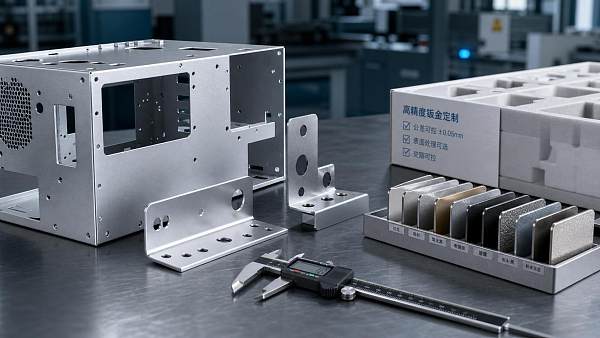
Tolerance defines acceptable dimensional variation. In sheet metal components, it influences hole position, bend angle, flatness, edge profile, and final assembly accuracy.
Many sourcing issues begin when tolerance expectations are unclear. A part may be manufacturable, but not manufacturable at the stated cost and lead time.
Common tolerance drivers
- Material type and thickness
- Cutting method and machine precision
- Bend sequence and springback behavior
- Tool wear and fixture stability
- Welding heat input and distortion control
- Inspection method and datum definition
For example, laser-cut sheet metal components can hold tight profile accuracy, but formed features may still shift after bending.
Likewise, welded sheet metal components often face distortion risk. Even strong fabrication capability needs compensation planning, fixturing, and dimensional verification.
A practical review point is tolerance stack-up. One feature may be within spec, while the total assembly still fails.
Suppliers that understand critical-to-function dimensions usually ask better questions early. That is often a sign of stronger manufacturing maturity.
How Surface Finish Changes Value and Risk
Surface finish is not only about appearance. For sheet metal components, finish affects corrosion resistance, conductivity, wear behavior, cleanliness, and brand perception.
In many projects, finish requirements are specified late. That often creates avoidable cost increases, because the base process and post-treatment route are closely linked.
Typical finish options
- Deburring for safer handling and cleaner assembly
- Brushing for uniform visual texture
- Powder coating for durable decorative protection
- Anodizing for aluminum sheet metal components
- Electroplating for conductivity or corrosion protection
- Passivation for stainless steel stability
Each finish has process limits. Sharp edges, deep recesses, weld marks, and oil residue can all reduce consistency.
This is where evaluators should compare cosmetic standards with functional standards. A visible consumer-facing panel needs a different control plan than an internal mounting bracket.
More importantly, finish quality depends on upstream discipline. Poor cutting edges and unstable welding usually show up later during coating or inspection.
In other words, finish problems often reveal process problems. They are not always isolated surface issues.
Core Process Options for Sheet Metal Components
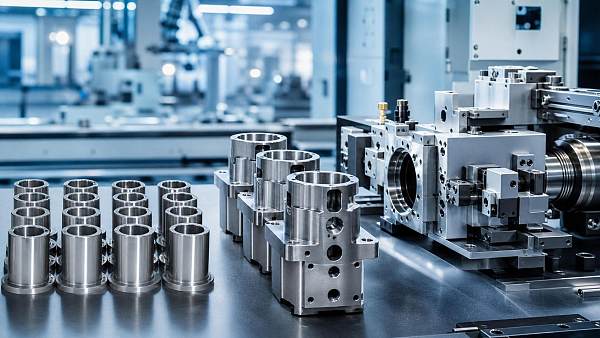
Different process routes suit different volumes, geometries, and budget targets. Choosing the right path is central to evaluating sheet metal components manufacturing.
Laser cutting
Laser cutting is flexible and fast for prototypes, low volume, and mixed-part production. It supports quick design changes and reduces hard tooling investment.
However, edge quality, heat effect, and cut speed vary by material and thickness. Those variables matter when parts move to bending or cosmetic finishing.
Stamping
Stamping suits medium to high volumes. Once tooling is proven, stamped sheet metal components can deliver excellent repeatability and low unit cost.
The trade-off is up-front tooling cost and development time. Design changes after tool release can be expensive.
Bending and forming
Press brake bending creates flanges, channels, and enclosures. Accuracy depends on tooling condition, bend allowance control, and operator setup.
For complex sheet metal components, bend order is critical. A manufacturable design on paper may still be inefficient or unstable on the shop floor.
Welding and assembly
Welding joins sub-parts into structural assemblies. It adds strength, but also introduces distortion, spatter, and extra inspection needs.
A capable supplier will define fixture strategy, weld sequence, and post-weld correction steps before quoting final sheet metal components.
Material Selection and Its Commercial Impact
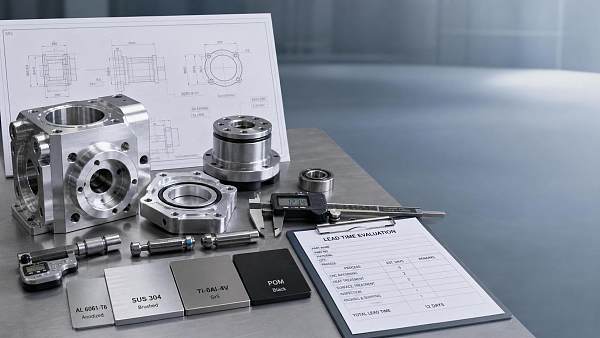
Material choice shapes both manufacturing performance and supply risk. For sheet metal components, common options include cold-rolled steel, stainless steel, aluminum, and galvanized steel.
Each material behaves differently during cutting, forming, and finishing. A low-cost sheet may create higher scrap or finishing expense later.
From a sourcing view, material certification and substitution control are just as important as nominal grade.
If the application is regulated or safety-related, traceability for sheet metal components should be checked early, not after production starts.
What to Ask a Supplier Before Approval
Good evaluation depends on specific questions. General capability statements do not reveal much about actual sheet metal components performance.
- Which dimensions are controlled as critical features?
- What process route is planned for these sheet metal components?
- How are first articles inspected and recorded?
- What finish acceptance standard is used?
- How is weld distortion prevented or corrected?
- What is the backup plan for material or tooling delays?
- Can the supplier support volume ramp without quality drift?
These questions help separate quoting ability from execution ability. That distinction matters more when projects involve strict delivery milestones.
At GIIH, we often see procurement decisions improve when technical review and commercial review happen together, not in separate steps.
A Practical Framework for Comparing Sheet Metal Components Suppliers
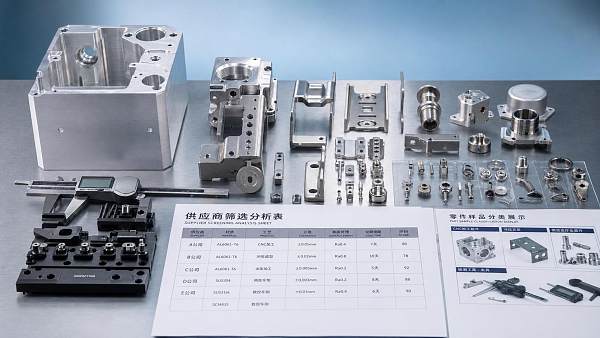
A balanced comparison model keeps evaluation grounded. Price matters, but it should sit beside capability, consistency, and risk readiness.
- Review drawing complexity and tolerance sensitivity.
- Match the process route to forecast volume.
- Check finish quality against end-use expectations.
- Verify inspection discipline and document control.
- Assess lead time resilience and supply continuity.
- Estimate total cost, not only piece price.
This framework makes sheet metal components sourcing more transparent. It also helps internal teams explain why the lowest quote is not always the safest option.
The clearer signal in today’s market is consistency. Buyers increasingly value suppliers that can maintain quality across prototypes, pilot runs, and scaled production.
That shift reflects broader supply chain reality. Stable execution now carries strategic value, especially for programs exposed to engineering change or tight delivery windows.
When reviewing sheet metal components, focus on manufacturability, finish integrity, and repeatable tolerance control. Those three indicators usually reveal the true strength of a supplier and support better long-term decisions.
Recommended News
 Sep 22, 2026How Brake Drum Material and Machining Affect Semi Trailer Service LifeSemi trailer spare parts guide: discover how brake drum material and precision machining improve braking reliability, reduce wear, and extend trailer service life.
 Sep 10, 2026Evaluating Compatibility and Certification Requirements for Replacement Brake Drums on BPW-Axle Semi-TrailersDiscover certified semi trailer spare parts for BPW-axle trailers—ensuring brake drum compatibility, EN 15085-2 certification & optimal thermal performance.
 Sep 09, 2026When does shaft runout require custom precision parts?Custom precision parts shafts become essential when runout affects bearings, seals, vibration, or assembly accuracy. Learn how to specify reliable, high-performance shaft solutions.
 Jul 14, 2026RoHS Precision Parts Explained: Compliance Requirements, Test Reports, and Buying RisksRoHS precision parts explained: learn compliance requirements, how to read test reports, spot supplier gaps, and avoid costly buying risks before shipment approval.
 Jul 14, 2026Precision Machining Factory Selection Guide: Tolerances, Materials, and Inspection CapabilityPrecision machining factory selection starts with tolerance control, material expertise, and inspection capability. Learn how to compare suppliers, reduce risk, and choose with confidence.
 Jul 13, 2026Forged Engineered Components Explained: When Forging Outperforms Casting or MachiningForged engineered components deliver superior strength, fatigue resistance, and reliability. Discover when forging outperforms casting or machining for critical industrial parts.
 Jul 12, 2026Laminated Core Components: How to Choose Grades, Thickness, and ApplicationsLaminated core components explained: learn how to choose steel grades, thickness, and application fit to cut losses, improve efficiency, and make smarter design decisions.
 Jul 11, 2026Diamond Saw Blades for Stone, Tile, and Concrete: How to Choose the Right Typediamondsawblades buying guide for stone, tile, and concrete. Learn how to match blade type, cutting method, and machine for cleaner cuts, longer life, and fewer costly mistakes.
 Jul 09, 2026Product Selection Criteria for Stamped Parts: 7 Factors That Affect Fit and CostProduct selection criteria for stamped parts: discover 7 key factors that shape fit, tolerance, tooling, and total cost—make smarter sourcing decisions with less risk.
 Jul 09, 2026Sheet Metal Custom Parts: How to Choose Tolerances, Finishes, and Lead TimesSheet metal custom parts guide: learn how to choose the right tolerances, finishes, and lead times to reduce cost, improve fit, and avoid sourcing delays.
 Jul 08, 2026How to Do Product Category Analysis for Precision Parts Sourcing and Supplier ShortlistingProduct category analysis precision parts helps buyers classify components, compare true supplier fit, and shortlist faster with better cost, lead time, and compliance accuracy.
![]() Jul 07, 2026How to Evaluate a Battery Protection Parts Supplier for Quality, Testing, and Supply StabilityBattery protection parts supplier evaluation starts with quality, testing, and supply stability. Learn the key checks, red flags, and sourcing criteria for safer, more reliable decisions.
Jul 07, 2026How to Evaluate a Battery Protection Parts Supplier for Quality, Testing, and Supply StabilityBattery protection parts supplier evaluation starts with quality, testing, and supply stability. Learn the key checks, red flags, and sourcing criteria for safer, more reliable decisions. Jul 04, 2026Custom Precision Parts Prototype: Tolerance, Material, and Lead Time BasicsCustom precision parts prototype basics made practical: learn how tolerance, material, and lead time choices reduce risk, improve testing, and speed smarter production decisions.
 Jul 04, 2026Custom Engineered Components vs Standard Parts: When Is Customization Worth It?Custom engineered components vs standard parts: discover when customization lowers lifecycle cost, reduces downtime, and creates stronger competitive advantage.
 Jul 03, 2026How to Source Precision Machined Parts in the Middle East: Tolerances, Materials, and Supplier ChecksPrecision machined parts Middle East sourcing starts with tighter supplier checks. Learn how to compare tolerances, materials, certifications, and total cost for safer, smarter procurement.
 Jul 02, 2026Performance Factor Analysis for Surface Treatment: Key Variables That Affect Coating ResultsPerformance factor analysis for surface treatment reveals how substrate condition, cleanliness, profile, environment, and process settings shape coating results. Learn the key variables to improve adhesion, consistency, and production decisions.
 Jun 29, 2026Material Selection Analysis by Weight: When Lighter Parts Improve Total System PerformanceMaterial selection analysis by weight reveals when lighter parts truly improve total system performance, cutting energy, load, and lifecycle cost while avoiding hidden tradeoffs.
 Jun 27, 2026Engineered Components Drawing Review: 8 Checks to Catch Tolerance and DFM Issues EarlyEngineered components drawing review made practical: discover 8 smart checks to catch tolerance, GD&T, and DFM issues early, reduce rework, and improve launch readiness.
 Jun 26, 2026DIN Precision Parts: Tolerances, Materials, and How to Read Spec RequirementsDIN precision parts explained clearly: learn tolerances, material selection, surface requirements, and how to read DIN specs to reduce sourcing risk and choose suppliers with confidence.
 Jun 25, 2026Custom Precision Parts for Electronics: Tolerance, Material, and Process BasicsCustom precision parts electronics guide covering tolerance, material, and process basics. Learn how to reduce sourcing risk, improve fit and reliability, and choose suppliers with confidence.
 Jun 24, 2026Rapid Prototyping Near Me: How to Compare Lead Time, Materials, and Tolerance OptionsRapid prototyping near me: compare lead time, materials, and tolerance options with a practical framework to choose faster, smarter suppliers and reduce costly prototype delays.
 Jun 23, 2026Sheet Metal Components Manufacturing: Tolerance, Finish, and Process Options ExplainedSheet metal components manufacturing explained: compare tolerance, finish, and process options to reduce sourcing risk, control cost, and choose suppliers with confidence.
 Jun 23, 2026Ballscrews Selection Guide: How Lead, Accuracy, and Load Affect Motion PerformanceBallscrews selection guide covering lead, accuracy, and load. Learn how to improve speed, repeatability, and service life with practical tips for better motion performance.
 Jun 22, 2026PCB Assembly Process Explained: SMT, THT, Testing, and Common Defects to Watch ForPCB assembly explained clearly: learn SMT, THT, testing methods, and common defects that affect reliability, compliance, and product performance across industries.