


Search News
Global Industrial Intelligence Hub (GIIH)Industry Portal
Global Industrial Intelligence Hub (GIIH)Status
Standard Access
Upgrade to PremiumNewsHow much can commercial LED lighting really save yearly?
Time
Click Count
For finance-led evaluations, lighting upgrades are judged by cash flow, payback speed, and operating risk. Commercial LED lighting energy-saving solutions often reduce annual power use by 40% to 75%.
The exact result depends on fixture type, operating hours, controls, local tariffs, and maintenance history. This guide explains realistic yearly savings and how to test the numbers before approval.
What do commercial LED lighting energy-saving solutions actually save?
Savings come from three main areas: electricity, maintenance, and operational efficiency. Electricity is usually the largest line item, but maintenance often becomes surprisingly meaningful in large facilities.
A common retrofit replaces fluorescent, HID, halogen, or older LED fixtures with high-efficacy commercial LEDs. Wattage drops immediately, while light quality usually improves at the same time.
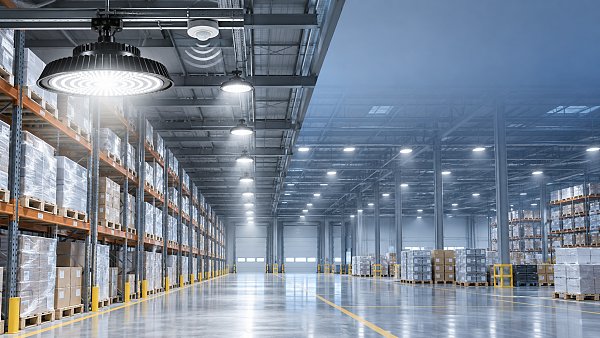
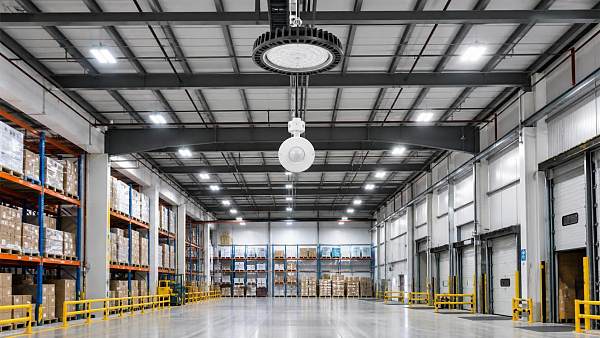
For example, replacing a 400W metal halide high bay with a 150W LED high bay can cut fixture energy use by roughly 60% or more. Across a warehouse, that difference compounds quickly.
Commercial LED lighting energy-saving solutions also lower relamping labor, lift rental needs, ballast replacement, and downtime. In retail and logistics environments, fewer outages can support safer and more consistent operations.
- Energy savings from lower fixture wattage
- Control savings from occupancy or daylight sensors
- Maintenance savings from longer service life
- Indirect savings from better visibility and uptime
How much can commercial LED lighting really save yearly in real facilities?
Yearly savings vary by operating profile. Spaces running 12 to 24 hours daily usually see the strongest returns because each watt reduction is multiplied by many annual hours.
In offices, lighting may run 2,500 to 3,500 hours yearly. In warehouses, factories, parking areas, and retail sites, annual hours can exceed 4,000 or even 6,000.
A simple estimate uses this formula: annual energy savings = wattage reduction × fixture quantity × yearly hours ÷ 1,000 × electricity rate. This creates a solid first-pass business case.
Consider 200 fixtures replaced from 180W to 90W, running 4,500 hours yearly. At $0.14 per kWh, annual electricity savings equal about $11,340 before maintenance and control benefits.
If maintenance previously cost $25 per fixture yearly, another $5,000 may be saved. That pushes total yearly savings above $16,000, which changes the payback picture materially.
Commercial LED lighting energy-saving solutions can save small sites several thousand dollars yearly. Large industrial campuses or chain stores can save tens or hundreds of thousands annually.
Typical annual savings ranges by application
Which variables have the biggest impact on yearly ROI?
The largest drivers are not always fixture price. Annual hours, local energy cost, and the size of wattage reduction usually matter more than a small difference in initial purchase cost.
Controls can sharply improve results. Occupancy sensors, daylight harvesting, scheduling, and networked dimming reduce wasted runtime, especially in aisles, meeting rooms, corridors, and low-traffic zones.
Thermal conditions and product quality also influence returns. Poorly specified fixtures can lose output early, fail prematurely, or require replacement sooner than the financial model assumed.
Commercial LED lighting energy-saving solutions should therefore be evaluated by total system performance, not fixture wattage alone. A cheap product with weak drivers may create false savings on paper.
Key variables to review before approval
- Existing and proposed wattage
- Measured or verified operating hours
- Electricity tariff, including demand charges if relevant
- Fixture lifetime, warranty, and driver quality
- Installation cost and disruption window
- Sensor strategy and control compatibility
- Utility rebates, tax incentives, or local efficiency programs
How should savings be compared across offices, warehouses, retail, and industrial spaces?
Not every environment should be modeled the same way. The best commercial LED lighting energy-saving solutions depend on ceiling height, task needs, occupancy patterns, and maintenance access difficulty.
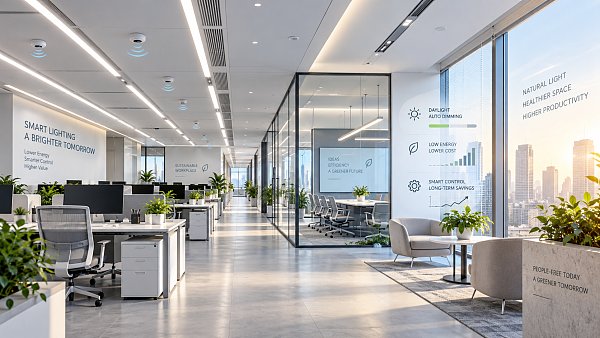
In offices, comfort and controllability matter. Troffers, panels, and linear systems often provide strong savings, while sensors and scheduling improve room-by-room efficiency.
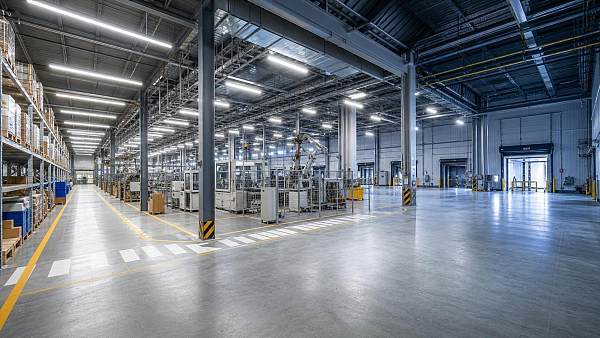
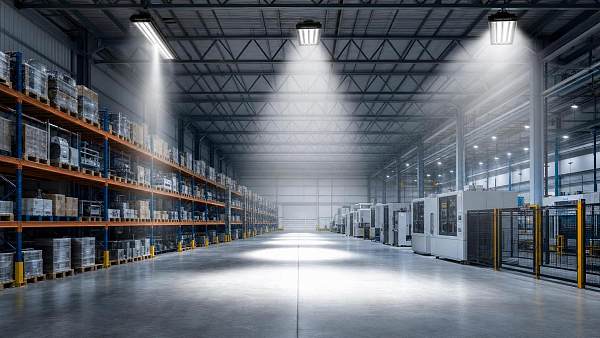
In warehouses, high bays usually dominate consumption. The value increases when old HID fixtures have long warm-up times and frequent lamp failures.
In retail, annual savings include both lower power and lower heat output. Reduced heat can slightly ease cooling loads, particularly in stores with dense lighting layouts.
In industrial sites, durability becomes critical. Dust, vibration, moisture, and high ambient temperatures can shorten fixture life unless specifications match the real operating environment.
Comparison table for evaluation focus
What mistakes make projected LED savings look better than reality?
The first mistake is using nameplate assumptions without checking the site. Many buildings have uneven schedules, partial occupancy, or fixtures that already operate less than expected.
The second mistake is comparing wattage only. Light distribution, mounting height, and target illuminance matter. A lower wattage product may still fail if the layout becomes too dim.
The third mistake is excluding maintenance logistics. In tall facilities, each lamp failure may require lifts, shutdown coordination, or safety controls. Those hidden costs can be substantial.
Another mistake is forgetting rebates and financing options. Incentives can shorten payback significantly, while staged implementation can smooth capital pressure without delaying all savings.
Commercial LED lighting energy-saving solutions work best when modeled with actual audits, sample measurements, and product verification. Confidence comes from field data, not optimistic averages.
How can yearly savings be evaluated with confidence before investing?
Start with a baseline inventory. Record fixture counts, wattages, operating hours, replacement history, and electricity rates. If possible, separate spaces by schedule and task type.
Next, request a proposal with photometric validation, not only a fixture list. This confirms whether the new layout meets lighting targets while still delivering expected efficiency gains.
Then calculate three cases: conservative, expected, and best-case. This prevents single-number bias and helps compare project risk under different occupancy and tariff assumptions.
Pilot installations are also useful. A small test area can verify brightness, controls behavior, and user acceptance before a full rollout.
Quick FAQ summary table
In summary, commercial LED lighting energy-saving solutions can deliver meaningful yearly savings, but the strongest cases are built on verified site conditions and realistic assumptions.
For organizations tracking energy, maintenance, and sustainability performance, lighting remains one of the clearest operational upgrades. A structured audit is the smartest next step before final investment decisions.
As a global intelligence platform, GIIH recommends comparing proposals through total lifecycle value, control potential, and application fit. That approach turns efficiency claims into dependable annual results.
Recommended News
 Sep 25, 2026When does energy efficient lighting pay back its higher upfront cost?Energy efficient lighting payback explained: assess energy savings, maintenance, tariffs, incentives, controls, and ROI to build a confident investment case.
 Sep 22, 2026How energy saving lighting for offices can cut operating costsEnergy saving lighting for offices cuts operating costs through efficient LEDs, smart controls, realistic payback analysis, and lower maintenance needs. Explore practical upgrade strategies.
 Sep 04, 2026Are Energy-Efficient Lighting Rebates Available for Industrial Facilities?Are energy efficient lighting rebates available for industrial facilities? Explore eligibility, pre-approval, LED upgrades, controls, and cost-saving incentive tips.
 Aug 21, 2026Do LED lights with low power consumption really cut electricity costsLED lights low power consumption can lower electricity bills, but real savings depend on brightness, usage hours, and quality. Learn how to choose LEDs that cut costs and last longer.
 Jul 20, 2026How Much Does Energy Efficient Lighting Cost and When Does It Pay Off?Energy efficient lighting cost is more than fixture price. Learn what drives payback, hidden lifecycle costs, and when LED upgrades deliver the strongest return.
 Jul 19, 2026How to Choose LED Lights for Cold Storage: Temperature, IP Rating, and EfficiencyLED lights for cold storage: learn how to choose the right fixtures by comparing temperature tolerance, IP rating, visibility, and efficiency for safer, longer-lasting performance.
 Jul 10, 2026Lighting Cost Breakdown: Equipment, Installation, Energy Use, and MaintenanceLighting cost explained from equipment and installation to energy use and maintenance. Compare total ownership factors, avoid hidden expenses, and make smarter buying decisions.
 Jul 08, 2026Custom Lighting for Commercial Projects: How to Specify Output, Beam Angle, and ControlsLighting custom for commercial projects made practical: learn how to specify output, beam angle, and controls to improve performance, reduce risk, and make smarter buying decisions.
 Jul 06, 2026LED Lights Wholesale: How to Check MOQ, Warranty Terms, and Price BreaksLED lights wholesale made simple: learn how to verify MOQ, warranty terms, and price breaks to reduce sourcing risk, protect margins, and choose suppliers with confidence.
 Jul 06, 2026Intelligent Lighting for Factories: Which Control Features Improve Safety and Efficiency?Intelligent lighting for factories improves safety, cuts energy waste, and supports smoother workflows with motion sensing, zoning, daylight control, and emergency-ready features.
 Jul 04, 2026Smart Living for Smart Lighting: Which Controls and Sensors Fit Each Room?Smart living for smart lighting made simple: discover the best controls and sensors for every room to improve comfort, safety, and energy savings with smarter home planning.
 Jul 03, 2026UL Listed Lighting System Requirements: What to Check for Commercial ProjectsUL listed lighting system checks can make or break commercial approvals. Learn what to verify in listings, controls, ratings, and documents to avoid delays and compliance risk.
 Jul 02, 2026LED Lights Lumen Output Explained: How to Compare Brightness Across FixturesLED lights lumen output explained in a clear, practical guide. Learn how to compare fixture brightness, beam spread, efficiency, and color temperature before you buy.
 Jul 01, 2026Commercial LED Lighting in the Middle East: What to Check Before SpecificationCommercial LED lighting Middle East projects need more than price checks. Learn how to verify heat, dust, power, optics, compliance, and maintenance before specification.
 Jun 29, 2026Industrial Lighting Selection Guide: Beam Angle, IP Rating, and Energy Use by Facility TypeIndustrial lighting guide for smarter facility upgrades: compare beam angle, IP rating, and energy use by warehouse, manufacturing, washdown, and outdoor site needs.
 Jun 23, 2026UV Nail Lamps Explained: Wattage, Timer, and Gel Compatibility Before You BuyUVnaillamps explained: compare wattage, timer settings, and gel compatibility to avoid curing issues, choose the right lamp faster, and get smoother, longer-lasting gel manicure results.
 Jun 22, 2026Why LED Lights with Low Heat Emission Work Better for Display Cases and Tight SpacesLED lights low heat emission solutions help display cases and tight spaces stay cooler, safer, and more visually stable. Discover why they improve protection, performance, and long-term efficiency.
 Jun 21, 2026Lighting Technology Analysis for Commercial Spaces: Efficacy, CRI, and Control CompatibilityLighting technology analysis for commercial spaces: compare efficacy, CRI, and control compatibility to cut costs, improve visual quality, and choose smarter future-ready lighting systems.
 Jun 19, 2026Lighting Sourcing Checklist: How to Compare Suppliers, Certifications, and MOQLighting sourcing made simple: compare suppliers, certifications, MOQ, lead times, and quality risks before choosing a quote. Use this checklist to source smarter and avoid costly mistakes.
 Jun 15, 2026How to Use Lighting in Small Rooms: Placement Tips, Layering, and Common MistakesHow to use lighting in small rooms: discover smart placement, layered lighting ideas, bulb tips, and common mistakes to avoid for a brighter, bigger-feeling space.
 Jun 05, 2026How to Evaluate a Lighting Exporter: Certifications, MOQ, Lead Time, and QA ChecklistLighting exporter evaluation starts with certifications, MOQ, lead time, and QA. Use this practical checklist to reduce sourcing risk, protect margins, and choose reliable partners.
![]() May 23, 2026Smart street lighting now matters beyond energy savingsSmart street lighting for urban areas now goes beyond energy savings—improving safety, maintenance efficiency, and smart city readiness. Discover the long-term ROI and strategic value.
May 23, 2026Smart street lighting now matters beyond energy savingsSmart street lighting for urban areas now goes beyond energy savings—improving safety, maintenance efficiency, and smart city readiness. Discover the long-term ROI and strategic value. May 22, 2026Do smart street lights cut energy costs enough to matter?Smart street lighting energy-saving solutions cut power and maintenance costs through LEDs, dimming, and remote monitoring. See when the savings are material enough to justify investment.
 May 21, 2026Are smart street lights really the lower cost optionSmart street lighting cost-effective solutions can cut energy and maintenance costs, but only in the right projects. See when smart street lights deliver true lifecycle savings.