


Search News
Global Industrial Intelligence Hub (GIIH)Industry Portal
Global Industrial Intelligence Hub (GIIH)Status
Standard Access
Upgrade to PremiumNewsCNC Machining Supplier Selection Guide: Tolerances, Materials, QA Process, and Capacity
Time
Click Count
CNC Machining Supplier Selection Guide: Tolerances, Materials, QA Process, and Capacity
Choosing the right CNC machining supplier can decide whether a project stays on spec, on schedule, and within cost targets.
That decision is rarely about price alone.
A capable CNC machining supplier must hold tolerances consistently, process the right materials, prove quality control, and support real production demand.
In practice, supplier evaluation becomes a technical risk review.
If one area is weak, the entire sourcing plan can become unstable.
This guide breaks the process into four core dimensions: tolerances, materials, QA process, and production capacity.
It also adds practical checkpoints for comparing suppliers with less guesswork and better technical confidence.
Why CNC Machining Supplier Evaluation Needs a Structured Approach
Many sourcing problems begin before production starts.
A supplier may quote aggressively, yet lack the process depth needed for stable machining performance.
That gap usually shows up later as scrap, delays, dimension drift, or repeated engineering clarifications.
A structured review helps separate true manufacturing capability from basic quoting ability.
This is especially important for precision automotive parts, medical assemblies, industrial tooling, and custom mechanical components.
In these applications, the wrong CNC machining supplier can create hidden downstream costs.
A clear assessment framework should answer five basic questions:
- Can the supplier hold the required tolerance repeatedly?
- Do they have proven experience with the specified material?
- Is the QA process preventive, not only reactive?
- Can they scale from prototype to batch production?
- Will communication remain technical, fast, and traceable?
Once these questions are answered well, supplier comparison becomes much more objective.
Tolerance Capability: Look Beyond the Quoted Number
Tolerance is often the first filter when screening a CNC machining supplier.
But the quoted tolerance alone does not confirm process stability.
What matters is whether the supplier can achieve that tolerance across material batches, machine setups, and production runs.
A stronger review starts with drawing analysis.
Check how the supplier handles critical dimensions, GD&T features, datum strategies, and surface finish interactions.
If responses stay generic, that is usually a warning sign.
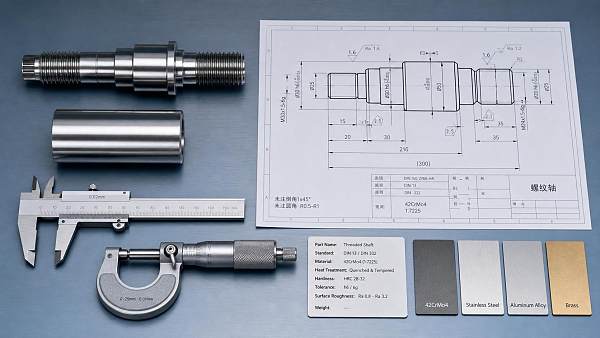
A qualified CNC machining supplier should explain how tolerance control is maintained through fixturing, tool selection, in-process inspection, and compensation methods.
Key tolerance review points
- Machine accuracy versus required part tolerance
- Process capability on thin walls, deep pockets, and tight concentricity
- Repeatability across first article and repeat orders
- Inspection method for critical dimensions
- Control plan for tool wear and thermal variation
Requesting sample inspection reports is useful here.
So is reviewing Cp or Cpk data when the application requires higher process confidence.
For tight-tolerance work, a CNC machining supplier should not sound uncertain about measurement strategy.
Material Expertise: Capability Changes with Every Alloy and Polymer
Material knowledge is another major differentiator.
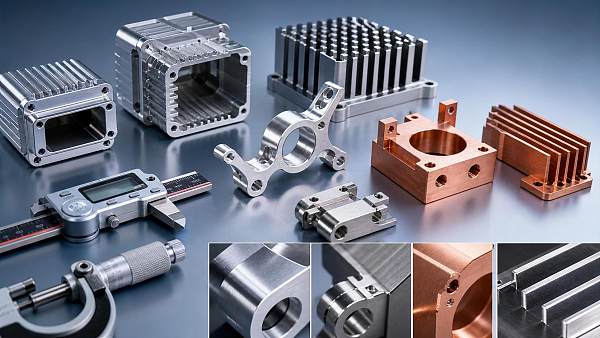
A supplier may machine aluminum well, yet struggle with stainless steel, titanium, copper, PEEK, or engineering plastics.
Each material changes cutting behavior, burr formation, tool life, distortion risk, and final inspection results.
That is why material familiarity should be validated, not assumed.
Ask the CNC machining supplier which grades they machine most often and what challenges they typically manage.
Their answer should include more than a material list.
It should cover chip control, cooling strategy, stress relief, deformation handling, and post-processing compatibility.
Questions worth asking
- Have they machined the same alloy temper or polymer grade before?
- Can they provide material certificates and lot traceability?
- Do they understand corrosion, galling, or warpage risks?
- Can they coordinate heat treatment, anodizing, plating, or passivation?
- How do they prevent mixed-material handling errors?
This area matters even more when the part has a demanding end-use environment.
In automotive, medical, and fluid system applications, the wrong material handling practice can undermine otherwise accurate machining.
QA Process: Strong Suppliers Build Quality into the Workflow
Quality assurance should never be reduced to final inspection only.
The better CNC machining supplier designs quality into quoting, planning, machining, and release.
This usually shows up in documentation discipline and process transparency.
A reliable QA process often includes contract review, first article inspection, in-process checks, calibrated equipment, nonconformance control, and corrective action records.
Certifications such as ISO 9001 can help, but they should not replace process-level verification.
Some buyers stop at the certificate.
A stronger evaluation asks how quality is executed on the shop floor.
Signs of a mature QA system
- Inspection plans tied to drawing characteristics
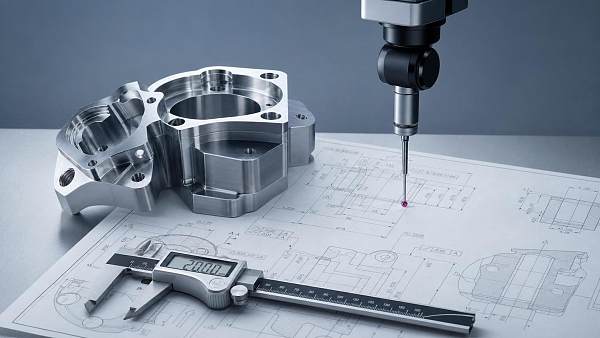
- Use of CMM, height gauges, micrometers, and calibrated fixtures
- Clear first article approval workflow
- Traceable records for material, process, and inspection
- Documented root cause analysis for defects
It also helps to ask how deviations are communicated.
A dependable CNC machining supplier raises risk early, instead of hiding it until shipment.
That habit protects timelines and reduces engineering churn.
Production Capacity: Check Scalability, Not Just Available Machines
Capacity is often misunderstood as machine count.
In reality, capacity includes scheduling discipline, operator skill, fixture readiness, maintenance uptime, and supply continuity.
A CNC machining supplier may own advanced equipment, yet still fail under fluctuating order volumes.
That is why prototype and production capability should be assessed separately.
Some suppliers are excellent at low-volume customization.
Others perform best in stable repeat manufacturing.
The ideal choice depends on your demand pattern, engineering revision speed, and supply risk tolerance.
Capacity review checklist
- Monthly output for similar parts
- Lead time stability during demand peaks
- Backup machines for critical operations
- Fixture and programming turnaround speed
- Sub-supplier control for finishing or secondary processes
It is also smart to test how the supplier handles schedule changes.
A responsive CNC machining supplier can explain what happens when forecasts rise, drawings change, or urgent jobs appear mid-cycle.
A Practical Comparison Framework for Supplier Shortlisting
To compare suppliers fairly, use a weighted evaluation model.
This keeps decisions anchored in measurable factors.
This type of scorecard is simple, but effective.
It turns the CNC machining supplier review into a more disciplined technical decision.
Final Takeaway
A strong CNC machining supplier does more than make parts.
They reduce uncertainty across engineering, quality, and delivery.
When evaluating options, focus on evidence instead of broad claims.
Review tolerance control, material know-how, QA discipline, and real production capacity as one connected system.
That approach usually leads to better supplier fit and fewer surprises after release.
For organizations tracking global manufacturing capability, GIIH continues to connect technical insight with practical sourcing judgment.
The next step is straightforward: build a shortlist, request evidence, compare process depth, and select the CNC machining supplier that can perform consistently under real operating conditions.
Recommended News
 Sep 22, 2026How Brake Drum Material and Machining Affect Semi Trailer Service LifeSemi trailer spare parts guide: discover how brake drum material and precision machining improve braking reliability, reduce wear, and extend trailer service life.
 Sep 10, 2026Evaluating Compatibility and Certification Requirements for Replacement Brake Drums on BPW-Axle Semi-TrailersDiscover certified semi trailer spare parts for BPW-axle trailers—ensuring brake drum compatibility, EN 15085-2 certification & optimal thermal performance.
 Sep 09, 2026When does shaft runout require custom precision parts?Custom precision parts shafts become essential when runout affects bearings, seals, vibration, or assembly accuracy. Learn how to specify reliable, high-performance shaft solutions.
 Jul 14, 2026RoHS Precision Parts Explained: Compliance Requirements, Test Reports, and Buying RisksRoHS precision parts explained: learn compliance requirements, how to read test reports, spot supplier gaps, and avoid costly buying risks before shipment approval.
 Jul 14, 2026Precision Machining Factory Selection Guide: Tolerances, Materials, and Inspection CapabilityPrecision machining factory selection starts with tolerance control, material expertise, and inspection capability. Learn how to compare suppliers, reduce risk, and choose with confidence.
 Jul 13, 2026Forged Engineered Components Explained: When Forging Outperforms Casting or MachiningForged engineered components deliver superior strength, fatigue resistance, and reliability. Discover when forging outperforms casting or machining for critical industrial parts.
 Jul 12, 2026Laminated Core Components: How to Choose Grades, Thickness, and ApplicationsLaminated core components explained: learn how to choose steel grades, thickness, and application fit to cut losses, improve efficiency, and make smarter design decisions.
 Jul 11, 2026Diamond Saw Blades for Stone, Tile, and Concrete: How to Choose the Right Typediamondsawblades buying guide for stone, tile, and concrete. Learn how to match blade type, cutting method, and machine for cleaner cuts, longer life, and fewer costly mistakes.
 Jul 09, 2026Product Selection Criteria for Stamped Parts: 7 Factors That Affect Fit and CostProduct selection criteria for stamped parts: discover 7 key factors that shape fit, tolerance, tooling, and total cost—make smarter sourcing decisions with less risk.
 Jul 09, 2026Sheet Metal Custom Parts: How to Choose Tolerances, Finishes, and Lead TimesSheet metal custom parts guide: learn how to choose the right tolerances, finishes, and lead times to reduce cost, improve fit, and avoid sourcing delays.
 Jul 08, 2026How to Do Product Category Analysis for Precision Parts Sourcing and Supplier ShortlistingProduct category analysis precision parts helps buyers classify components, compare true supplier fit, and shortlist faster with better cost, lead time, and compliance accuracy.
![]() Jul 07, 2026How to Evaluate a Battery Protection Parts Supplier for Quality, Testing, and Supply StabilityBattery protection parts supplier evaluation starts with quality, testing, and supply stability. Learn the key checks, red flags, and sourcing criteria for safer, more reliable decisions.
Jul 07, 2026How to Evaluate a Battery Protection Parts Supplier for Quality, Testing, and Supply StabilityBattery protection parts supplier evaluation starts with quality, testing, and supply stability. Learn the key checks, red flags, and sourcing criteria for safer, more reliable decisions. Jul 04, 2026Custom Precision Parts Prototype: Tolerance, Material, and Lead Time BasicsCustom precision parts prototype basics made practical: learn how tolerance, material, and lead time choices reduce risk, improve testing, and speed smarter production decisions.
 Jul 04, 2026Custom Engineered Components vs Standard Parts: When Is Customization Worth It?Custom engineered components vs standard parts: discover when customization lowers lifecycle cost, reduces downtime, and creates stronger competitive advantage.
 Jul 03, 2026How to Source Precision Machined Parts in the Middle East: Tolerances, Materials, and Supplier ChecksPrecision machined parts Middle East sourcing starts with tighter supplier checks. Learn how to compare tolerances, materials, certifications, and total cost for safer, smarter procurement.
 Jul 02, 2026Performance Factor Analysis for Surface Treatment: Key Variables That Affect Coating ResultsPerformance factor analysis for surface treatment reveals how substrate condition, cleanliness, profile, environment, and process settings shape coating results. Learn the key variables to improve adhesion, consistency, and production decisions.
 Jun 29, 2026Material Selection Analysis by Weight: When Lighter Parts Improve Total System PerformanceMaterial selection analysis by weight reveals when lighter parts truly improve total system performance, cutting energy, load, and lifecycle cost while avoiding hidden tradeoffs.
 Jun 27, 2026Engineered Components Drawing Review: 8 Checks to Catch Tolerance and DFM Issues EarlyEngineered components drawing review made practical: discover 8 smart checks to catch tolerance, GD&T, and DFM issues early, reduce rework, and improve launch readiness.
 Jun 26, 2026DIN Precision Parts: Tolerances, Materials, and How to Read Spec RequirementsDIN precision parts explained clearly: learn tolerances, material selection, surface requirements, and how to read DIN specs to reduce sourcing risk and choose suppliers with confidence.
 Jun 25, 2026Custom Precision Parts for Electronics: Tolerance, Material, and Process BasicsCustom precision parts electronics guide covering tolerance, material, and process basics. Learn how to reduce sourcing risk, improve fit and reliability, and choose suppliers with confidence.
 Jun 24, 2026Rapid Prototyping Near Me: How to Compare Lead Time, Materials, and Tolerance OptionsRapid prototyping near me: compare lead time, materials, and tolerance options with a practical framework to choose faster, smarter suppliers and reduce costly prototype delays.
 Jun 23, 2026Sheet Metal Components Manufacturing: Tolerance, Finish, and Process Options ExplainedSheet metal components manufacturing explained: compare tolerance, finish, and process options to reduce sourcing risk, control cost, and choose suppliers with confidence.
 Jun 23, 2026Ballscrews Selection Guide: How Lead, Accuracy, and Load Affect Motion PerformanceBallscrews selection guide covering lead, accuracy, and load. Learn how to improve speed, repeatability, and service life with practical tips for better motion performance.
 Jun 22, 2026PCB Assembly Process Explained: SMT, THT, Testing, and Common Defects to Watch ForPCB assembly explained clearly: learn SMT, THT, testing methods, and common defects that affect reliability, compliance, and product performance across industries.