


Search News
Global Industrial Intelligence Hub (GIIH)Industry Portal
Global Industrial Intelligence Hub (GIIH)Status
Standard Access
Upgrade to PremiumNewsPrecision parts demand is shifting from volume to accuracy
Time
Click Count
Demand for precision parts is moving beyond volume toward tighter tolerances, traceability, and smarter procurement. Across aftermarket and automotive components markets—from EV motor, EV battery, and EV accessories to car spare parts and custom components—buyers now prioritize high-quality parts, inventory control, logistics management, and supply chain resilience to secure long-term competitiveness.
Why precision parts demand is changing so quickly
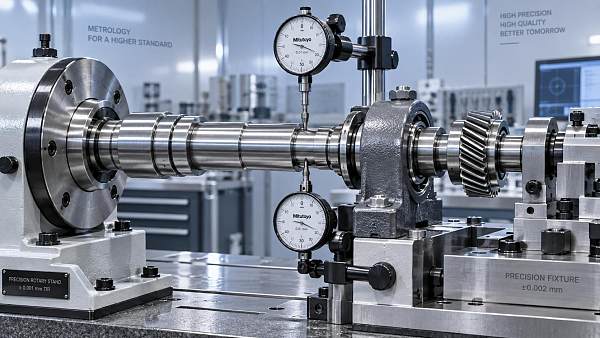
The market is no longer rewarding suppliers simply for output scale. In automotive and industrial aftermarket channels, buyers increasingly ask whether a part can hold a tolerance band such as ±0.01 mm, whether batch records can be traced within 24–48 hours, and whether replacement shipments can be coordinated across 2–4 regional warehouses. This shift affects procurement teams, commercial evaluators, distributors, and sourcing researchers alike.
Electrification is a major reason. EV motor housings, battery connection components, thermal management fittings, and sensor-related assemblies often require greater dimensional consistency than many conventional car spare parts. When one component deviates slightly, assembly stability, vibration behavior, sealing performance, or electrical safety can be affected. As a result, precision parts are now evaluated as risk-control assets, not just line items on a purchase order.
Another driver is the restructuring of global supply chains. Buyers have learned that a low unit price may create hidden costs if defect sorting, delayed customs documentation, or stockouts increase total operational burden over 3–6 months. This is why procurement criteria now include logistics management, document completeness, production consistency, and secondary sourcing feasibility.
For decision-makers, the question has changed from “Who can deliver the most parts?” to “Who can deliver the right precision parts, with predictable quality and stable lead times?” That change explains why quality assurance, traceability, and supplier intelligence have moved to the center of B2B conversations.
What buyers are measuring now
- Tolerance capability across repeated batches, especially for custom components and mating parts.
- Process stability over medium-volume and high-volume production windows, often reviewed every month or every quarter.
- Traceability readiness, including lot coding, material records, inspection checkpoints, and shipping documentation.
- Recovery speed when disruptions occur, such as rework, replenishment, or route changes within 7–15 days.
Which sectors and scenarios are pushing accuracy over volume
Not every precision parts segment is changing at the same speed. The strongest pressure comes from applications where fit, thermal performance, vibration control, and service life depend on repeatable tolerances. In mobility and aftermarket channels, this includes EV battery enclosures, motor-related assemblies, braking subcomponents, fluid connectors, compact fasteners, and sensor mounting structures.
Distributors and agents are also seeing the shift. End users no longer accept generic substitutions as easily as before, especially when warranty exposure or installation labor costs are high. A part that is only slightly off in dimension or surface finish can increase return rates, installation failures, and dealer-side inspection time. In practical terms, one poor batch can damage channel confidence for an entire quarter.
The same trend appears in custom components for smaller production runs. Buyers ordering pilot batches of 500–2,000 units often care more about process validation and future scaling logic than about the absolute lowest price. They want to confirm whether the supplier can move from sample approval to stable production without changing materials, tooling logic, or inspection methods.
For information researchers, these scenarios matter because demand is becoming more segmented. It is no longer enough to track market size alone. The more useful intelligence lies in identifying where precision is mission-critical, where substitution risk is high, and where distribution partners need technical support before committing inventory.
Typical application scenarios and procurement focus
The table below helps buyers compare how application context changes sourcing priorities for precision automotive parts, EV components, and aftermarket spare parts.
A useful takeaway is that “accuracy” does not mean the same thing in every case. In some categories it means micron-level machining repeatability. In others it means documentation accuracy, stable packaging identification, or clear interchange data. Good sourcing decisions account for all of these layers together.
How procurement teams should evaluate precision parts suppliers
A modern procurement review should move across at least 5 dimensions: technical capability, process control, traceability, supply resilience, and commercial fit. Looking only at price or sample appearance creates blind spots. A well-finished sample may still hide unstable tooling, undocumented material substitution risk, or weak replenishment planning.
For purchasing teams, the most practical approach is to use stage-based verification. In stage 1, confirm drawings, material requirements, tolerance windows, and inspection standards. In stage 2, test sample repeatability across at least 2–3 batches or machines where possible. In stage 3, assess logistics and replenishment scenarios, including normal lead times, urgent orders, and packaging accuracy.
Commercial evaluators should also estimate the total landed risk, not only the unit cost. If a supplier offers a 4% lower price but has a 10–14 day longer replenishment cycle or limited lot traceability, the real commercial advantage may disappear quickly. This is especially true for distributors holding mixed inventories across fast-moving and slow-moving SKUs.
GIIH’s value in this environment is not as a simple information source, but as an industrial intelligence platform that helps users connect fragmented signals. By combining market insight, technical interpretation, and supply-chain context, GIIH supports more grounded decisions on precision automotive parts, custom components, and global sourcing readiness.
A practical supplier assessment framework
The following evaluation table can be used by procurement managers, sourcing researchers, and channel partners when screening precision parts suppliers.
Using a framework like this helps teams standardize decision logic. It also reduces the common problem of selecting one supplier for price, another for quality, and a third for emergency response without a clear integration plan.
5 key checks before placing a larger order
- Confirm whether critical dimensions are measured on every batch or by sampling frequency.
- Review how nonconforming parts are isolated, documented, and replaced.
- Check whether the supplier can maintain output during 20%–30% demand fluctuations.
- Verify packaging labels, SKU mapping, and shipment accuracy for multi-item orders.
- Clarify engineering revision control before approving custom precision parts.
Cost, alternatives, and the hidden price of poor accuracy
One of the biggest procurement mistakes is comparing suppliers only by quoted unit price. In precision parts sourcing, the actual cost picture includes inspection labor, production downtime, claim handling, repackaging, emergency air freight, and channel return management. A part that is 3% cheaper on paper may become 8%–15% more expensive when failure handling is included over one sales cycle.
That does not mean the highest-spec option is always the right choice. Buyers should separate critical-to-function dimensions from non-critical features. For instance, a custom component may require strict tolerance on mating geometry but more flexible standards on cosmetic surface appearance. This is where balanced engineering and commercial judgment create savings without undermining performance.
Alternative sourcing is also becoming more strategic. Some companies now split purchases into three categories: core precision parts, standard replacement parts, and buffer-stock items. This allows them to apply tighter supplier qualification to high-risk components while using broader sourcing options for less sensitive items. It is a practical way to improve resilience without overcomplicating procurement.
For distributors and agents, poor accuracy has an especially sharp cost effect because it creates downstream friction. Returns, field complaints, workshop distrust, and slower inventory turnover all consume margin. In this sense, precision is not only a manufacturing variable. It is a channel economics variable.
Comparing low-price and precision-centered sourcing strategies
This comparison helps teams explain internally why “cheapest” and “most economical” are often not the same sourcing decision in precision automotive parts and aftermarket components.
In practice, hybrid segmented sourcing is often the most workable model. It supports budget discipline while protecting the items that most directly affect assembly reliability, warranty exposure, and customer satisfaction.
What standards, documentation, and traceability should buyers review
In precision parts procurement, documentation is part of the product. Buyers do not always need highly complex certification packages, but they do need clarity. Depending on part category and market destination, the review may include dimensional inspection records, material declarations, lot identification, packaging specifications, and controlled drawing revisions. Missing paperwork can delay clearance, internal approval, or customer acceptance even when the part itself is usable.
Automotive-related buyers often pay attention to process discipline and consistency frameworks. While not every supplier or component will require the same level of formalization, good practice usually includes incoming material control, in-process inspection, final verification, and nonconformance handling. For higher-risk components, traceability at batch level is often the minimum acceptable baseline.
A practical rule is to review documentation across 4 checkpoints: before sampling, at sample approval, before first shipment, and during recurring supply. This reduces the common issue where the sample phase looks organized but regular production becomes opaque. For cross-border projects, document accuracy can be just as important as machining accuracy.
This is where an intelligence-led approach becomes valuable. GIIH helps users interpret technical specifications in a broader trade context, linking product data, market expectations, regional entry concerns, and supply chain signals. That combination is particularly relevant for businesses comparing multiple suppliers across regions or building new distribution pipelines.
Common documentation checklist for precision parts sourcing
- Controlled drawings with clear revision history, especially for custom components and engineering changes.
- Inspection records for critical dimensions, with sampling method or batch verification logic explained.
- Lot or batch identification that supports trace-back within routine commercial timelines.
- Packaging and labeling specifications that prevent SKU confusion in mixed shipments.
- Material or process declarations when market, customer, or application requirements make them necessary.
A frequent misconception
Many buyers assume that if a supplier responds quickly and sends a good sample, the system behind that supplier is mature. That assumption is risky. Precision parts sourcing should verify not just the first piece, but the repeatability of the next 3 shipments, the accuracy of the accompanying documents, and the supplier’s response path when something changes unexpectedly.
FAQ: practical questions from researchers, buyers, and distributors
How do I know whether a precision parts supplier is suitable for EV-related components?
Start with fit-for-application evidence. Review whether the supplier can explain critical dimensions, material behavior, and inspection controls relevant to EV motor, EV battery, or thermal interface parts. Then confirm batch traceability, revision control, and normal versus urgent lead times. If the supplier cannot clearly describe these basics, scale alone should not be treated as proof of suitability.
What lead time is common for precision automotive parts?
It depends on whether the item is standard, modified, or fully custom. For stocked or recurring parts, buyers may see shipment preparation within 7–15 days. For custom components involving tooling confirmation, sample validation, and drawing approval, the process often extends to 2–6 weeks. The more critical issue is whether the lead time is stable and supported by realistic planning.
Should distributors prioritize price or consistency?
For high-return categories and fit-sensitive spare parts, consistency usually protects margin better than the lowest purchase price. If return handling, installer complaints, and slow-moving inventory rise, the channel absorbs costs that are often invisible during initial quote comparison. A balanced strategy is to protect critical SKUs with stronger precision and use broader price competition on lower-risk items.
What are the most common procurement mistakes in precision parts sourcing?
Three mistakes appear often. First, buyers overfocus on sample appearance and undercheck repeatability. Second, they compare unit prices without estimating rework and logistics disruption costs. Third, they fail to align drawings, packaging, labeling, and revision management before scaling orders. These gaps usually emerge after the first or second batch, when correction becomes more expensive.
Why work with GIIH when precision parts decisions become more complex
When demand shifts from volume to accuracy, decision-making becomes more interdisciplinary. Buyers need technical interpretation, market context, supplier comparison logic, and supply-chain visibility at the same time. GIIH is built for exactly this kind of industrial decision environment. Its role is to transform scattered information into structured intelligence for manufacturers, sourcing teams, distributors, and market evaluators.
Through its cross-sector intelligence network, GIIH connects precision automotive parts and mobility insights with logistics analysis, trade developments, and technology trend tracking. That makes it especially useful for businesses assessing EV components, custom precision parts, aftermarket expansion opportunities, and regional sourcing risk. Instead of reviewing isolated data points, users can see how technical standards, trade flow changes, and procurement pressure interact.
If your team is comparing suppliers, defining qualification criteria, or planning a new product line, GIIH can support the decision process with clearer frameworks and sharper market interpretation. Typical consultation topics include parameter confirmation, sourcing strategy, supplier screening, lead-time assessment, documentation expectations, inventory control logic, and channel readiness for high-precision parts.
If you need support on product selection, custom solution evaluation, sample planning, certification-related document review, or quotation communication, reach out to GIIH with your application scenario, target market, expected order rhythm, and technical priorities. That allows the discussion to move quickly from broad inquiry to actionable procurement insight.
- industrial intelligence
- technical specifications
- global supply chain
- precision automotive
- industrial decision
- supply chain
- logistics management
- inventory control
- procurement
- car spare parts
- automotive components
- EV components
- EV accessories
- EV battery
- EV motor
- precision parts
- custom components
- high-quality parts
- aftermarket
- replacement parts
Recommended News
 Sep 22, 2026How Brake Drum Material and Machining Affect Semi Trailer Service LifeSemi trailer spare parts guide: discover how brake drum material and precision machining improve braking reliability, reduce wear, and extend trailer service life.
 Sep 10, 2026Evaluating Compatibility and Certification Requirements for Replacement Brake Drums on BPW-Axle Semi-TrailersDiscover certified semi trailer spare parts for BPW-axle trailers—ensuring brake drum compatibility, EN 15085-2 certification & optimal thermal performance.
 Sep 09, 2026When does shaft runout require custom precision parts?Custom precision parts shafts become essential when runout affects bearings, seals, vibration, or assembly accuracy. Learn how to specify reliable, high-performance shaft solutions.
 Jul 14, 2026RoHS Precision Parts Explained: Compliance Requirements, Test Reports, and Buying RisksRoHS precision parts explained: learn compliance requirements, how to read test reports, spot supplier gaps, and avoid costly buying risks before shipment approval.
 Jul 14, 2026Precision Machining Factory Selection Guide: Tolerances, Materials, and Inspection CapabilityPrecision machining factory selection starts with tolerance control, material expertise, and inspection capability. Learn how to compare suppliers, reduce risk, and choose with confidence.
 Jul 13, 2026Forged Engineered Components Explained: When Forging Outperforms Casting or MachiningForged engineered components deliver superior strength, fatigue resistance, and reliability. Discover when forging outperforms casting or machining for critical industrial parts.
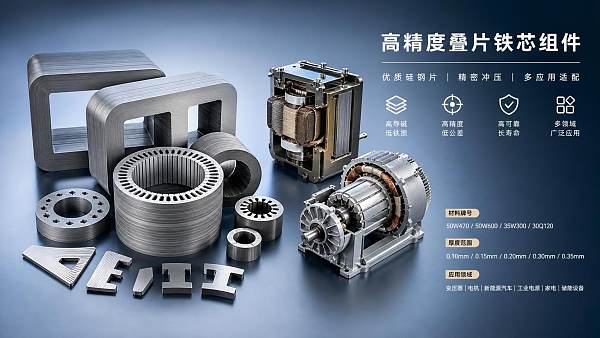
 Jul 12, 2026Laminated Core Components: How to Choose Grades, Thickness, and ApplicationsLaminated core components explained: learn how to choose steel grades, thickness, and application fit to cut losses, improve efficiency, and make smarter design decisions.
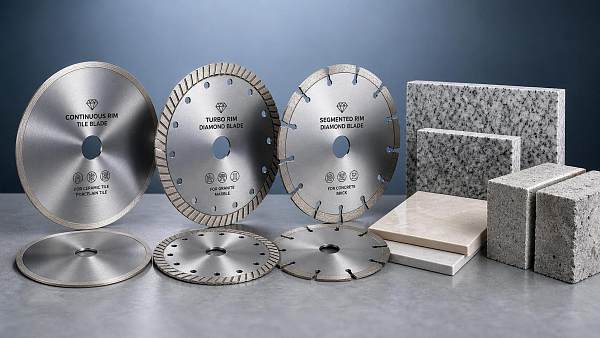
 Jul 11, 2026Diamond Saw Blades for Stone, Tile, and Concrete: How to Choose the Right Typediamondsawblades buying guide for stone, tile, and concrete. Learn how to match blade type, cutting method, and machine for cleaner cuts, longer life, and fewer costly mistakes.
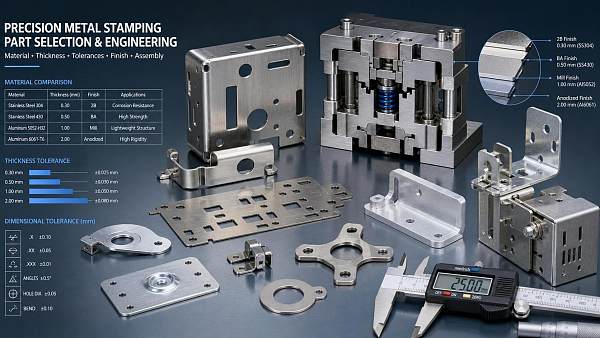
 Jul 09, 2026Product Selection Criteria for Stamped Parts: 7 Factors That Affect Fit and CostProduct selection criteria for stamped parts: discover 7 key factors that shape fit, tolerance, tooling, and total cost—make smarter sourcing decisions with less risk.
 Jul 09, 2026Sheet Metal Custom Parts: How to Choose Tolerances, Finishes, and Lead TimesSheet metal custom parts guide: learn how to choose the right tolerances, finishes, and lead times to reduce cost, improve fit, and avoid sourcing delays.
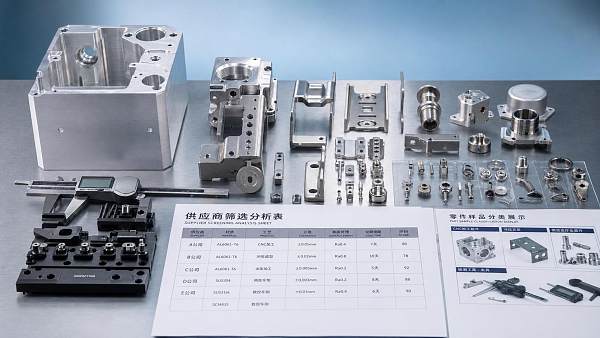
 Jul 08, 2026How to Do Product Category Analysis for Precision Parts Sourcing and Supplier ShortlistingProduct category analysis precision parts helps buyers classify components, compare true supplier fit, and shortlist faster with better cost, lead time, and compliance accuracy.
![]() Jul 07, 2026How to Evaluate a Battery Protection Parts Supplier for Quality, Testing, and Supply StabilityBattery protection parts supplier evaluation starts with quality, testing, and supply stability. Learn the key checks, red flags, and sourcing criteria for safer, more reliable decisions.
Jul 07, 2026How to Evaluate a Battery Protection Parts Supplier for Quality, Testing, and Supply StabilityBattery protection parts supplier evaluation starts with quality, testing, and supply stability. Learn the key checks, red flags, and sourcing criteria for safer, more reliable decisions. Jul 04, 2026Custom Precision Parts Prototype: Tolerance, Material, and Lead Time BasicsCustom precision parts prototype basics made practical: learn how tolerance, material, and lead time choices reduce risk, improve testing, and speed smarter production decisions.
 Jul 04, 2026Custom Engineered Components vs Standard Parts: When Is Customization Worth It?Custom engineered components vs standard parts: discover when customization lowers lifecycle cost, reduces downtime, and creates stronger competitive advantage.
 Jul 03, 2026How to Source Precision Machined Parts in the Middle East: Tolerances, Materials, and Supplier ChecksPrecision machined parts Middle East sourcing starts with tighter supplier checks. Learn how to compare tolerances, materials, certifications, and total cost for safer, smarter procurement.
 Jul 02, 2026Performance Factor Analysis for Surface Treatment: Key Variables That Affect Coating ResultsPerformance factor analysis for surface treatment reveals how substrate condition, cleanliness, profile, environment, and process settings shape coating results. Learn the key variables to improve adhesion, consistency, and production decisions.
 Jun 29, 2026Material Selection Analysis by Weight: When Lighter Parts Improve Total System PerformanceMaterial selection analysis by weight reveals when lighter parts truly improve total system performance, cutting energy, load, and lifecycle cost while avoiding hidden tradeoffs.
 Jun 27, 2026Engineered Components Drawing Review: 8 Checks to Catch Tolerance and DFM Issues EarlyEngineered components drawing review made practical: discover 8 smart checks to catch tolerance, GD&T, and DFM issues early, reduce rework, and improve launch readiness.
 Jun 26, 2026DIN Precision Parts: Tolerances, Materials, and How to Read Spec RequirementsDIN precision parts explained clearly: learn tolerances, material selection, surface requirements, and how to read DIN specs to reduce sourcing risk and choose suppliers with confidence.
 Jun 25, 2026Custom Precision Parts for Electronics: Tolerance, Material, and Process BasicsCustom precision parts electronics guide covering tolerance, material, and process basics. Learn how to reduce sourcing risk, improve fit and reliability, and choose suppliers with confidence.
 Jun 24, 2026Rapid Prototyping Near Me: How to Compare Lead Time, Materials, and Tolerance OptionsRapid prototyping near me: compare lead time, materials, and tolerance options with a practical framework to choose faster, smarter suppliers and reduce costly prototype delays.
 Jun 23, 2026Sheet Metal Components Manufacturing: Tolerance, Finish, and Process Options ExplainedSheet metal components manufacturing explained: compare tolerance, finish, and process options to reduce sourcing risk, control cost, and choose suppliers with confidence.
 Jun 23, 2026Ballscrews Selection Guide: How Lead, Accuracy, and Load Affect Motion PerformanceBallscrews selection guide covering lead, accuracy, and load. Learn how to improve speed, repeatability, and service life with practical tips for better motion performance.
 Jun 22, 2026PCB Assembly Process Explained: SMT, THT, Testing, and Common Defects to Watch ForPCB assembly explained clearly: learn SMT, THT, testing methods, and common defects that affect reliability, compliance, and product performance across industries.